Blog

  • Cosmic Campfire – DEM L 190

    Cosmic Campfire – DEM L 190

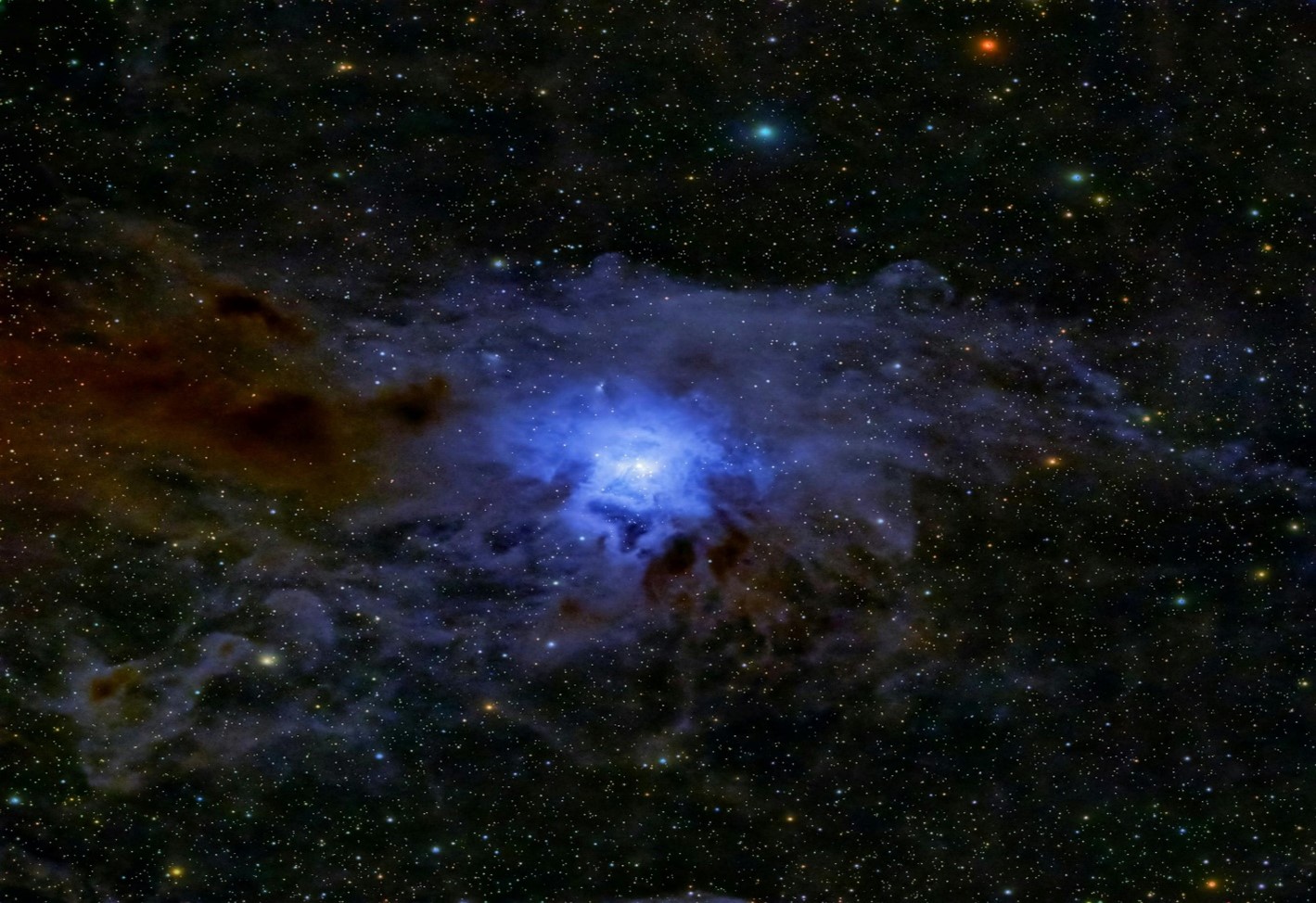
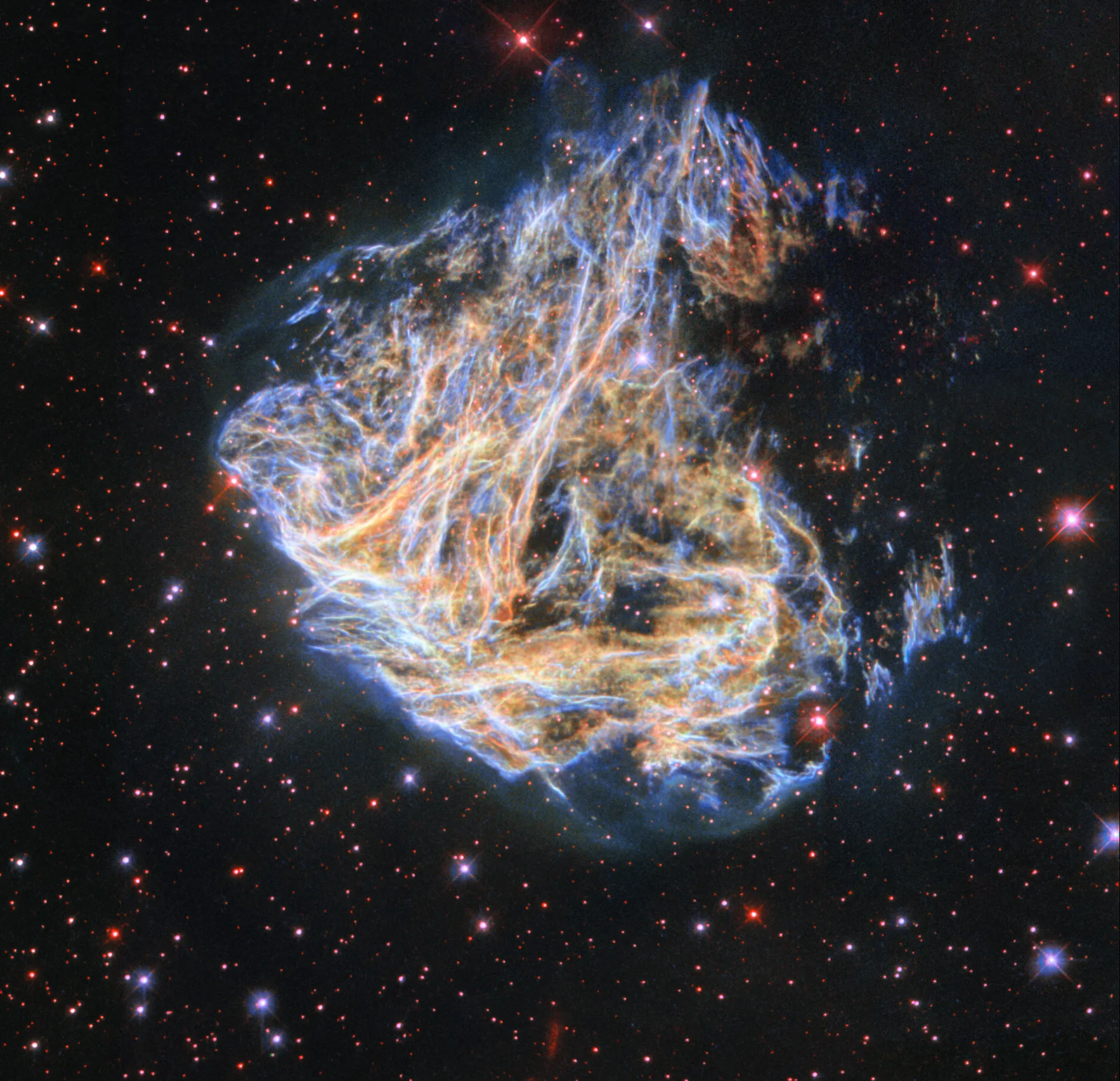
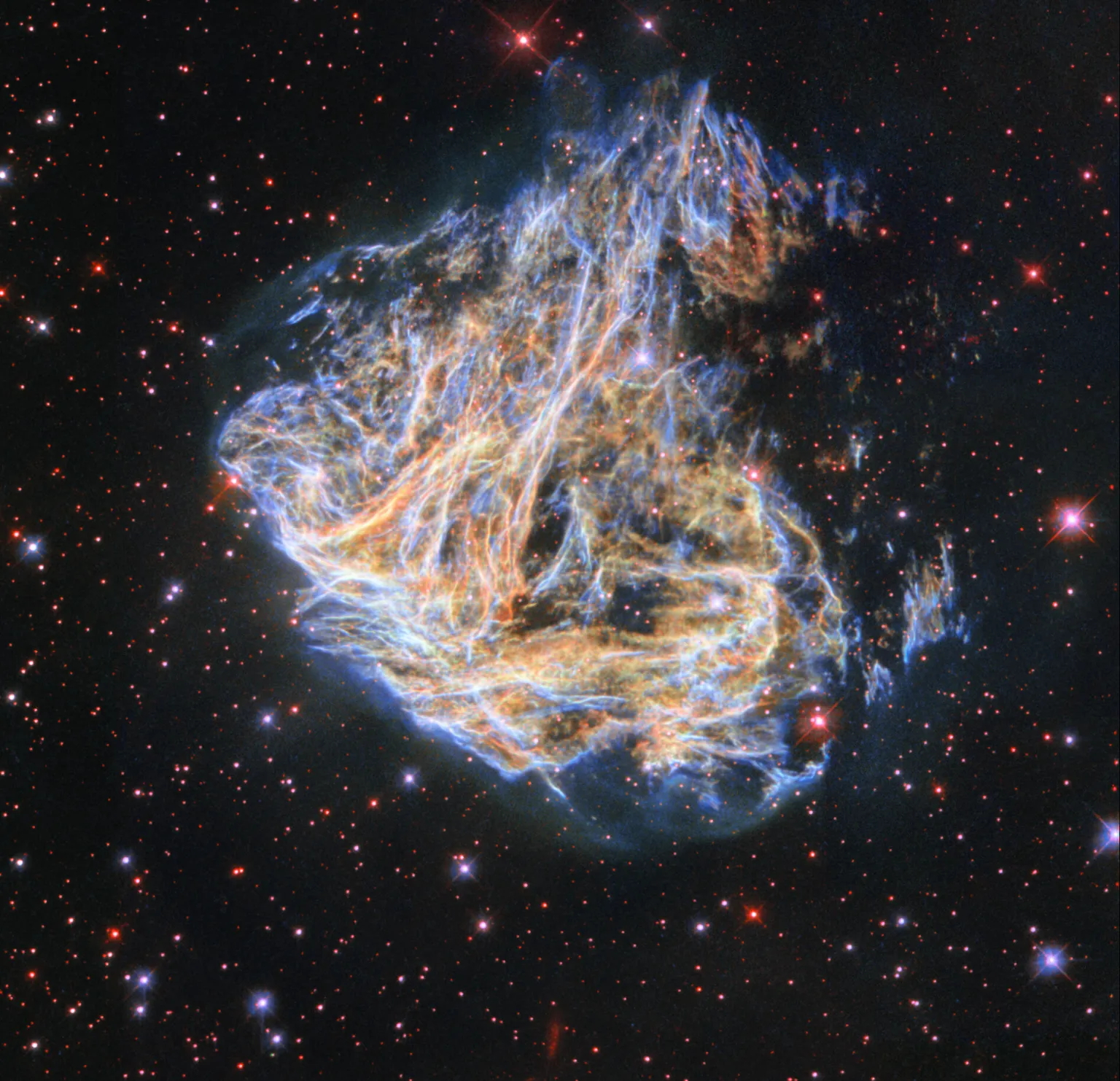
    This enthralling image of the supernova remnant DEM L 190, captured by the Hubble Space Telescope, provides a glimpse into the cataclysmic death of a massive star in the Large Magellanic Cloud, the Milky Way’s small galactic neighbour. Located approximately 160,000 light-years away from Earth in the constellation Dorado, DEM L 190, also known as LMC N49, is one of the brightest supernova remnants in the Large Magellanic Cloud.

    The delicate filaments of the remnant, which resemble puffs of smoke and sparks from a campfire, are layers of debris from the stellar explosion. These filaments, along with other materials from the blast, will eventually contribute to the formation of a new generation of stars.

    Astronomers studied DEM L 190 to understand the interaction between the supernova remnant and the interstellar medium. The intricate structure houses a powerful, rapidly spinning neutron star known as a magnetar. This exotic object undergoes episodes of gamma-ray emissions and is classified as a “soft gamma-ray repeater,” referring to its emission of photons with lower energy than typical gamma-ray bursts. The neutron star also emits X-rays with energies slightly less than those of soft gamma rays.

    The stunning image is a composite of data from two different astronomical projects using Hubble Space Telescope’s Wide Field and Planetary Camera 2 (WFPC2).

    Source: NASA

    Image Credit: ESA/Hubble & NASA, S. Kulkarni, Y. Chu

  • Andromeda Galaxy

    Andromeda Galaxy

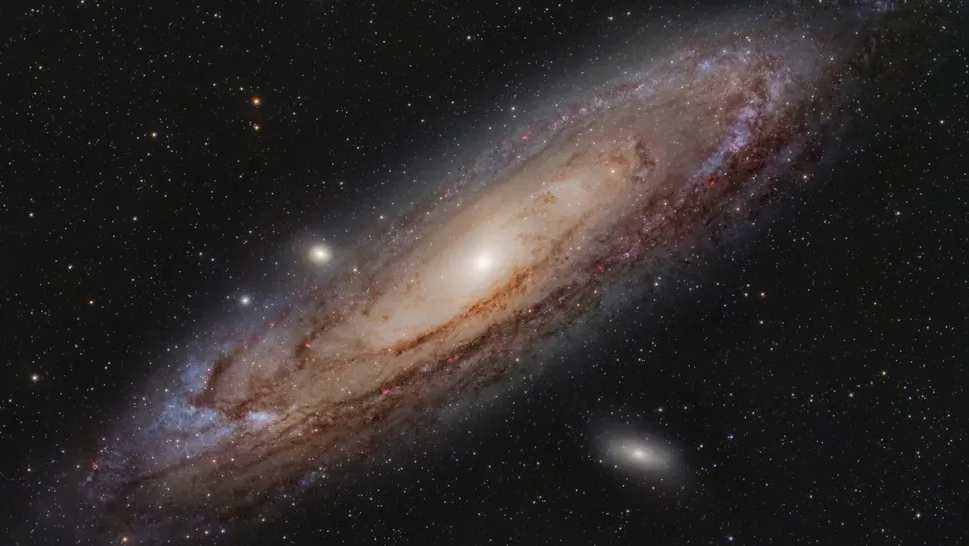
    The Andromeda Galaxy, also called Messier 31 or M31, is the nearest major galaxy to the Milky Way.

    It is 2.5 million light years away from Earth and is the other major member of the Local Group, our local collection of galaxies.

    Like the Milky Way, it is a barred spiral galaxy, so-called for the bar-like structure formed by the stars in its centre.


    Andromeda is about 260,000 light-years wide, according to NASA, making it the largest galaxy in the Local Group. However, its mass is comparable to or even less than that of the Milky Way, according to NASA JPL

    Scientists think the galaxy could be anywhere from 5 and 10 billion years old. However, it may not have existed in its current form until two or three billion years ago, when two smaller galaxies orbiting each other merged to form the current Andromeda Galaxy, according to a 2018 study.

    Can I see Andromeda?

    Andromeda is visible to the naked eye but only when viewed in dark skies and ideally on a moonless night. In many places, it is visible the entire year for at least part of the night but is highest in the sky and therefore easiest to spot in August and September, according to EarthSky. There are several ways to find Andromeda. One of the easiest is to locate the constellation Cassiopeia, which forms a kind of M or W shape in the sky. The lowest point of the W is the star Schedar, which points directly at Andromeda.

    Using a high-powered telescope in dark skies, it is also possible to observe some of the star clusters within the galaxy, such as the bright cluster Mayall II, also called Globular One or G1. This cluster is so bright that some researchers think it is the remnant of the core of a dwarf galaxy that merged with Andromeda in the distant past.

    What will happen when we hit the Andromeda galaxy?

    When the Milky Way and Andromeda merge in about 4.5 billion years, they will form a huge elliptical galaxy. Chances are that our solar system will be unaffected. We might be pulled away from the centre of the galaxy, or we might be totally ejected from it. Stars are so far apart that any sort of collision is extremely unlikely. However, it is almost certain that the increasing luminosity of our sun will have caused Earth to become inhospitable to all multicellular life by this point, so we will not be around to find out.

    Is Andromeda bigger than the Milky Way?

    Andromeda is larger than the Milky Way in terms of the distance it extends. However, the two galaxies are comparable in mass, and it is hard to say which one is more massive.

    Colliding galaxies:

    Andromeda and the Milky Way are slowly drifting towards each other, leading scientists to conclude that they will collide about 4.5 billion years from now, according to a 2019 study. The two galaxies will form a giant elliptical, or oval, galaxy, according to NASA.

    It is not clear what might happen to our planet and solar system during this merger. Scientists think we might be swept about much further away from the core of the Milky Way, according to NASA, or be completely ejected from our galaxy. However, neither one of these things would impact our solar system.


    Unfortunately (or fortunately) for us, we will not be around to find out what happens. By around a billion years from now, the sun’s increasing luminosity is predicted to have disrupted life on Earth so thoroughly that only single-celled organisms will be left.


    A possible exoplanet:

    In 1999, scientists noticed a minute change in Andromeda known as a microlensing event, which they called PA-99-N2. Gravitational lensing happens when something extremely massive, like a large galaxy, bends the light of a far more distant background object behind it, sometimes creating multiple distorted images of that object. With microlensing, a smaller object, like a star or planet, causes this type of distortion. The distortion of light causes the background source to become temporarily brighter, according to the Planetary Society.

    One explanation for this event is that the background object was a red giant star in Andromeda, and the lensing object was another star in the galaxy, with a planet orbiting it. Scientists think this star has a planet because of the pattern of the brightening during the event. If this planet exists, it would be the first exoplanet discovered in another galaxy. The planet may be around 6.34 times the mass of Jupiter, according to a 2012 study.

    Andromeda and the Great Debate

    In the 1920s, the distant galaxy became part of the Great Debate between American astronomers Harlow Shapley and Heber Curtis. At the time, astronomers thought the Milky Way composed the whole universe, and the strange patches such as Andromeda (known as “nebulas” at the time) lay inside of them. Curtis had spotted various novas in Andromeda and argued it was not a “nebula” but instead that it was a separate galaxy.

    The discussion was not concluded until 1925 when Edwin Hubble identified a special kind of star known as a Cepheid variable — a star whose characteristics allow for precise measurements of distance — within Andromeda. Because Shapley had previously determined that the Milky Way was only 100,000 light-years across, Hubble’s calculations revealed that the fuzzy patch was too far away to lie within the Milky Way.

    What are some major similarities and differences between Andromeda and our Milky Way galaxy?

    Both are intermediate-type spirals, with 3-D central bars (not very strong ones). M31 is often reported as more massive. Both central black holes are relatively inactive. M31 is even less active than the Milky Way at least at present.

    M31 probably has more globular clusters. Both have families of a dozen or more dwarf galaxies around them, the Milky Way’s dwarf galaxies are better inventoried than M31 because they’re easier to observe.

    How similar would they look if we could see both from the outside? 

    Not quite sure, because we cannot see our own from outside!

    What are some ways we think Andromeda might have evolved and changed over time?

    The current understanding is that both the Milky Way and M31 (and large galaxies in general) have formed from mergers of a few smaller ones and ongoing accretion of dwarf galaxies.

    The evidence is streams of stars moving together in the Milky Way that are left from such dwarfs coming close and getting torn apart. As a result, there are lots of stars in the Milky Way that are older than the age of the fully assembled galaxy. Mergers still occur from time to time for both the Milky Way and M31. Both probably also have had their nuclei more active in the past when the central black holes experienced episodes of accreting gas and/or having a star come close enough to get torn apart (tidal disruption event) and fall into the black hole.

    Why do researchers think Andromeda will collide or merge with our galaxy?

    The two galaxies are moving toward each other now at about 100 km/sec and are about 685,000 parsecs apart, so some interaction is inevitable. Probably a glancing collision because the Milky Way and M31 are not aimed exactly straight at one another.

    How would our galaxy merge with Andromeda impact Earth and our solar system?

    Not predictable for certain (because there is some tiny probability of a near collision of the sun with an M31 star) but certainly fairly minor because the stars are so far apart compared to their sizes and the sizes of the main part of the solar system.

    Gas from the two galaxies will collide, forming a shockwave and very likely trigger an episode of star formation so that a few million years later, we would probably have lots more young, bright stars near enough to be naked-eye objects.

    Resources:

    1. NASA. “The Galaxy Next Door”. https://www.nasa.gov/image-article/galaxy-next-door/

    2. NASA Jet Propulsion Laboratory. “Cool, New Views of Andromeda Galaxy.” https://www.jpl.nasa.gov/news/cool-new-views-of-andromeda-galaxy

    3. Schindler, K. “Views From Mars Hill: Andromeda Galaxy,” Lowell Observatory. https://lowell.edu/views-from-mars-hill-andromeda-galaxy/

    4. Hammer F et al. “A 2–3 billion-year-old major merger paradigm for the Andromeda galaxy and its outskirts,” Monthly Notices of the Royal Astronomical Society. https://academic.oup.com/mnras/article/475/2/2754/4839413

    5. McClure, B. “Andromeda galaxy: All you need to know,” EarthSky. https://earthsky.org/clusters-nebulae-galaxies/andromeda-galaxy-closest-spiral-to-milky-way/

    6. Refreshing Views. “Star Clusters in Another Galaxy”. https://www.youtube.com/watch

    7. Ma J et al. “Structural parameters of Mayall II = G1 in M31,” Monthly Notices of the Royal Astronomical Society. https://academic.oup.com/mnras/article/376/4/1621/1014745

    8. van der Marel R et al. “First Gaia Dynamics of the Andromeda System: DR2 Proper Motions, Orbits, and Rotation of M31 and M33,” The Astrophysical Journal. https://iopscience.iop.org/article/10.3847/1538-4357/ab001b

    9. NASA Hubble Mission Team. “NASA’s Hubble Shows Milky Way is Destined for Head-On Collision.” https://science.nasa.gov/missions/hubble/nasas-hubble-shows-milky-way-is-destined-for-head-on-collision/


    10. Muir H. “Galactic merger to ‘evict’ Sun and Earth,” New Scientist. https://www.newscientist.com/article/dn11852-galactic-merger-to-evict-sun-and-earth/#.VDVdDvl_uVB

    11. O’Malley-James, Jack T et al. “Swansong biospheres II: the final signs of life on terrestrial planets near the end of their habitable lifetimes,” International Journal of Astrobiology. https://www.cambridge.org/core/journals/international-journal-of-astrobiology/article/abs/swansong-biospheres-ii-the-final-signs-of-life-on-terrestrial-planets-near-the-end-of-their-habitable-lifetimes/EC5E8031028203F2EA3866C170575922#

    12. The Planetary Society. “Space-Warping Planets: The Microlensing Method.” https://www.planetary.org/articles/space-warping-planets-the-microlensing-method

    13. Ingrosso, G et al. “Detection of exoplanets in M31 with Pixel-Lensing: The Event PA-99-N2 Case,” The Twelfth Marcel Grossmann Meeting. https://www.worldscientific.com/doi/abs/10.1142/9789814374552_0433


    Image #1: Image of the andromeda galaxy showing swirling arms of gas and dust with a bright centre. (Image credit: Westend61 via Getty Images)

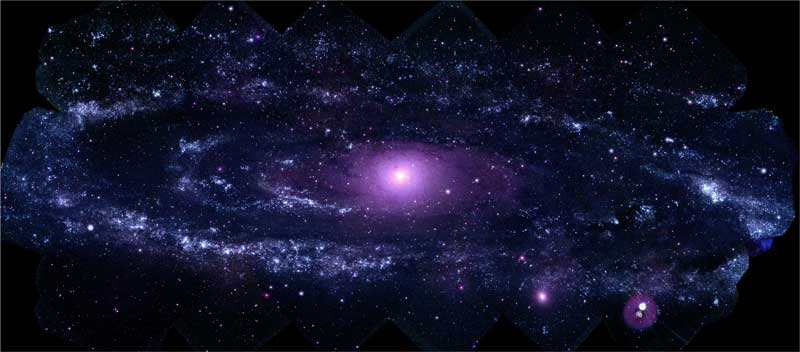
    Image #2: This mosaic of M31 merges 330 individual images taken by the Ultraviolet/Optical Telescope aboard NASA’s Swift spacecraft. It is the highest-resolution image of the galaxy ever recorded in the ultraviolet. The image shows a region 200,000 light-years wide and 100,000 light-years high (100 arcminutes by 50 arcminutes). (Image credit: NASA/Swift/Stefan Immler (GSFC) and Erin Grand (UMCP))

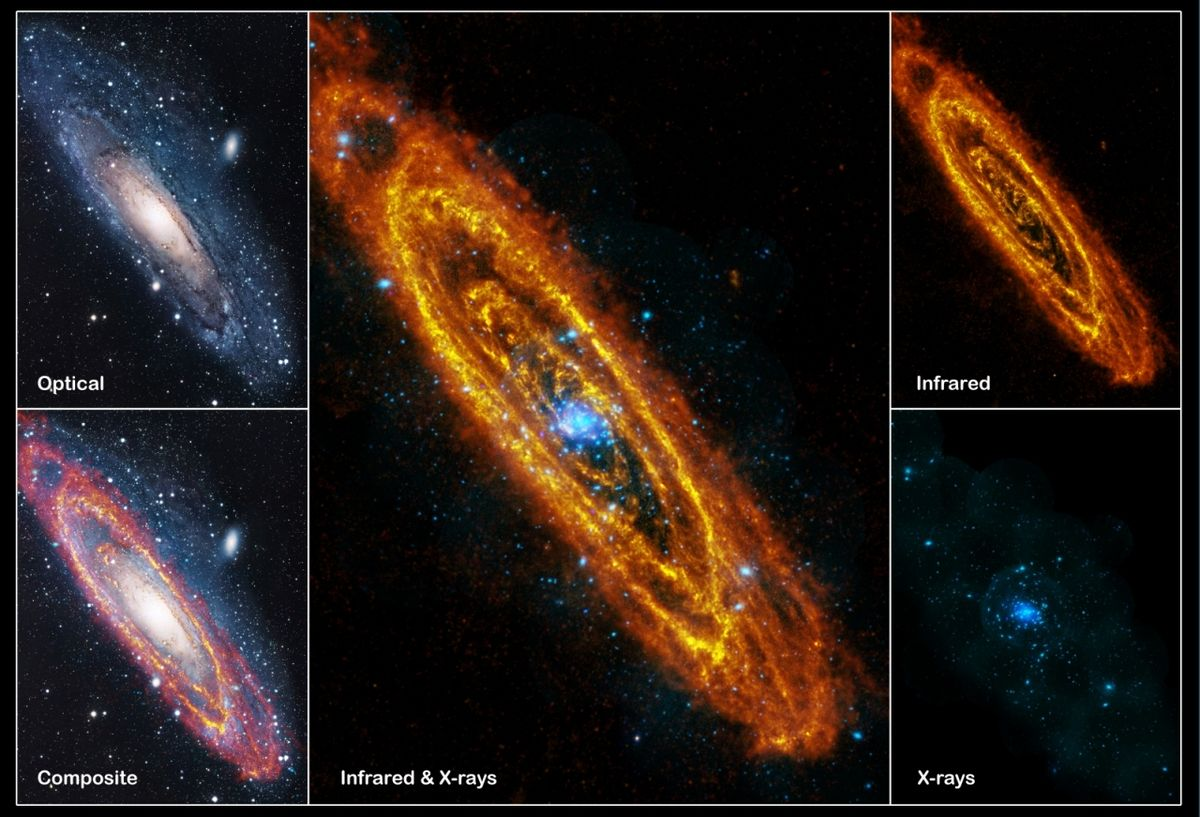
    Image #3: The Andromeda galaxy in the visible, infrared, and X-ray light spectrums, using data from the European Space Agency’s Herschel (infrared) and XMM-Newton (X-ray) observatories, as well as the optical image by Robert Gendler.  (Image credit: infrared: ESA/Herschel/PACS/SPIRE/J. Fritz, U. Gent; X-ray: ESA/XMM-Newton/EPIC/W. Pietsch, MPE; optical: R. Gendler)

  • Andromeda Constellation’s NGC 7640

    Andromeda Constellation’s NGC 7640

    The Andromeda Constellation is the 19th largest of the 88 constellations recognized by the International Astronomical Union (IAU) and should not be confused with our neighboring Andromeda Galaxy.

    The Andromeda Constellation consists of 16 stars visible in the northern sky. Named by ancient Greeks after the mythological Andromeda princess, the constellation also contains the Andromeda Galaxy, the nearest full-fledged galaxy to our own Milky Way.

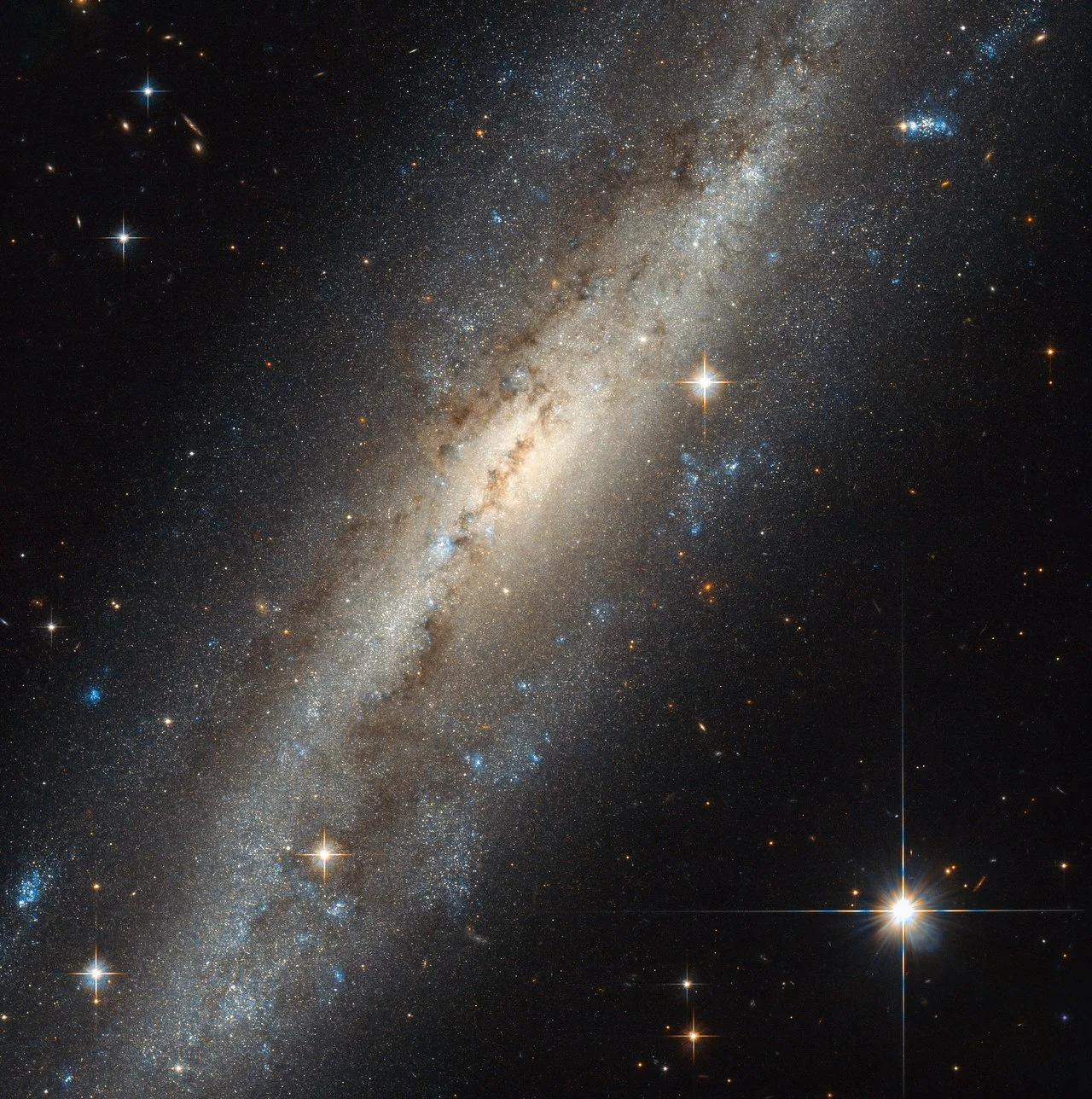
    The Andromeda constellation is home to the pictured galaxy known as NGC 7640.

    Many different classifications are used to identify galaxies by shape and structure — NGC 7640 is a barred spiral type. These are recognizable by their spiral arms, which fan out not from a circular core, but from an elongated bar cutting through the galaxy’s center. Our home galaxy, the Milky Way, is also a barred spiral galaxy.

    NGC 7640 might not look much like a spiral in this image, but this is due to the orientation of the galaxy with respect to Earth — or to Hubble, which acted as photographer in this case! We often do not see galaxies face on, which can make features such as spiral arms less obvious.

    There is evidence that NGC 7640 has experienced some kind of interaction in its past.

    Galaxies contain vast amounts of mass, and therefore affect one another via gravity. Sometimes these interactions can be mild, and sometimes hugely dramatic, with two or more colliding and merging into a new, bigger galaxy.

    Understanding the history of a galaxy, and what interactions it has experienced, helps astronomers to improve their understanding of how galaxies — and the stars within them — form.

    Image Credit: ESA / Hubble and NASA

  • Advanced data shed light on gravitational basins of attraction that shape the movement of galaxies

    Advanced data shed light on gravitational basins of attraction that shape the movement of galaxies

    by Hebrew University of Jerusalem

    September 27, 2024

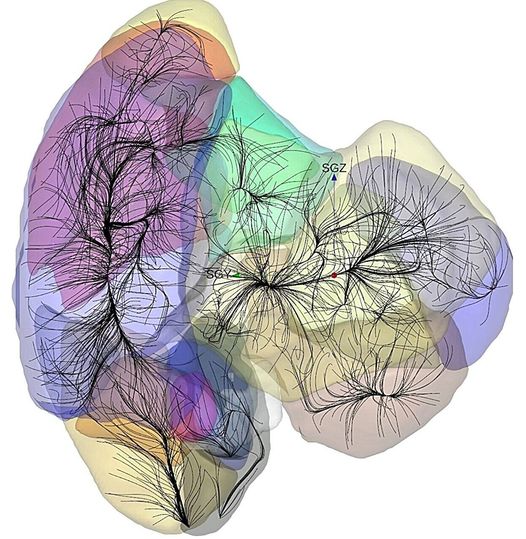
    A new study has mapped out the gravitational basins of attraction in the local universe, offering fresh insights into the large-scale cosmic structures that shape the movement of galaxies. The study has been published in Nature Astronomy.

    Using advanced data from the Cosmicflows-4 compilation of distances and velocities of roughly 56,000 galaxies, the international research team applied cutting-edge algorithms to identify regions where gravity dominates, such as the Sloan Great Wall and the Shapley Supercluster.

    This research suggests that our Milky Way most probably resides within the larger Shapley basin, shifting our understanding of cosmic flows and the role of massive structures in shaping the universes evolution.

    A team of international researchers has taken a significant step forward in understanding the vast structure of the universe, identifying key gravitational regions known as basins of attraction.

    The research, led by Dr. Valade during his doctoral work under the supervision of Prof. Yehuda Hoffman from Hebrew University and Prof. Noam Libeskind from AIP Potsdam. The work also involved contributions from Dr. Pomarede from the University of Paris-Saclay, Dr. Pfeifer from AIP Potsdam, and Prof. Tully and Dr. Kourkchi from the University of Hawaii.


    Understanding the structure of the universe

    The study is based on the widely accepted Lambda Cold Dark Matter (ΛCDM) standard model of cosmology, which suggests that the universe’s large-scale structure emerged from quantum fluctuations during the early stages of cosmic inflation.

    These minute fluctuations in density evolved over time, forming the galaxies and clusters we observe today. As these density perturbations grew, they attracted surrounding matter, creating regions where gravitational potential minima, or “basins of attraction,” formed.

    Utilizing the latest data from the Cosmicflows-4 (CF4) compilation, the team employed a Hamiltonian Monte Carlo algorithm to reconstruct the large-scale structure of the universe up to a distance corresponding to roughly a billion light years. This method allowed the researchers to provide a probabilistic assessment of the universe’s gravitational domains, identifying the most significant basins of attraction that govern the movement of galaxies.

    Laniakea and Shapley basins of attraction

    Earlier catalogs had suggested that the Milky Way galaxy was part of a region called the Laniakea Supercluster. However, the new CF4 data offers a slightly different perspective, indicating that Laniakea might be part of the much larger Shapley basin of attraction, which encompasses an even greater volume of the local universe.

    Among the newly identified regions, the Sloan Great Wall stands out as the largest basin of attraction, with a volume of about half a billion cubic light years, more than twice the size of the Shapley basin, which was previously considered the largest. These findings provide an unprecedented look into the gravitational landscape of the local universe, offering new insights into how galaxies and cosmic structures evolve and interact over time.

    A leap forward in cosmological research

    This research offers a deeper understanding of the universe’s intricate gravitational dynamics and the forces that have shaped its structure. The identification of these basins of attraction is a significant advancement in cosmology, potentially reshaping our understanding of cosmic flows and large-scale structures.

    This research is important because it deepens our understanding of the large-scale structure of the universe and the gravitational forces that shape it. By mapping out the basins of attraction—regions where gravity pulls galaxies and matter—the study reveals how massive cosmic structures influence the movement and formation of galaxies over time.

    Understanding these dynamics not only helps us better grasp the universe’s past and its ongoing evolution, but also provides valuable insights into fundamental cosmological questions, such as the distribution of dark matter and the forces driving cosmic expansion. This knowledge has the potential to refine our models of the universe and guide future astronomical research.

    Image:

    Velocity streamlines within the reconstructed volume, with colored envelopes associated with the prominent nearby basins of attraction. The map and streamlines have been cropped to the region covered by Cosmicflows-4 data. The streamlines within a given basin converge onto the region of high concentration of galaxies. Credit: Daniel Pomarède

    Journal:

    Identification of basins of attraction in the local universe, Nature Astronomy (2024).

    DOI: 10.1038/s41550-024-02370-0

  • Earth will capture ‘second moon’ this weekend

    Earth will capture ‘second moon’ this weekend

    By Robert Lea

    September 26, 2024

    Earth will get a “second moon” this weekend, but it won’t be sticking around for long.

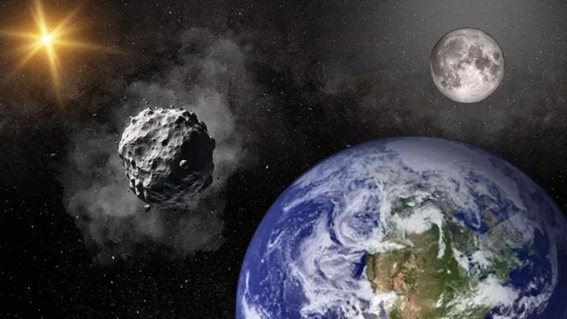
    NASA scientists have calculated that Earth will capture a “second moon” on Sunday (September 29). The “mini moon” comes in the form of the tiny asteroid 2024 PT5, which usually orbits the sun as part of a small asteroid belt that follows Earth.

    While Earth’s primary companion, the moon, has lingered around our planet for around 4 billion years since its formation in the solar system’s infancy, this asteroid will be a temporary fixture that won’t even see the year out.

    “According to the latest data available from NASA’s Jet Propulsion Laboratory Horizons system, the temporary capture will start at 15:54 EDT and will end at 11:43 EDT on November 25,” mini-moon event expert and Universidad Complutense de Madrid professor Carlos de la Fuente Marcos stated on Wednesday (September 25).

    “The object that is going to pay us a visit belongs to the Arjuna asteroid belt, a secondary asteroid belt made of space rocks that follow orbits very similar to that of Earth at an average distance to the sun of about 150 million kilometres,” Marcos stated. “Objects in the Arjuna asteroid belt are part of the near-Earth object population of asteroids and comets.”

    Though the idea of Earth getting a second moon sounds extraordinary, these gravitational capture events are actually quite common.

    After its brief stay around Earth, the asteroid 2024 PT5 will continue to orbit the sun as part of the Arjuna family of asteroids.

    2024 PT5 isn’t the first asteroid to be captured by Earth to be transformed into a mini moon. Scientists have officially documented two prior “short captures,” a type of asteroid-grabbing event lasting about a week and estimated to occur several times per decade. We also know of two prior and rarer “long-capture” events that can last years rather than weeks that lead to snared asteroids completing one or more full orbits of Earth.

    The fact that asteroid 2024 PT5 will stick around for just a few weeks, as opposed to billions of years, isn’t the only major difference between this “mini moon” and the actual moon.

    Whereas the moon dominates the night sky over Earth for at least half the month, 2024 PT5 won’t be observable to the average skywatcher. However, professional astronomers may be able to grab us some images of this temporary alignment.

    This is mostly due to the massive difference in size between the two bodies. While the moon is an estimated 3,475 km in diameter, 2024 PT5 is believed to be just 37 feet wide. That means the moon is a whopping 308,108 times wider than the lunar pretender asteroid 2024 PT5!

    “The object is too small and dim for typical amateur telescopes and binoculars. However, the object is well within the brightness range of typical telescopes used by professional astronomers,” Marcos concluded. “A telescope with a diameter of at least 30 inches plus a CCD or CMOS detector is needed to observe this object; a 30-inch telescope and a human eye behind it will not be enough.”

    The team’s research is published in the journal The Research Notes of the AAS.

    Journal:

    de la Fuente Marcos, C., & de la Fuente Marcos, R. (2024). A Two-month Mini-moon: 2024 PT5 Captured by Earth from September to November. Research Notes of the AAS, 8(9), 224.


    Image:

    An illustration showing Earth’s second moon, the mini moon asteroid 2024 PT5. (Image credit: Robert Lea (created with Canva))

  • Early dark energy could resolve cosmology’s two biggest puzzles

    Early dark energy could resolve cosmology’s two biggest puzzles

    by Jennifer Chu, Massachusetts Institute of Technology

    September 13, 2024

    A new study by MIT physicists proposes that a mysterious force known as early dark energy could solve two of the biggest puzzles in cosmology and fill in some major gaps in our understanding of how the early universe evolved.

    One puzzle in question is the “Hubble tension,” which refers to a mismatch in measurements of how fast the universe is expanding. The other involves observations of numerous early, bright galaxies that existed at a time when the early universe should have been much less populated.

    Now, the MIT team has found that both puzzles could be resolved if the early universe had one extra, fleeting ingredient: early dark energy. Dark energy is an unknown form of energy that physicists suspect is driving the expansion of the universe today.

    Early dark energy is a similar, hypothetical phenomenon that may have made only a brief appearance, influencing the expansion of the universe in its first moments before disappearing entirely.

    Some physicists have suspected that early dark energy could be the key to solving the Hubble tension, as the mysterious force could accelerate the early expansion of the universe by an amount that would resolve the measurement mismatch.

    The MIT researchers have now found that early dark energy could also explain the baffling number of bright galaxies that astronomers have observed in the early universe. In their new study, reported in the Monthly Notices of the Royal Astronomical Society, the team modeled the formation of galaxies in the universe’s first few hundred million years.

    When they incorporated a dark energy component only in that earliest sliver of time, they found the number of galaxies that arose from the primordial environment bloomed to fit astronomers’ observations.

    “You have these two looming open-ended puzzles,” says study co-author Rohan Naidu, a postdoc in MIT’s Kavli Institute for Astrophysics and Space Research. “We find that, in fact, early dark energy is a very elegant and sparse solution to two of the most pressing problems in cosmology.”

    The study’s co-authors include lead author and Kavli postdoc Xuejian (Jacob) Shen, and MIT professor of physics Mark Vogelsberger, along with Michael Boylan-Kolchin at the University of Texas at Austin, and Sandro Tacchella at the University of Cambridge.


    Big city lights

    Based on standard cosmological and galaxy formation models, the universe should have taken its time spinning up the first galaxies. It would have taken billions of years for primordial gas to coalesce into galaxies as large and bright as the Milky Way.

    But in 2023, NASA’s James Webb Space Telescope (JWST) made a startling observation. With an ability to peer farther back in time than any observatory to date, the telescope uncovered a surprising number of bright galaxies as large as the modern Milky Way within the first 500 million years, when the universe was just 3% of its current age.

    “The bright galaxies that JWST saw would be like seeing a clustering of lights around big cities, whereas theory predicts something like the light around more rural settings like Yellowstone National Park,” Shen says. “And we don’t expect that clustering of light so early on.”

    For physicists, the observations imply that there is either something fundamentally wrong with the physics underlying the models or a missing ingredient in the early universe that scientists have not accounted for. The MIT team explored the possibility of the latter, and whether the missing ingredient might be early dark energy.

    Physicists have proposed that early dark energy is a sort of antigravitational force that is turned on only at very early times. This force would counteract gravity’s inward pull and accelerate the early expansion of the universe in a way that would resolve the mismatch in measurements. Early dark energy, therefore, is considered the most likely solution to the Hubble tension.

    Galaxy skeleton

    The MIT team explored whether early dark energy could also be the key to explaining the unexpected population of large, bright galaxies detected by JWST. In their new study, the physicists considered how early dark energy might affect the early structure of the universe that gave rise to the first galaxies. They focused on the formation of dark matter halos—regions of space where gravity happens to be stronger, and where matter begins to accumulate.

    “We believe that dark matter halos are the invisible skeleton of the universe,” Shen explains. “Dark matter structures form first, and then galaxies form within these structures. So, we expect the number of bright galaxies should be proportional to the number of big dark matter halos.”

    The team developed an empirical framework for early galaxy formation, which predicts the number, luminosity, and size of galaxies that should form in the early universe, given some measures of “cosmological parameters.” Cosmological parameters are the basic ingredients, or mathematical terms, that describe the evolution of the universe.

    Physicists have determined that there are at least six main cosmological parameters, one of which is the Hubble constant—a term that describes the universe’s rate of expansion. Other parameters describe density fluctuations in the primordial soup, immediately after the Big Bang, from which dark matter halos eventually form.

    The MIT team reasoned that if early dark energy affects the universe’s early expansion rate in a way that resolves the Hubble tension, then it could affect the balance of the other cosmological parameters, in a way that might increase the number of bright galaxies that appear at early times.

    To test their theory, they incorporated a model of early dark energy (the same one that happens to resolve the Hubble tension) into an empirical galaxy formation framework to see how the earliest dark matter structures evolve and give rise to the first galaxies.

    “What we show is, the skeletal structure of the early universe is altered in a subtle way where the amplitude of fluctuations goes up, and you get bigger halos, and brighter galaxies that are in place at earlier times, more so than in our more vanilla models,” Naidu says. “It means things were more abundant, and more clustered in the early universe.”

    “A priori, I would not have expected the abundance of JWST’s early bright galaxies to have anything to do with early dark energy, but their observation that EDE pushes cosmological parameters in a direction that boosts the early-galaxy abundance is interesting,” says Marc Kamionkowski, professor of theoretical physics at Johns Hopkins University, who was not involved with the study.

    “I think more work will need to be done to establish a link between early galaxies and EDE, but regardless of how things turn out, it’s a clever—and hopefully ultimately fruitful—thing to try.”

    “We demonstrated the potential of early dark energy as a unified solution to the two major issues faced by cosmology. This might be evidence for its existence if the observational findings of JWST get further consolidated,” Vogelsberger concludes.

    “In the future, we can incorporate this into large cosmological simulations to see what detailed predictions we get.”

    Image:

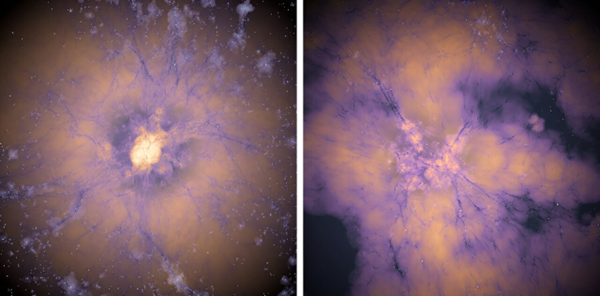
    Early dark energy could have triggered the formation of numerous bright galaxies, very early in the universe, a new study finds. The mysterious unknown force could have caused early seeds of galaxies (depicted at left) to sprout many more bright galaxies (at right) than theory predicts. Credit: Josh Borrow/Thesan Team


    Journal:

    Xuejian Shen et al, Early Galaxies and Early Dark Energy: A Unified Solution to the Hubble Tension and Puzzles of Massive Bright Galaxies revealed by JWST, Monthly Notices of the Royal Astronomical Society (2024). DOI: 10.1093/mnras/stae1932.
     

  • Deep imaging techniques reveal that galaxies are much much bigger than previously thought

    Deep imaging techniques reveal that galaxies are much much bigger than previously thought

    by ARC Centre of Excellence for All Sky Astrophysics in 3D (ASTRO 3D)

    September 06, 2024

    If this galaxy is typical, then the study, published today in Nature Astronomy, indicates that our galaxy is already interacting with its closest neighbour, Andromeda.

    Where does a galaxy end and deep space begin? It seems like a simple question until you look more closely at the gas that surrounds galaxies, known as the circumgalactic medium.

    The halo of gas surrounding the stellar disk accounts for about 70% of the mass of the galaxy—excluding dark matter—but until now it has remained something of a mystery. In the past, we have only been able to observe the gas by measuring the light from a background object, such as a quasar, that is absorbed by the gas.

    That limits the picture of the cloud to a pencil-like beam.

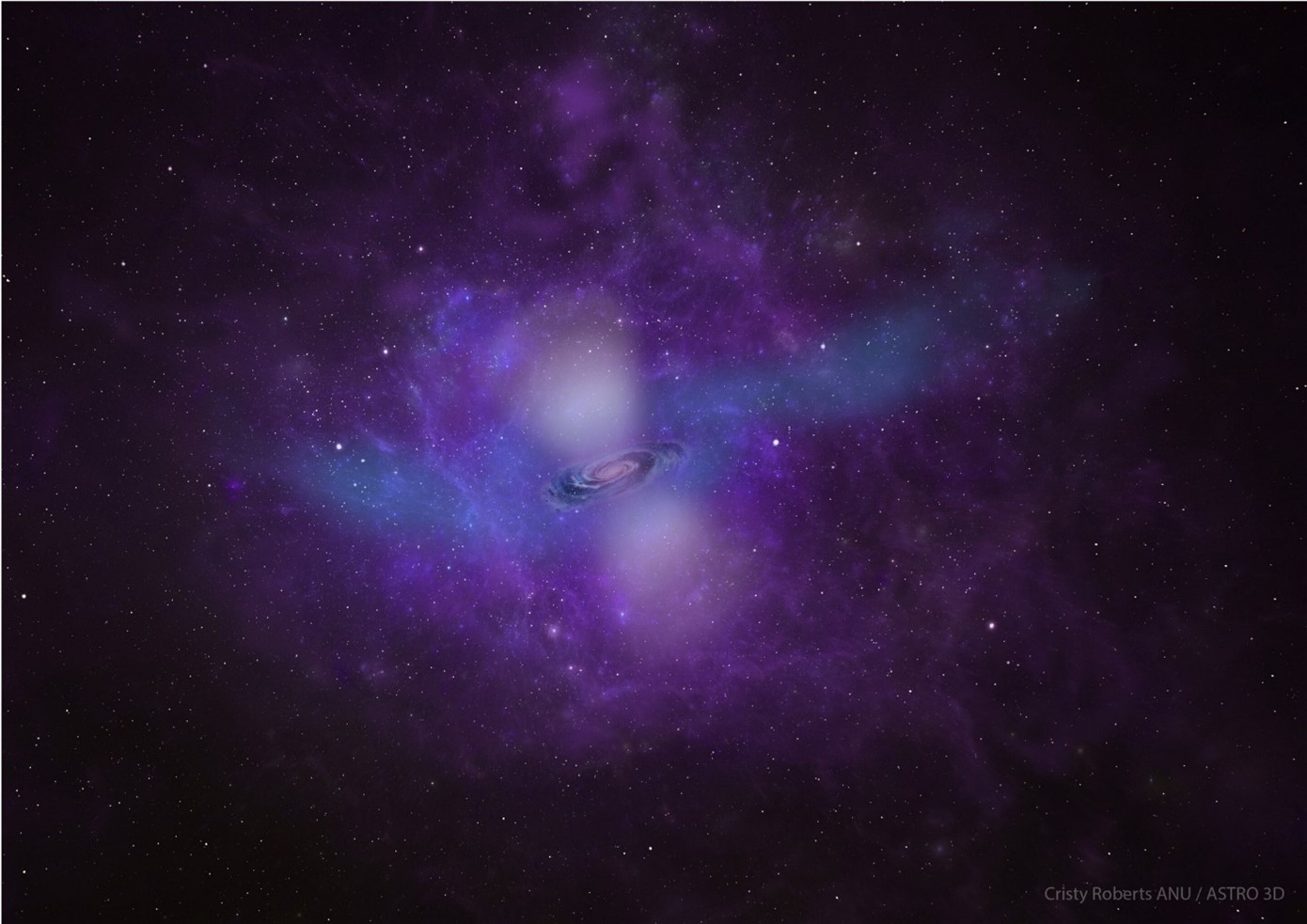
    A new study, however, has observed the circumgalactic medium of a star-bursting galaxy 270 million light years away, using new deep imaging techniques that were able to detect the cloud of gas glowing outside of the galaxy 100,000 light years into space, as far as they were able to look.

    To envisage the vastness of that cloud of gas, consider that the galaxy’s starlight—what we would typically view as the disk—extends just 7,800 light years from its centre.

    The current study observed the physical connection of hydrogen and oxygen from the centre of the galaxy far into space and showed that the physical conditions of the gas changed.

    “We found it everywhere we looked, which was really exciting and kind of surprising,” says Associate Professor Nikole M. Nielsen, lead author of the paper, and a researcher with Swinburne University, and ASTRO 3D and an Assistant Professor at the University of Oklahoma.

    Other authors of the paper came from Swinburne, the University of Texas at Austin, the California Institute of Technology, Pasadena, the University of California, San Diego, and Durham University.

    “We’re now seeing where the galaxy’s influence stops, the transition where it becomes part of more of what’s surrounding the galaxy, and, eventually, where it joins the wider cosmic web and other galaxies. These are all usually fuzzy boundaries,” says Dr. Nielsen.

    “But in this case, we seem to have found a fairly clear boundary in this galaxy between its interstellar medium and its circumgalactic medium.”

    The study observed stars ionizing gas with their photons within the galaxy.

    “In the CGM, the gas is being heated by something other than typical conditions inside galaxies. This likely includes heating from the diffuse emissions from the collective galaxies in the universe and possibly some contribution is due to shocks,” says Dr. Nielsen.

    “It’s this interesting change that is important and provides some answers to the question of where a galaxy ends,” she says.

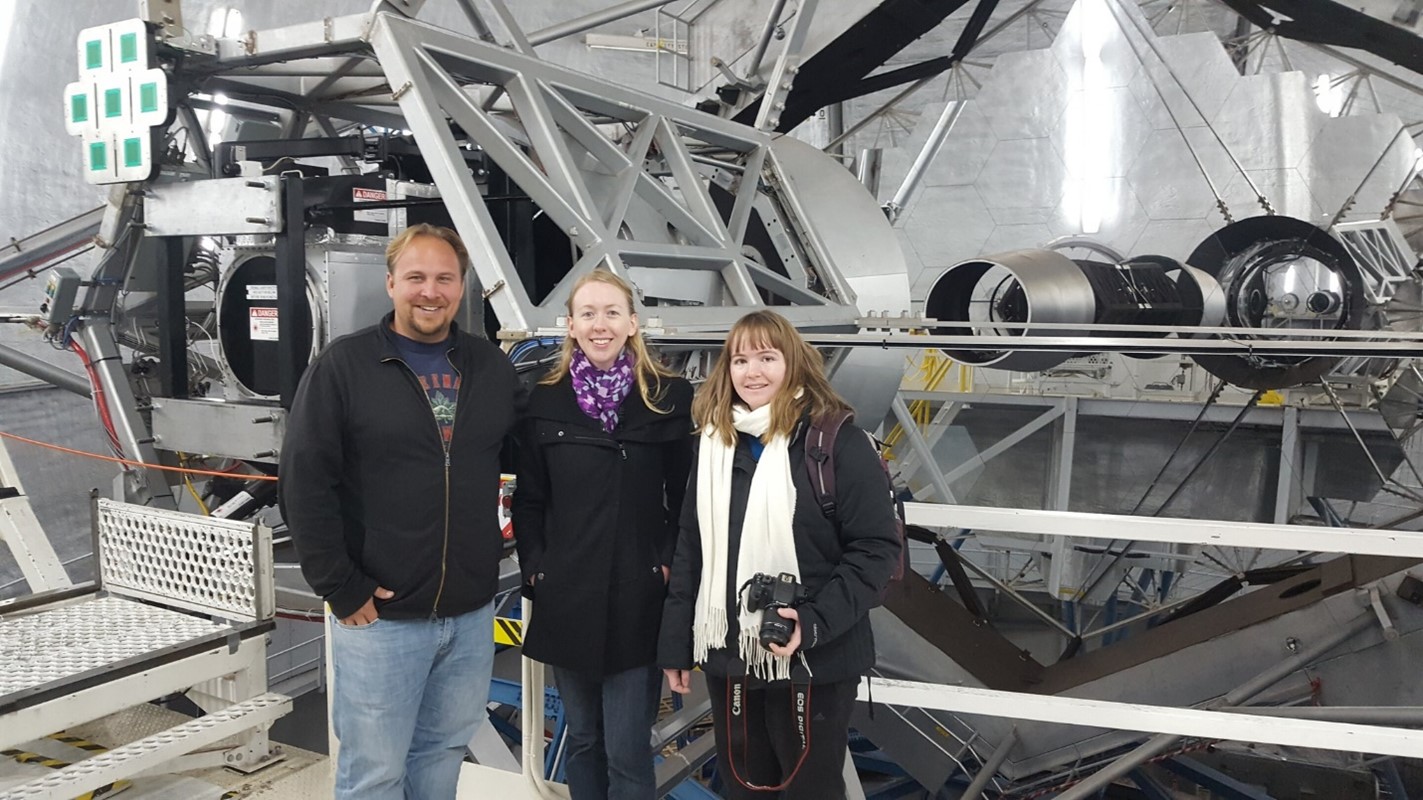
    The discovery has been made possible thanks to the Keck Cosmic Web Imager (KCWI) on the 10-meter Keck telescope in Hawaii, which contains an integral field spectrograph and is one of the most sensitive instruments of its kind in operation.

    “These one-of-a-kind observations require the very dark sky that is only available at the Keck Observatory on Mauna Kea,” said one of the paper’s authors, Swinburne’s Associate Professor Deanne Fisher.

    ASTRO 3D scientists gained access to KCWI through Swinburne University.

    “Swinburne’s Partnership with the W. M. Keck Observatory has allowed our team to really push the boundaries of what is possible,” says another author, Associate Professor Glenn Kacprzak. “KCWI has really changed the game on how we can now measure and quantify the diffuse gas around galaxies.”

    Thanks to the instrument, rather than making a single observation providing a single spectrum of the gas in the galaxy, scientists can now obtain thousands of spectra simultaneously with one image from KCWI.

    “It is the very first time that we have been able to take a photograph of this halo of matter around a galaxy,” says Professor Emma Ryan-Weber, the Director of ASTRO 3D.

    The study adds another piece to the puzzle that is one of the big questions in astronomy and galaxy evolution—how do galaxies evolve? How do they get their gas? How do they process that gas? Where does that gas go.

    “The circumgalactic medium plays a huge role in that cycling of that gas,” says Dr. Nielsen. “So, being able to understand what the CGM looks like around galaxies of different types—ones that are star-forming, those that are no longer star-forming, and those that are transitioning between the two—we can observe differences in this gas, which might drive the differences within the galaxies themselves, and changes in this reservoir may actually be driving the changes in the galaxy itself.”

    The study speaks directly to the ASTRO 3D’s mission. “It helps us understand how galaxies build mass over time,” says Professor Ryan-Weber.

    The findings could also hold implications for how different galaxies interact and how they might impact each other.

    “It’s highly likely that the CGMs of our own Milky Way and Andromeda are already overlapping and interacting,” says Dr. Nielsen.

    Journal:

    An emission map of the disk–circumgalactic medium transition in starburst IRAS 08339+6517, Nature Astronomy (2024). DOI: 10.1038/s41550-024-02365-x


    Image:

    Visualization of the gas shroud of starburst galaxy IRAS 08339+6517. Credit: Cristy Roberts ANU/ASTRO 3D

    Image:

    Lead author, Nikki Nielsen with colleagues Glenn Kacprzak and Stephanie Pointon in front of the Keck mirror. Credit: Provided

  • Dark matter could have slight interaction with regular matter, study suggests

    Dark matter could have slight interaction with regular matter, study suggests

    by Brian Koberlein

    September 26, 2024

    The reason we call dark matter dark isn’t that it’s some shadowy material. It’s because dark matter doesn’t interact with light. The difference is subtle, but important. Regular matter can be dark because it absorbs light. It’s why, for example, we can see the shadow of molecular clouds against the scattered stars of the Milky Way. This is possible because light and matter have a way to connect.

    Light is an electromagnetic wave, and atoms contain electrically charged electrons and protons, so matter can emit, absorb and scatter light. Dark matter isn’t electrically charged. It has no way to connect with light, and so when light and dark matter meet up they simply pass through each other.

    All of our observations suggest that dark matter and light only have gravity in common. When dark matter is clustered around a galaxy, for example, its gravitational tug can deflect light. Because of this we can map the distribution of dark matter in the universe by observing how light is gravitationally lensed around it.

    We also know that dark and regular matter interact gravitationally. The tug of dark matter causes galaxies to gather together into superclusters. But an unanswered question is whether dark and regular matter only interact gravitationally. If an atom and dark matter particle intersected, would they really just pass through each other?

    Since we haven’t directly observed dark matter particles we can only speculate, but most dark matter models argue that gravity is the only common link with light and regular matter. Dark and regular matter clump around each other, but they don’t collide and merge like interstellar clouds. But a new study suggests the two do interact, which could reveal subtle aspects of the mysterious stuff.

    The study looks at six ultrafaint dwarf galaxies, or UFDs. They are satellite galaxies near the Milky Way that seem to have far fewer stars than their mass would suggest. This is because they are mostly made of dark matter. The findings are published in The Astrophysical Journal Letters.

    If regular and dark matter only interact gravitationally, then the distribution of stars in these small galaxies should follow a certain pattern. If dark and regular matter interact directly, then this distribution will be skewed.

    To test this, the team ran computer simulations of both scenarios. They found that in the non-interacting model the distribution of stars should become more dense in the centre of the UFDs and more diffuse at the edges. In the interacting model the stellar distribution should be more uniform. When they compared these models with observations of the six galaxies, they found the interacting model was a slightly better fit.

    So it seems dark and regular matter interact in ways beyond their gravitational tugs. There isn’t enough data to pin down the exact nature of the interaction, but the fact there is any interaction at all is a surprise. It means that our traditional models of dark matter are at least partly wrong.

    It may also point the way toward new methods of detecting dark matter directly. In time we may finally solve the mystery of this dark, but not entirely invisible, material.

    Journal:

    Jorge Sánchez Almeida et al, The Stellar Distribution in Ultrafaint Dwarf Galaxies Suggests Deviations from the Collisionless Cold Dark Matter Paradigm, The Astrophysical Journal Letters (2024).

    DOI: 10.3847/2041-8213/ad66bc


  • Dark matter could have helped make supermassive black holes in the early universe

    Dark matter could have helped make supermassive black holes in the early universe

    by Holly Ober, University of California, Los Angeles

    August 27, 2024

    It takes a long time for supermassive black holes, like the one at the center of our Milky Way galaxy, to form. Typically, the birth of a black hole requires a giant star with the mass of at least 50 of our suns to burn out—a process that can take a billion years—and its core to collapse in on itself.

    Even so, at only about 10 solar masses, the resulting black hole is a far cry from the 4 million-solar-masses black hole, Sagittarius A*, found in our Milky Way galaxy, or the billion-solar-mass supermassive black holes found in other galaxies. Such gigantic black holes can form from smaller black holes by accretion of gas and stars, and by mergers with other black holes, which take billions of years.

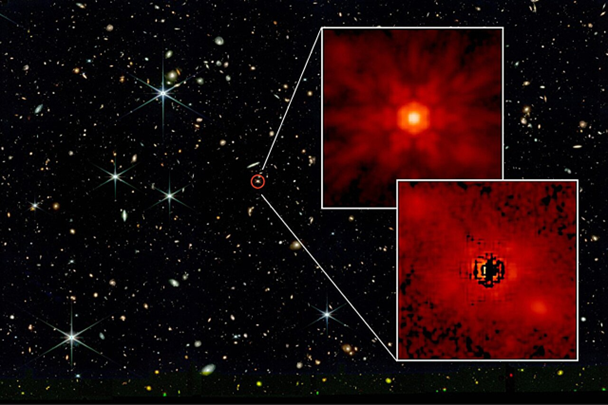
    Why, then, is the James Webb Space Telescope discovering supermassive black holes near the beginning of time itself, eons before they should have been able to form? UCLA astrophysicists have an answer as mysterious as the black holes themselves: Dark matter kept hydrogen from cooling long enough for gravity to condense it into clouds big and dense enough to turn into black holes instead of stars. The finding is published in the journal Physical Review Letters.

    “How surprising it has been to find a supermassive black hole with a billion solar mass when the universe itself is only half a billion years old,” said senior author Alexander Kusenko, a professor of physics and astronomy at UCLA. “It’s like finding a modern car among dinosaur bones and wondering who built that car in the prehistoric times.”

    Some astrophysicists have posited that a large cloud of gas could collapse to make a supermassive black hole directly, bypassing the long history of stellar burning, accretion and mergers. But there’s a catch: Gravity will, indeed, pull a large cloud of gas together, but not into one large cloud. Instead, it gathers sections of the gas into little halos that float near each other but don’t form a black hole.

    The reason is that the gas cloud cools too quickly. As long as the gas is hot, its pressure can counter gravity. However, if the gas cools, pressure decreases, and gravity can prevail in many small regions, which collapse into dense objects before gravity has a chance to pull the entire cloud into a single black hole.

    “How quickly the gas cools has a lot to do with the amount of molecular hydrogen,” said first author and doctoral student Yifan Lu. “Hydrogen atoms bonded together in a molecule dissipate energy when they encounter a loose hydrogen atom. The hydrogen molecules become cooling agents as they absorb thermal energy and radiate it away. Hydrogen clouds in the early universe had too much molecular hydrogen, and the gas cooled quickly and formed small halos instead of large clouds.”

    Lu and postdoctoral researcher Zachary Picker wrote code to calculate all possible processes of this scenario and discovered that additional radiation can heat the gas and dissociate the hydrogen molecules, altering how the gas cools.

    “If you add radiation in a certain energy range, it destroys molecular hydrogen and creates conditions that prevent fragmentation of large clouds,” Lu said.

    But where does the radiation come from?

    Only a very tiny portion of matter in the universe is the kind that makes up our bodies, our planet, the stars and everything else we can observe. The vast majority of matter, detected by its gravitational effects on stellar objects and by the bending of light rays from distant sources, is made of some new particles, which scientists have not yet identified.

    The forms and properties of dark matter are therefore a mystery that remains to be solved. While we don’t know what dark matter is, particle theorists have long speculated that it could contain unstable particles which can decay into photons, the particles of light.

    Including such dark matter in the simulations provided the radiation needed for the gas to remain in a large cloud while it is collapsing into a black hole.

    Dark matter could be made of particles that slowly decay, or it could be made of more than one particle species: some stable and some that decay at early times. In either case, the product of decay could be radiation in the form of photons, which break up molecular hydrogen and prevent hydrogen clouds from cooling too quickly. Even very mild decay of dark matter yielded enough radiation to prevent cooling, forming large clouds and, eventually, supermassive black holes.

    “This could be the solution to why supermassive black holes are found very early on,” Picker said. “If you’re optimistic, you could also read this as positive evidence for one kind of dark matter. If these supermassive black holes formed by the collapse of a gas cloud, maybe the additional radiation required would have to come from the unknown physics of the dark sector.”

    Image:

    A James Webb Telescope image shows the J0148 quasar circled in red. Two insets show, on top, the central black hole, and on bottom, the stellar emission from the host galaxy. Credit: MIT/NASA

    Journal:

    Yifan Lu et al, Direct Collapse Supermassive Black Holes from Relic Particle Decay, Physical Review Letters (2024). DOI: 10.1103/PhysRevLett.133.091001.

    On arXiv: DOI: 10.48550/arxiv.2404.03909

  • Dark matter could be annihilating inside white dwarfs

    Dark matter could be annihilating inside white dwarfs

    by Brian Koberlein

    October 02, 2023

    As the search for dark matter particles continues to yield nothing, astronomers continue to look at ways these elusive particles might be found. One general method is to look for evidence of dark matter particle decay. Although dark matter doesn’t interact strongly with regular matter, some dark matter models predict that dark matter particles can interact with each other, causing them to decay into regular particles.

    There have been several searches for this effect, but there’s no clear evidence yet. But a new study, published on the pre-print server arXiv, suggests looking at white dwarfs could be a good approach.

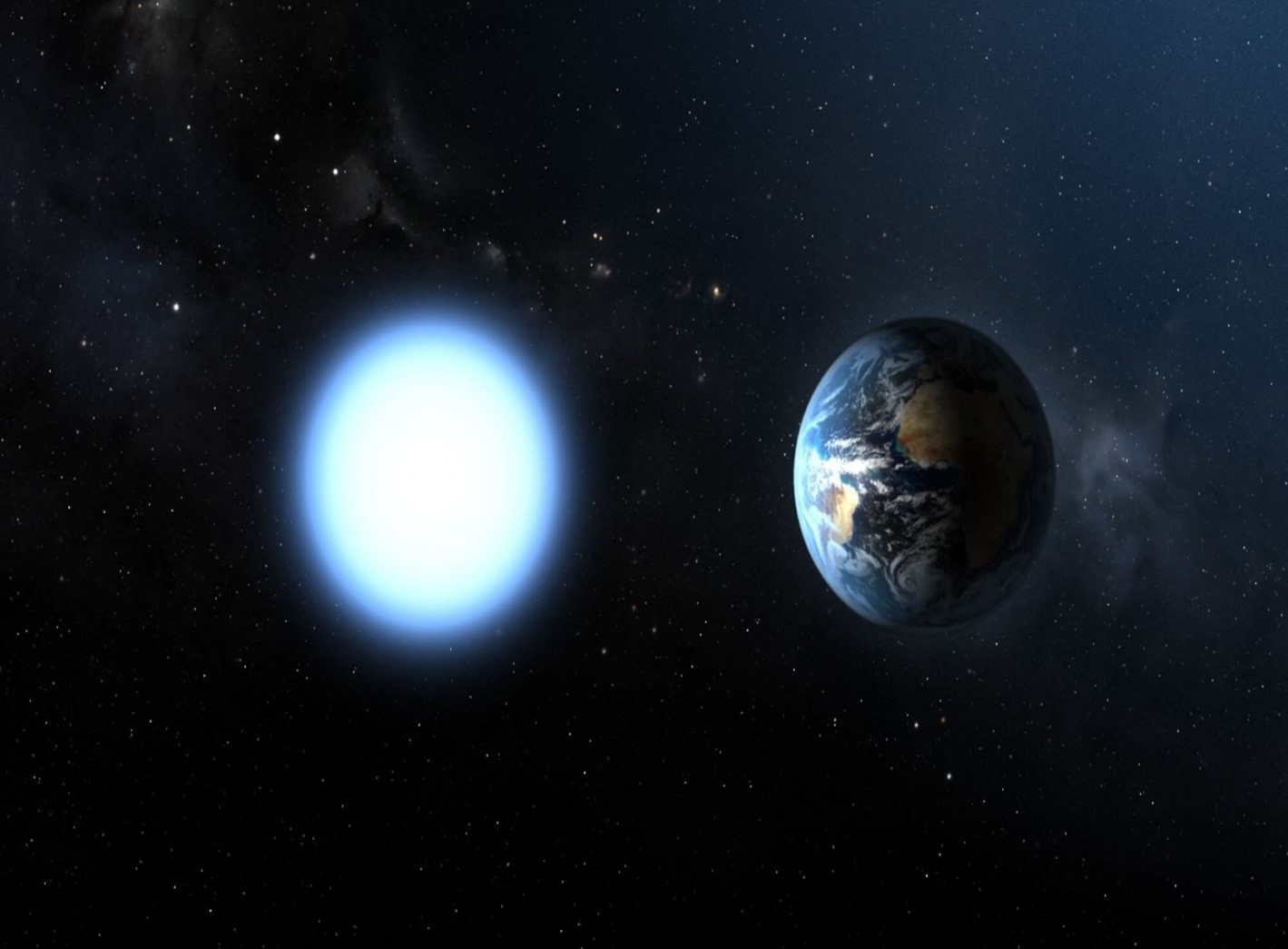
    White dwarfs are the dense remnants of dead stars. They have nearly a sun’s worth of mass compressed into a sphere the size of Earth. White dwarfs are so dense it is the pressure of electrons that keeps them from collapsing. As the authors of this new study point out, white dwarfs have a perfect balance of being dense but not overly tiny like neutron stars. They are also very common throughout the Milky Way, giving astronomers plenty of options to study them.

    For this reason, the authors argue that white dwarfs are perfect sources for dark matter decay. The high density of white dwarfs would tend to attract dark matter particle interactions, and the high surface gravity of white dwarfs would tend to capture dark matter particles over time. The particle decay from dark matter would tend to produce an excess of both heat and gamma rays, and since white dwarf physics is fairly well understood astronomers should be able to distinguish between normal and dark-matter enriched white dwarfs.

    As an example of this, the team considered a simple white dwarf model comprised entirely of carbon-12. They then considered dark matter capture for three particle models, with light, intermediate, and heavy masses. They then calculated the interaction cross-sections between dark matter particles and the nucleons of regular matter in the white dwarf. From this, they determined the observational constraints of dark matter based on current observations.

    There isn’t any evidence of dark matter decay thus far, but the authors suggest that a direct study of individual white dwarf stars could reveal dark matter. White dwarfs near the centre of the Milky Way, or those in nearby globular clusters could be particularly good candidates.

    So nothing yet, but as astronomers continue to search for dark matter, checking out some white dwarfs looking for excess gamma-rays could be a good option.

    Journal:

    Javier F. Acevedo et al, Milky Way White Dwarfs as Sub-GeV to Multi-TeV Dark Matter Detectors, arXiv (2023). DOI: 10.48550/arxiv.2309.10843


    Image:

    The white dwarf Sirius B compared to Earth. Credit: ESA and NASA