Blog

  • Boeing’s Starliner heads home to Earth without Astronauts

    Boeing’s Starliner heads home to Earth without Astronauts

    By Elizabeth Howell

    September 06, 2024


    Boeing’s Starliner capsule will depart the International Space Station without Astronauts on Saturday 07. A livestream of Starliner’s homecoming will begin at 07:45 am Saturday September 07 AEST, featuring the capsule’s undocking at 08:04 am Saturday 07 AEST.

    You can watch it via NASA Television and YouTube: https://youtu.be/_79y0yZs0dc

    Landing, at White Sands Space Harbor in New Mexico, is scheduled about six hours later, at 2:03 pm on Saturday September 07. NASA will livestream that event as well, starting at 12:50pm AEST.

    Starliner’s Crew Flight Test (CFT) to the International Space Station (ISS) — the capsule’s first-ever human spaceflight — lifted off on June 05 and docked with the orbiting complex on June 06, although the first docking attempt was waved off. Starliner experienced helium leaks before launch and, during docking, five of its 28 reaction control system thrusters went offline.

    CFT was originally supposed to last about 10 days. But NASA authorized a mission extension that eventually stretched to about three months, to allow for extensive ground and space testing on Starliner’s propulsion system before senior agency reviews authorizing the spacecraft to land.

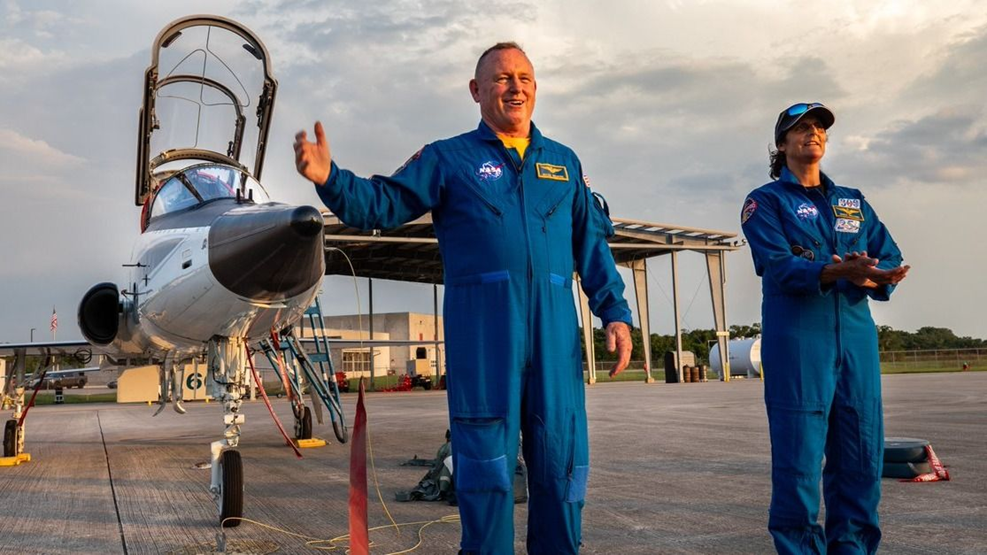
    NASA ultimately decided that sending CFT’s two astronauts, Butch Wilmore and Suni Williams, home on Starliner was too risky. So, the duo will ride home on a SpaceX Crew Dragon in February 2025, while Starliner will return to Earth uncrewed.

    SpaceX and Boeing both received multibillion-dollar-contracts from NASA in 2014 for astronaut flights, to fill the crew-carrying shoes of the space shuttle, which retired in 2011. At that time, it was expected those commercial crewed flights would begin in 2017. But technical and funding delays meant that SpaceX did not fly humans until 2020; Starliner waited four extra years, until CFT.

    NASA, Boeing, Williams, and Wilmore (who are both former U.S. Navy test pilots) have all emphasized the tricky nature of complex developmental projects in aerospace. Specifically, since everyone grapples often with the unknown on a test mission such as CFT, timelines are always subject to change. It is unclear how CFT certification will be affected by Starliner’s latest issues, but NASA and Boeing will be examining the process in the coming months.

    Starliner’s first uncrewed test flight to the ISS in 2019, the same year as SpaceX’s, did not go to plan; the Boeing capsule failed to reach the station due to technical glitches. Rerunning the mission required addressing dozens of issues; it was also delayed due to the COVID pandemic that erupted in early 2020.

    The second uncrewed test flight of Starliner mostly went to plan in 2022, including an ISS docking, although Starliner faced some thruster issues as well. How those are related to the CFT issues are still being investigated, but officials say it appears to be due to different causes. CFT was supposed to launch in 2023, but the mission was delayed after issues with parachute loading and wiring wrapped in flammable tape were discovered.


    CFT’s first launch attempt, on May 6, 2024, was delayed after a valve issue was discovered on Starliner’s rocket ride, a United Launch Alliance Atlas V. Post-scrub, officials found a small helium leak in one of Starliner’s thrusters.

    While not an immediate launch hazard, the leak was investigated for safety reasons, and both NASA and Boeing uncovered a design vulnerability: If enough thrusters went offline, one of the re-entry modes would be affected. NASA certified a new entry mode after performing ground simulations with the CFT crew.

    A second attempt at launch on June 01 was scrubbed due to a ground equipment issue, and then Starliner flew to space on the third try on June 05.

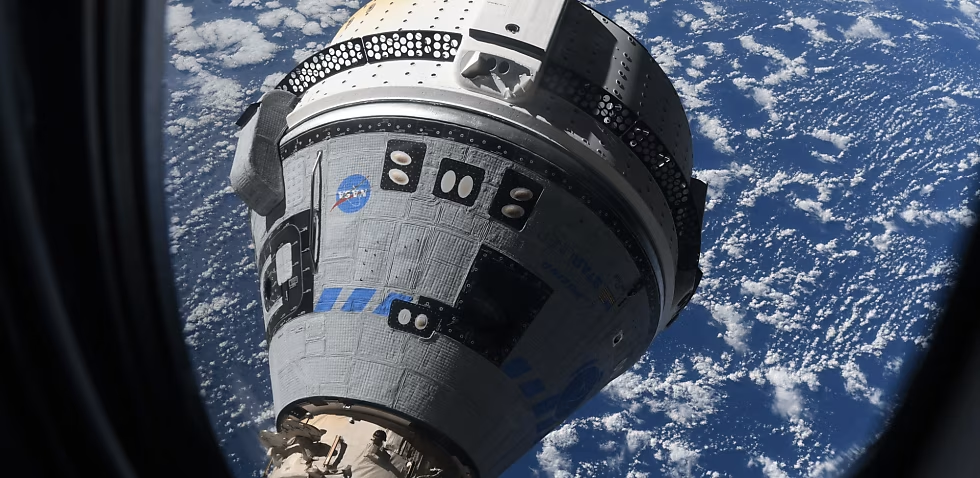
    Image #1:  Boeing’s Starliner capsule approaches the International Space Station for docking on June 6, 2024. (Image credit: NASA)
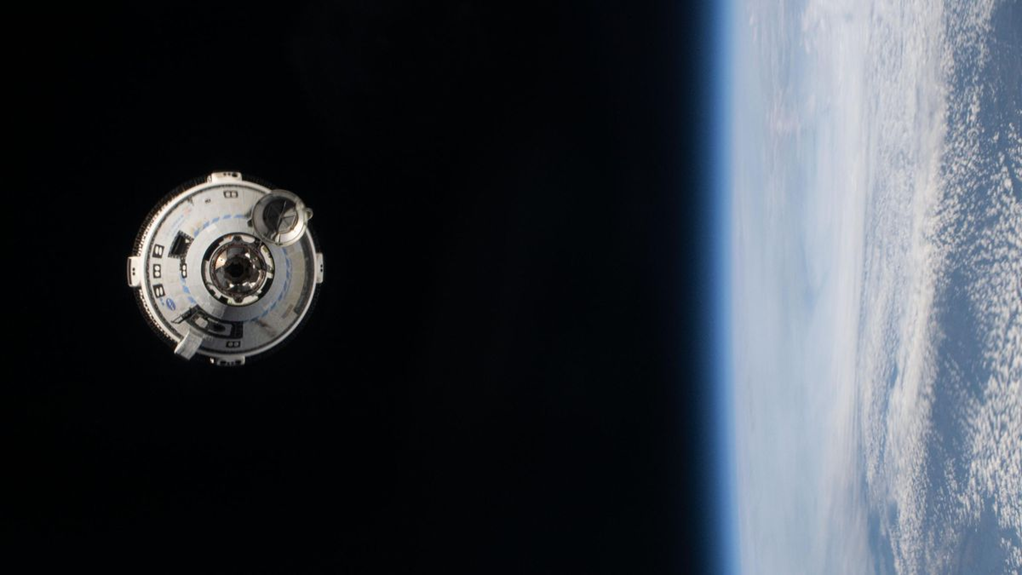
    Image #2: Boeing’s Starliner capsule is seen docked to the International Space Station in this zoomed-in view of an image captured by Maxar Technologies’ WorldView-3 satellite on June 7, 2024. (Image credit: Maxar Technologies).
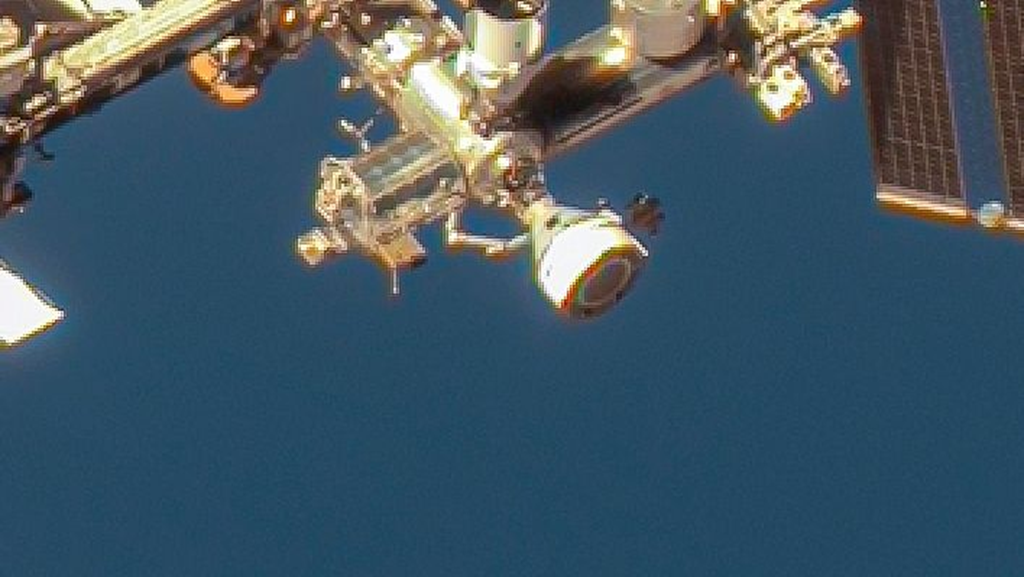
    Image #3: Crew Flight Test astronauts Barry Wilmore (left) and Suni Williams, both of NASA, arrive at the agency’s Kennedy Space Centre on May 28, 2024, ahead of the launch of their mission aboard Boeing Starliner. (Image credit: NASA/Cory S Huston)
  • Artemis Returning Humans to the Moon and Beyond.

    Artemis Returning Humans to the Moon and Beyond.

    The Artemis program is a pivotal initiative by NASA which represents a significant leap in human space exploration. Named for Artemis who is the twin sister of Apollo and goddess of the Moon in Greek mythology, the mission will build on the legacy of the Apollo missions by returning humans to the Moon and lay the groundwork for future exploration of Mars and beyond.

    Here’s a comprehensive look at the Artemis missions and their goals.


    Objectives of Artemis Missions

    1. Scientific Discovery: The Artemis missions are designed to explore and conduct scientific research on the Moon. This includes studying the lunar surface, analysing samples, and understanding the Moon’s geology and history. The goal is to gather information that can help us understand the early solar system and the processes that shaped it.

    2. Technology Advancement: Artemis aims to push the boundaries of space technology. This involves developing new spacecraft, landing systems, and habitats that will not only support lunar exploration but also future missions to Mars. Key technologies include the Space Launch System (SLS) rocket, the Orion spacecraft, and the Lunar Gateway.

    3. Sustainable Presence: One of the primary goals of Artemis is to establish a long-term human presence on the Moon. This involves creating sustainable habitats and infrastructure that will allow for extended stays on the lunar surface. The plan includes building the Lunar Gateway, a space station in lunar orbit, and establishing lunar bases that can support ongoing exploration and research.

    4. Preparation for Mars: The experience gained from living and working on the Moon will be crucial for planning human missions to Mars. The Moon serves as a testing ground for technologies and strategies that will be used for longer-duration missions beyond Earth, including Mars.

    5. Inclusivity: Artemis is committed to diversity and inclusion. NASA plans to land the first woman and the first person of colour on the Moon, reflecting its broader goals of expanding representation in space exploration. This inclusive approach is expected to inspire a new generation of scientists, engineers, and explorers.

    Key Components of the Artemis Program

    • Artemis I: This uncrewed mission, launched in November 2021, tested the Space Launch System and the Orion spacecraft. It aimed to validate the systems and perform critical mission profile tests in preparation for crewed missions.

    • Artemis II: Scheduled to launch no earlier than September 2025, it will be the first crewed mission of the Artemis program. Artemis II will carry 4 astronauts -including the first woman and the first person of colour – around the Moon but will not land. This mission will demonstrate the capabilities of the Orion spacecraft with a human crew on board.

    • Artemis III: Planned to be the mission that returns humans to the lunar surface, including landing at the Moon’s South Pole. This mission aims to establish a new era of exploration and scientific research.

    • Lunar Gateway: A planned space station in lunar orbit that will serve as a staging point for lunar missions and as a base for deep space exploration. It will be a collaborative effort with international partners and commercial entities.

    • Lunar Surface Exploration: The Artemis program will utilize various landers and rovers to explore the lunar surface. This includes the development of the Human Landing System (HLS), which will transport astronauts from lunar orbit to the surface.

    Collaboration and Partnerships

    • Commercial Partners: NASA is working with private companies to develop new technologies and systems for lunar exploration. This collaboration is aimed at leveraging commercial innovation and investment to advance space exploration.

    • International Partners: The Artemis program involves collaboration with international space agencies, including the European Space Agency (ESA), the Canadian Space Agency (CSA), and others. These partnerships will contribute to various aspects of the program, including scientific research and the Lunar Gateway.

    Impact and Legacy

    • Inspiration and Education: The Artemis missions are designed to inspire global interest in space exploration and STEM (Science, Technology, Engineering, and Mathematics) fields. By showcasing human achievement and inclusivity, the program aims to motivate future generations.

    • Economic and Scientific Benefits: The technologies and knowledge gained from the Artemis program will have wide-ranging applications beyond space exploration. This includes advancements in materials science, robotics, and remote sensing that can benefit various industries on Earth.

    Through its ambitious goals and collaborative approach, Artemis aims to extend humanity’s presence into the solar system and inspire a new era of discovery and innovation.

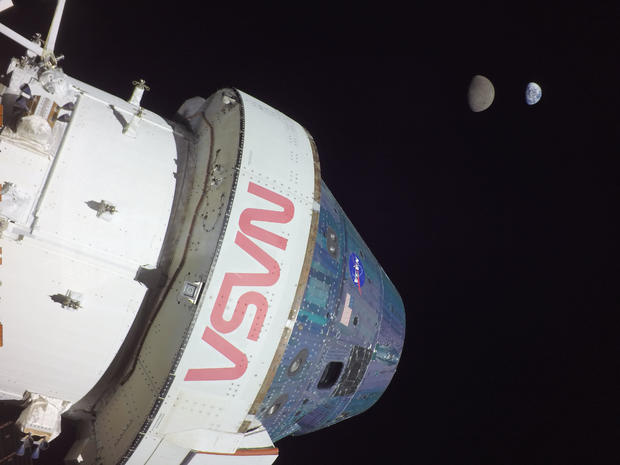
    Image Credit: On November 28, 2022, flight day 13, Orion reached its maximum distance from Earth during the Artemis I mission: 268,563 miles away from our home planet. 

    With that milestone, Orion had traveled farther than any other spacecraft built for humans, although there was no crew on board this flight. NASA.

  • What is the Messier Objects Catalog?

    What is the Messier Objects Catalog?

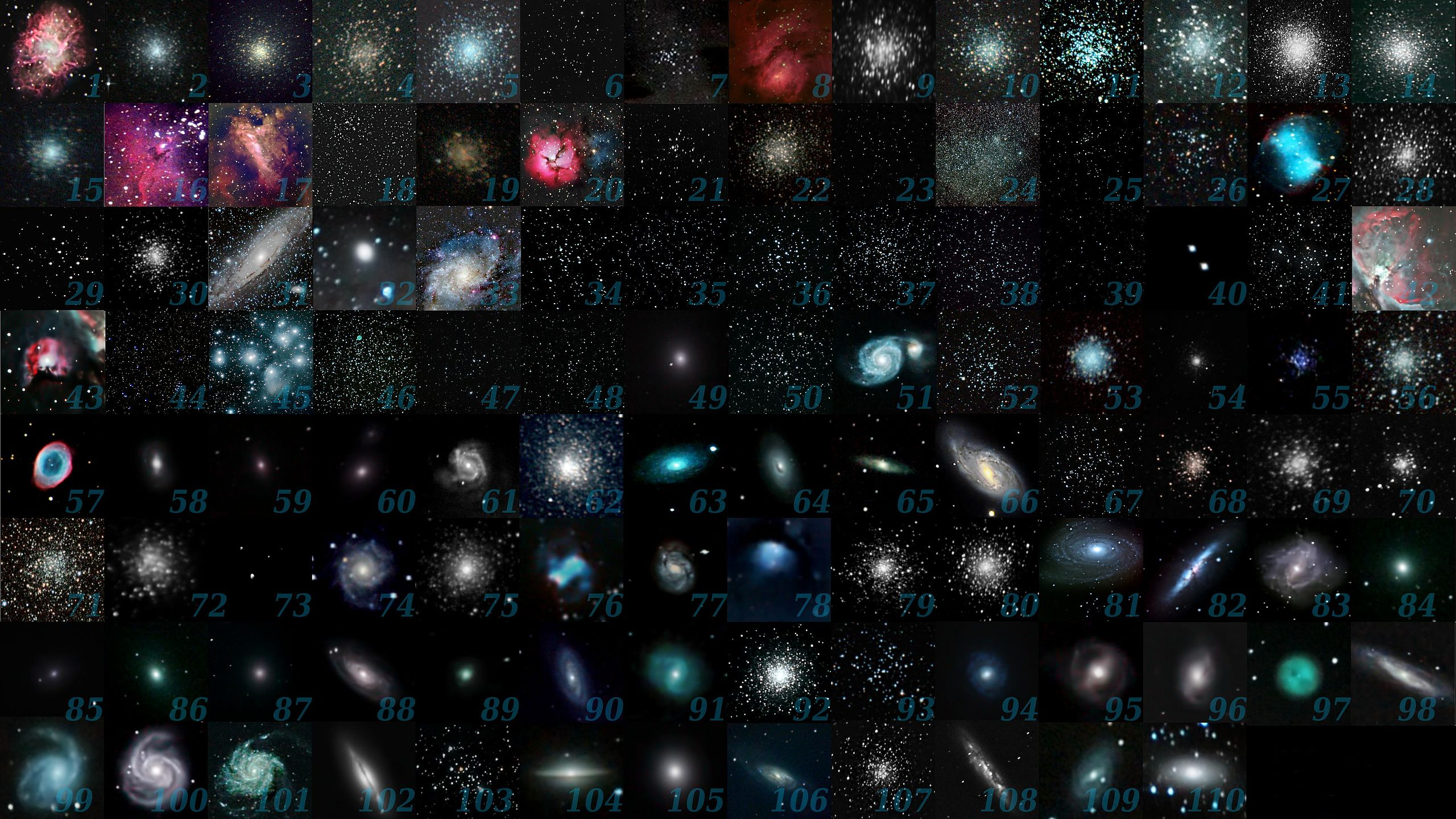
    Messier objects are a set of 110 astronomical objects cataloged by the French astronomer Charles Messier in the 18th century. Messier, who was primarily searching for comets, created this list to avoid confusing these static, diffuse objects with comets in the night sky.

    These objects include various types of deep-sky objects, such as galaxies, star clusters, and nebulae.

    Categories of Messier Objects:

    1. Galaxies: Large systems of stars, gas, and dust bound together by gravity. Examples include:

      • M31: The Andromeda Galaxy, the closest spiral galaxy to the Milky Way.

      • M87: A giant elliptical galaxy in the Virgo Cluster, known for housing a supermassive black hole.

    2. Star Clusters:

      • Globular Clusters: Dense, spherical collections of stars, typically old. Example: M13 (the Hercules Globular Cluster).

      • Open Clusters: Looser groups of younger stars. Example: M45, known as the Pleiades or “Seven Sisters.”

    3. Nebulae: Clouds of gas and dust where stars are born or remnants of stellar explosions. Examples:

      • M42: The Orion Nebula, a bright emission nebula and star-forming region.

      • M1: The Crab Nebula, the remnant of a supernova explosion.

    4. Planetary Nebulae: Shells of gas ejected by dying stars. Example:

      • M57: The Ring Nebula, a famous planetary nebula in the constellation Lyra.

    Significance:

    Messier’s catalog remains popular with astronomers and stargazers because many of these objects are bright and can be observed with small telescopes or even binoculars.

    The list includes some of the most beautiful and interesting objects in the sky, making it a favorite for amateur astronomers who attempt the Messier Marathon — an event where one tries to observe all 110 objects in a single night.

    Though Messier originally compiled the list to avoid distractions from his comet-hunting, it has become an important and widely used reference in observational astronomy.

    Messier Marathon:

    Since all the Messier objects are fairly bright, finding Messier objects is an ideal project for the beginning stargazer.

    Every year stargazers around the world take part in the Messier marathon. Participants use telescopes or binoculars and attempt to see as many Messier objects as possible throughout 12 continuous hours of darkness. In order to see them all, observations start at sunset and end at sunrise the following morning.

    A few Messier objects are hard to catch because they are only visible very close to the horizon.

    Image: All 110 Messier objects are shown here with their respective M numbers. Image via Wikipedia.

  • What is the Andromeda Constellation?

    What is the Andromeda Constellation?

    The Andromeda constellation consists of 16 stars visible in the northern sky. Named by ancient Greeks after the mythological Andromeda princess, the constellation contains the Andromeda Galaxy, the nearest full-fledged galaxy to our own Milky Way.

    Andromeda is one of 48 constellations described by the Ancient Greek astronomer Claudius Ptolemy in 150 AD in his famous work “The Almagest.”

    Ptolemy’s list was the first official description of constellations, although these stellar groupings had been known to ancient Greeks, Babylonians, Egyptians and other cultures, who frequently saw them as embodiments of their mythical figures.

    Andromeda is one of the largest of Ptolemy’s constellations.

    Another 40 constellations were added to Ptolemy’s tally over the centuries. Many of these additions reside in the southern sky, which was not visible to Ptolemy, who spent most of his life in Egypt.

    Today, Andromeda is the 19th largest of the 88 constellations recognized by the International Astronomical Union.

    How to find the Andromeda Constellation

    Andromeda is part of a big prominent group of constellations named after mythological figures related to the Perseus and Andromeda myth. The pronounced W-shaped Cassiopeia constellation points directly at Andromeda.

    With a bit of imagination, you can see the constellation as a sprawled figure with its arms extended. The figure’s feet point in the direction of the Perseus constellation, right next to Cassiopeia. The figure’s “head” connects the constellation to the neighboring square of Pegasus.

    The Andromeda Myth

    In ancient Greek mythology, Andromeda was a beautiful daughter of the king Cepheus and queen Cassiopeia. When her mother bragged that Andromeda was better-looking than the famously beautiful Nereid sea nymphs, the sea god Poseidon sent his pet sea monster Cetus to destroy Cepheus’ kingdom.

    It was said, however, that sacrificing Andromeda could save the country and its people. So, the loving parents had their daughter chained to a rock by the sea, so that the sea monster could get her easily. Fortunately, the charming prince Perseus flew past on his winged horse Pegasus and fell in love with Andromeda’s beauty. He killed Cetus and married Andromeda. The two lived happily ever after.

    Stars of the Andromeda Constellation

    The Andromeda Constellation contains nine main named stars, according to Constellation Guide. Three of these stars are brighter than magnitude 3.00, which puts them into the top 100 brightest stars in the sky.

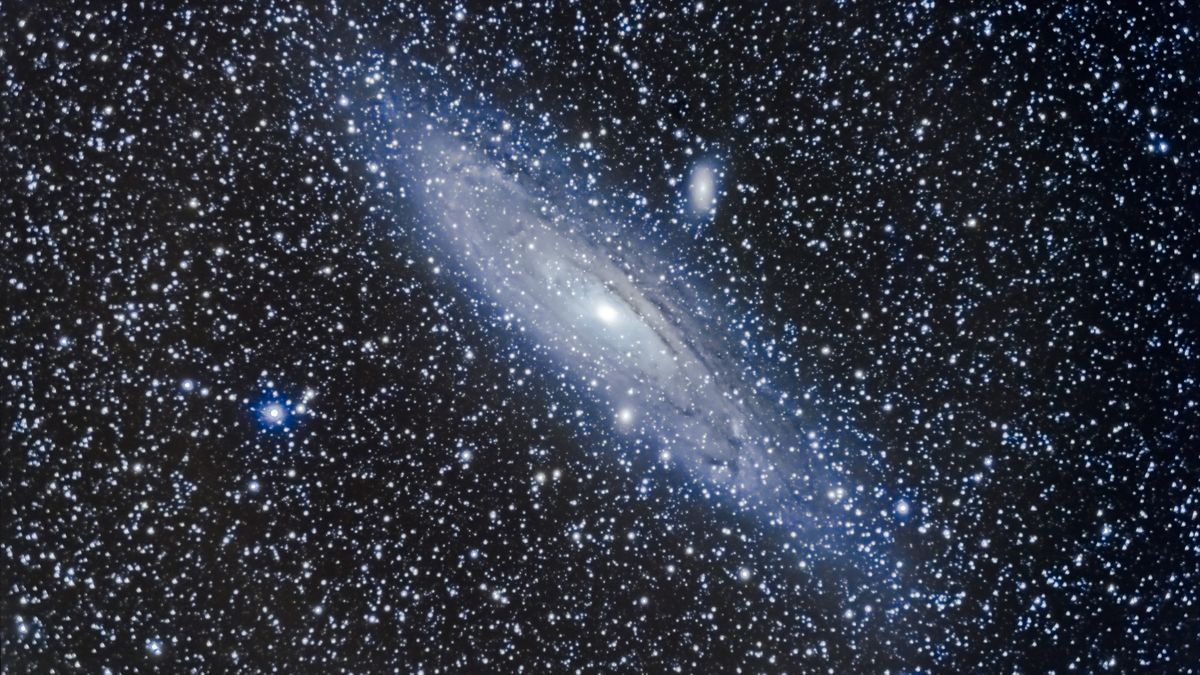
    In addition to the visible stars, one can find many intriguing objects within the Andromeda constellation that are only visible with telescopes or binoculars. The most famous one of these is the Andromeda Galaxy, the closest full-fledged galaxy to the Milky Way. Andromeda is currently about 2.5 million light-years from the Milky Way, and the two galaxies are on a collision course; a few billion years from now, they will smash into each other.

    • Alpheratz (Alpha Andromeda)

      • The brightest star in the Andromeda Constellation is Alpheratz, also called Alpha Andromedae. Alpheratz is essentially Andromeda’s head, but it’s also part of the neighbouring square of Pegasus.

      • Astronomers know today that Alpheratz is located 97 light-years from Earth and is, in fact, a binary star, a system of two stars orbiting a common centre of mass. The bigger of those two stars has a unique chemical composition and is the brightest known star with high levels of mercury and manganese. A so-called subgiant, this star is 200 times brighter than the sun while being less than four times as massive.

      • The smaller star of the Alpheratz binary system is about 10 times as luminous as the sun and orbits the larger star every 97 days, according to the Constellation Guide.

    • Mirach

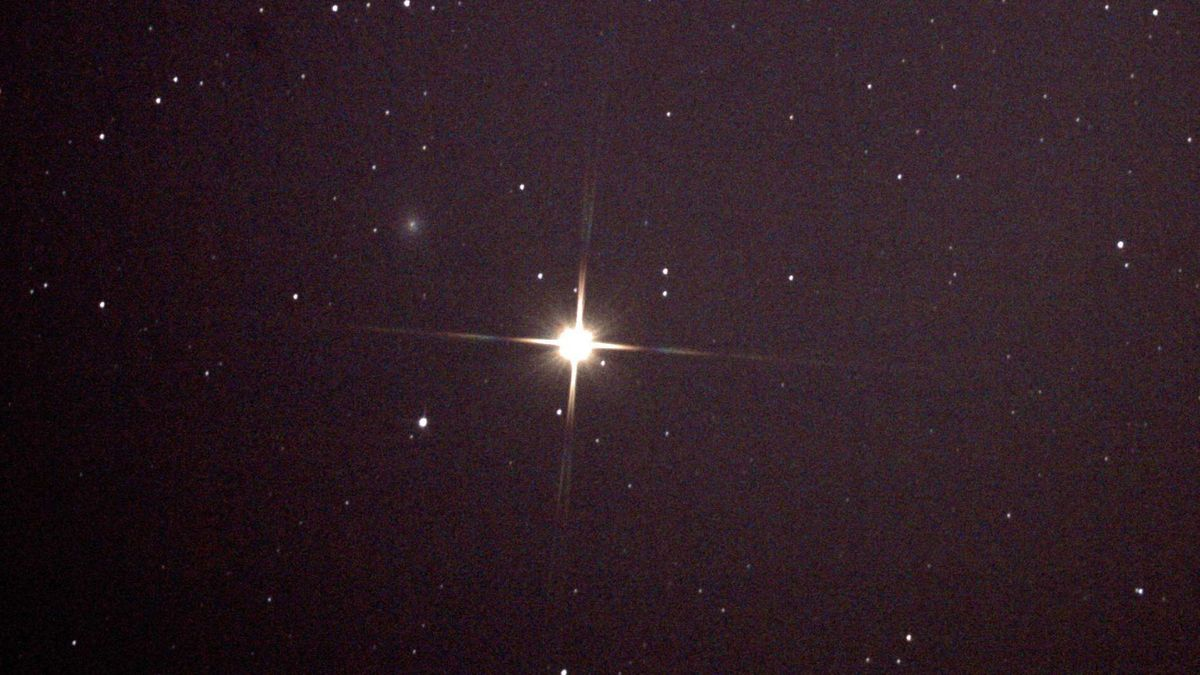
      • Mirach, also known as Beta Andromedae, is nearly as bright as Alpheratz and located about 200 light-years away from Earth. It is a giant star 1,900 times as bright as the sun, according to the Constellation Guide, and three to four times as massive.

      • Within the Andromeda Constellation, Mirach forms the chained figure’s left hip. Close to Mirach, astronomers can observe two distant dwarf galaxies located some 10 million light-years from Earth.

    • Almach

      • Almach, or Gamma Andramodae, is Andromeda’s foot. It is a multi-star system featuring a central giant orbited by a pair of white dwarfs. The third brightest star of the Andromeda Constellation, Almach is about 350 light-years away from Earth. The star’s central giant is 2,000 times more luminous than the sun.

    • Other stars in the Andromeda Constellation:

      • Other stars in the Andromeda Constellation are Delta Andromedae, Iota Andromedae, Upsilon Andromedae, Adhil (or Xi Andromedae) and Mu Andromedae.

    Andromeda Galaxy

    The Andromeda Galaxy, the Milky Way’s nearest major galactic neighbour, can be found within the Andromeda Constellation. The galaxy, located some 2.5 million light-years away from Earth, is barely visible to the naked eye but can be found with binoculars.

    The Andromeda Galaxy, also known as M31, can be seen as a misty patch on the edge of the Andromeda Constellation to the right of the sprawled figure’s right hip, which is right next to the bright star Mirach. The right V shape of the Cassiopeia constellation points vaguely in the direction of the galaxy.

    Andromedids Meteor Shower

    The constellation also appeared to be the source of the Andromedids Meteor shower that used to occur every few years in November. But the stars of the constellation, obviously, had nothing to do with these shooting stars. The actual source of the space rocks was a trail of debris left behind by Comet Biela, and which Earth used to intersect every November. However, in recent decades, the once mesmerizing display nearly ceased, as our planet’s orbit moved out of the path of the cometary debris.

    References:

    1. IAU, Constellations. https://www.iau.org/public/themes/constellations/

    2. Swinburne University of Technology, Constellation. https://astronomy.swin.edu.au/cosmos/c/Constellation

    3. Britannica, Andromeda Constellation. https://www.britannica.com/place/Andromeda-constellation

    4. University of St. Andrews, Claudius Ptolemy.  https://mathshistory.st-andrews.ac.uk/Biographies/Ptolemy/

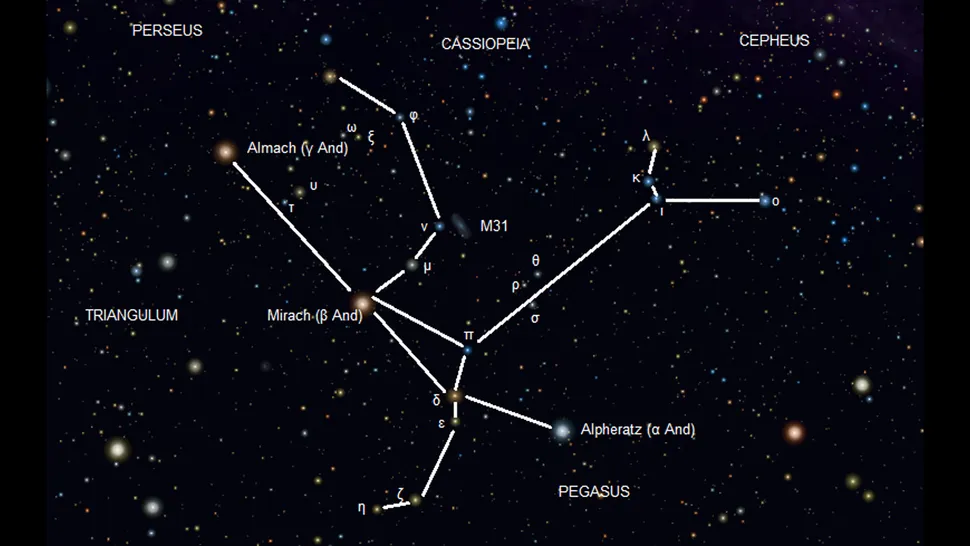
    Image #1: The Andromeda constellation with all Bayer-designated stars marked and the IAU figure drawn in. (Image credit: Wikimedia Commons/Keilana/Roberto Mura)

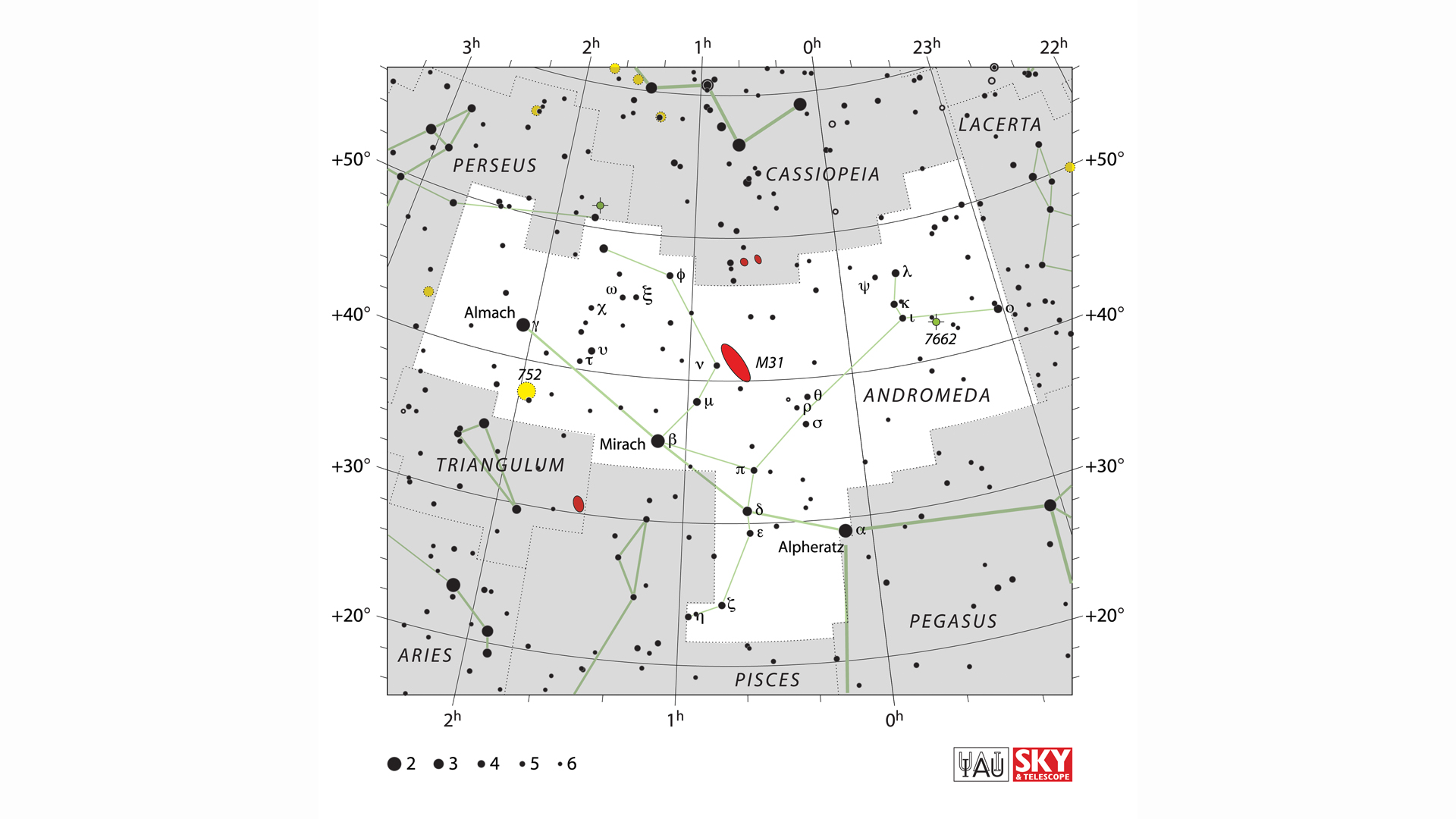
    Image #2: The position of the Andromeda constellation among the other constellations named after characters related to the Perseus myth. (Image credit: IAU)

    Image #3: Mirach is one of the brightest stars of the Andromeda constellation. (Image credit: Stub Mandrel)

    Image #4: The Andromeda Galaxy can be found on the edges of the Andromeda constellation. (Image credit: Alan Dyer /VW PICS/Universal Images Group via Getty Images)

  • Starliner’s Troubled Thrusters to be Test-Fired on its Return to Earth

    Starliner’s Troubled Thrusters to be Test-Fired on its Return to Earth

    NASA and Boeing are planning to test-fire the troubled thrusters of the CST-100 Starliner spacecraft before it returns to Earth.

    The Starliner, which has been docked at the International Space Station (ISS) since June 2023, has faced issues with its reaction control system (RCS) thrusters, including some that malfunctioned during its approach to the ISS.

    Ground tests have identified potential causes, such as higher temperatures causing oxidizer to vaporize and reduce thrust. Engineers will conduct a series of thruster tests while the spacecraft remains docked, excluding one malfunctioning thruster.

    The space agency said on Wednesday September 04, the tests would be short pulses lasting just 0.1 seconds and could involve some of the aft thrusters that experienced problems on the journey to the International Space Station (ISS).

    Steve Stich, NASA commercial crew program manager, explained that the thrusters’ test-firings would help the teams “continue to learn.” He continued to state that:

    “We really want to see how the thrusters perform and what the thrust levels exactly are after we undock and fire them for a little bit. We have been entirely focused this summer on understanding what is happening on orbit, trying to decide if we could bring the crew back or not. What we need to do now is lay out the overall plan, which we have not had time to do.”

    NASA also revealed that Starliner is now due to have a faster departure – or “breakout burn” – from the ISS because it is not carrying astronauts.

    “Without the crew on board, able to take manual control if needed, there’s just a lot less variables that we need to account for when we do the breakout burn and allows us to get the vehicle on a trajectory home that much sooner,” Stich said.

    Over the last two months, teams on Earth have been trying to duplicate the loss of performance in the thrusters, with researchers concluding that a Teflon seal had heated and expanded, which constrained the flow of oxidiser.

    However, NASA finally concluded there was still “too much uncertainty” in predicting how the thruster would perform after undocking, and instead opted to send the spacecraft back without crew.

    In a boost to Boeing though, Bill Nelson, NASA’s administrator, attempted to downplay criticism of the aerospace giant by arguing spaceflight is risky “even at its routine” and a test flight “by nature is neither safe nor routine”.

    “So, the decision to keep Butch and Suni aboard the ISS and bring the Boeing Starliner home uncrewed is a result of a commitment to safety. Safety is our North Star of what we are trying to do in a very hostile environment, in which if you make a mistake, it’s very unforgiving.”

    The current Starliner mission is the final test flight before NASA certifies the vehicle for regular operational missions.

    Source: NASA / Boeing

    Image: NASA / Boeing Starliner Spacecraft docked at the International Space Station.

  • SpaceX’s Polaris Dawn Mission will perform the First Commerical Spacewalk

    SpaceX’s Polaris Dawn Mission will perform the First Commerical Spacewalk

    Overview:

    SpaceX’s Polaris Dawn, the first of up to three spaceflights in the Polaris Program, endeavours to rapidly advance human spaceflight capabilities by demonstrating innovative technologies and conducting extensive scientific research to expand our knowledge of humans adapting, living, and working in space.

    The mission represents a significant leap in commercial space exploration, utilizing SpaceX’s Falcon 9 and Dragon spacecraft to their fullest potential. This mission is set to reach an altitude of approximately 700 kilometres, higher than any previous Dragon mission, and aims to achieve the highest Earth orbit ever flown. The crew will navigate through portions of the Van Allen radiation belt, conducting critical research to better understand the effects of space radiation on human health.

    A highlight of the mission will be the first-ever commercial extravehicular activity (EVA), using SpaceX-designed EVA spacesuits. These suits are an upgrade from the current intravehicular (IVA) suits and represent a crucial step towards developing scalable spacesuits necessary for future missions to the Moon, Mars, and beyond. The mission’s success in this area could pave the way for thousands of such suits in the future, supporting long-duration missions and the establishment of a human presence on other celestial bodies.

    In addition to the EVA, the Polaris Dawn crew will be the first to test Starlink’s laser-based communications in space. This experiment will provide valuable data for the development of future space communication systems, which will be essential for missions beyond Earth’s orbit.

    Thirty-six experiments from 31 partner institutions from across the world have come together to produce one of the most robust and diverse science and research portfolios ever slated for a spaceflight mission.

    The scientific research conducted during the mission will focus on advancing our understanding of human health in space and improving health on Earth.

    Key areas of study include:

    • Venous Gas Emboli (VGE): Using ultrasound to monitor and quantify VGE, contributing to the understanding of decompression sickness.

    • Space Radiation: Gathering data on the radiation environment to assess its impact on human biological systems.

    • Biological Samples: Contributing to a long-term Biobank for multi-omics analyses.

    • Spaceflight Associated Neuro-Ocular Syndrome (SANS): Researching this critical risk to human health in long-duration spaceflights.

    The mission involves collaboration with leading institutions, including the Translational Research Institute for Space Health (TRISH), BioServe Space Technologies, and several universities and research laboratories. The combined expertise of the four crew members will drive the mission forward, furthering our knowledge and capabilities in human space exploration.

    The Crew:

    The Polaris Dawn mission is under the command of billionaire Jared Isaacman, making his second trip to space, after being the commander of the first all-civilian Inspiration4 mission to orbit Earth in 2021 – which was also organized and primarily funded by him in partnership with SpaceX.

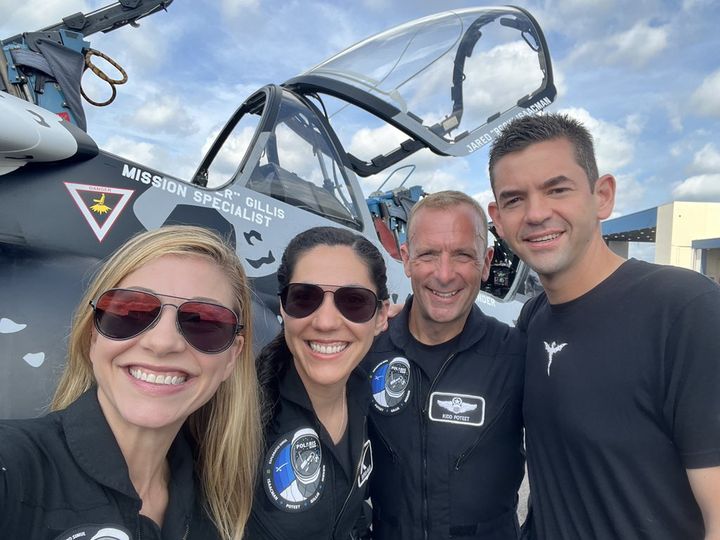
    He will be joined on the all-private mission by pilot retired United States Air Force (USAF) Lieutenant Colonel Scott “Kidd” Poteet, and SpaceX’s Lead Space Operations Engineers Sarah Gillis (mission specialist) and Anna Menon (mission specialist and medical officer) – all who will be experiencing their first human spaceflight.

    This will also be the first time two SpaceX employees will be part of a human spaceflight crew, providing valuable insight to future missions on the road to making life multiplanetary.

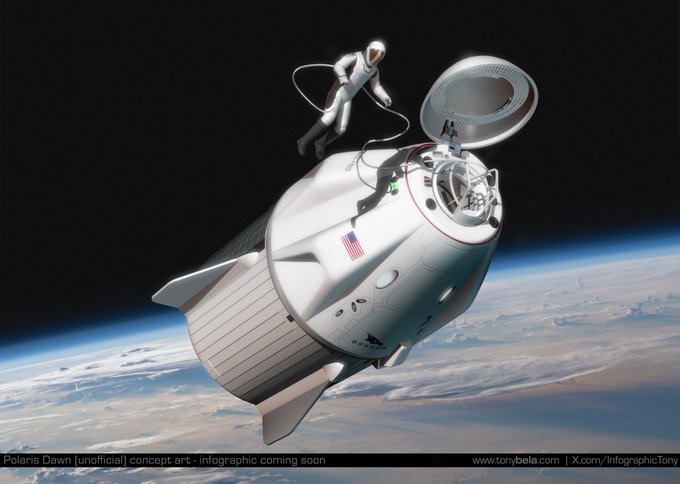
    Crew members Jared Isaacman, and Sarah Gillis, will venture out of their Crew Dragon capsule in Earth’s orbit for a tethered spacewalk, marking the first major test of SpaceX’s new spacesuits. This event will mark the first-ever civilian spacewalk, a risky endeavour previously undertaken only by government astronauts.

    The Crew Dragon capsule lacks an airlock and will completely depressurize for the spacewalk, requiring all four crew members to rely on their suits for survival.

    Launch:

    The Polaris Dawn mission, SpaceX’s ambitious private space venture, is experiencing a series of delays, but the crew is managing them with patience and focus.

    Initially scheduled for August 27, the launch was scrubbed due to a helium leak on the launch pad. Then as they geared up for a retry early Wednesday August 28, SpaceX announced the weather conditions in the forecast for five days ahead of the potential landing sites on either coast of Florida were not good enough to launch. They took both the Wednesday and Thursday opportunities off the board.

    Failure of SpaceX’s Dragon 9 first-stage rocket landing on August 28 resulted in the Federal Aviation Administration (FAA) launching an investigation and grounding SpaceX’s launches for three days. Additionally, SpaceX posted on Friday August 30, that weather was still an issue, so the chances for any weekend launch opportunities were already unlikely.

    The company posted on X:

    “Latest forecasts continue to show unfavourable weather conditions in the areas along

    Florida’s coast where Dragon would splash down upon returning from space. Once

    teams identify the next best opportunity for launch and return of the Polaris Dawn

    mission, we will provide an update. Falcon 9 and Dragon remain healthy and vertical

    on the pad at 39A.”

    The mission’s unique requirements, including splashdown weather conditions and limited life support supplies, make precise timing critical. Unlike other SpaceX missions that dock with the International Space Station (ISS), Polaris Dawn requires a careful balance of launch and return conditions since the crew will be entirely dependent on the provisions they carry.

    Despite the setbacks, the crew, led by commander and financier Jared Isaacman, remains optimistic. They are set to attempt the first-ever private spacewalk and reach the highest human altitude since the Apollo missions.

    The entire team, including SpaceX CEO Elon Musk, emphasizes the importance of safety and thorough preparation, with the crew staying in pre-flight quarantine while awaiting favourable conditions for launch.

    Isaacman posted to X this week:

    “The crew remains in quarantine, staying productive, keeping fit, and ready to launch

    within approximately 30 hours of receiving a favourable forecast.”

    As of 05 September 2024, based on FAA NOTAM (Notice to Airmen) filings, the Polaris Dawn mission is scheduled to launch no earlier than (NET) 09 September 2024.

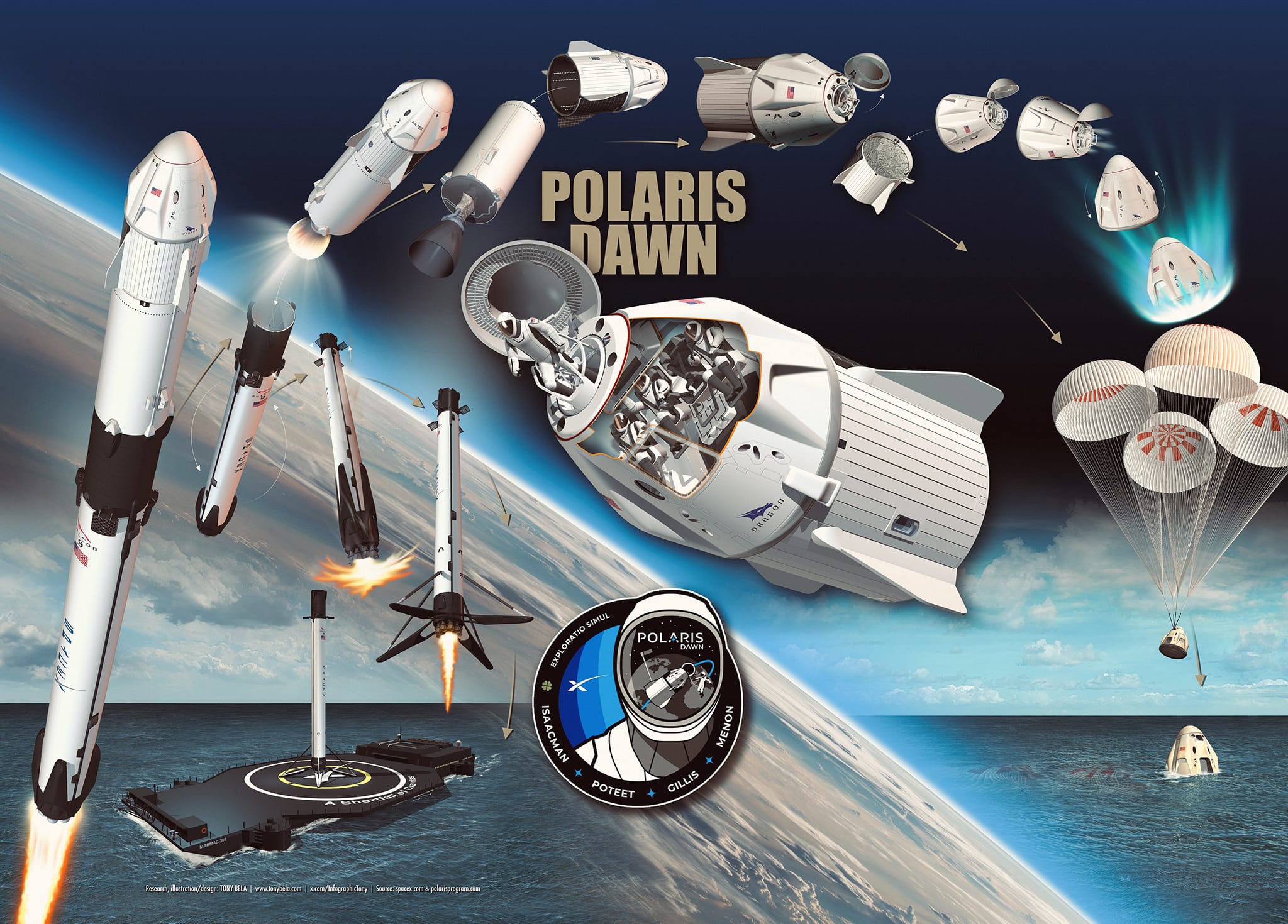
    Image #1: Polaris Dawn Infographic

    Image #2: Artist’s impression of Polaris Dawn’s First Commercial Spacewalk. Credit: SpaceX

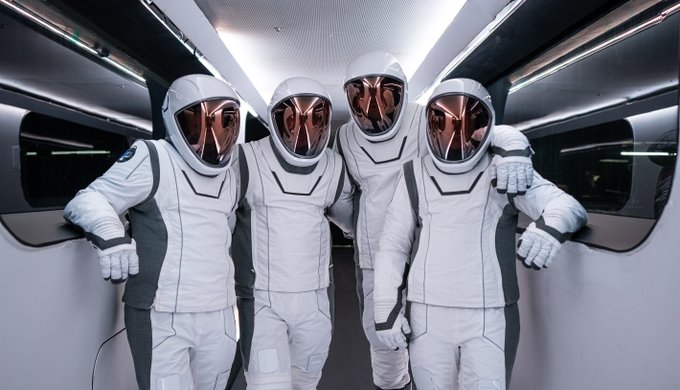
    Image #3: The four astronauts of SpaceX’s Polaris Dawn private mission pose in black and white spacesuits on the gantry leading to the Dragon capsule. Credit: SpaceX

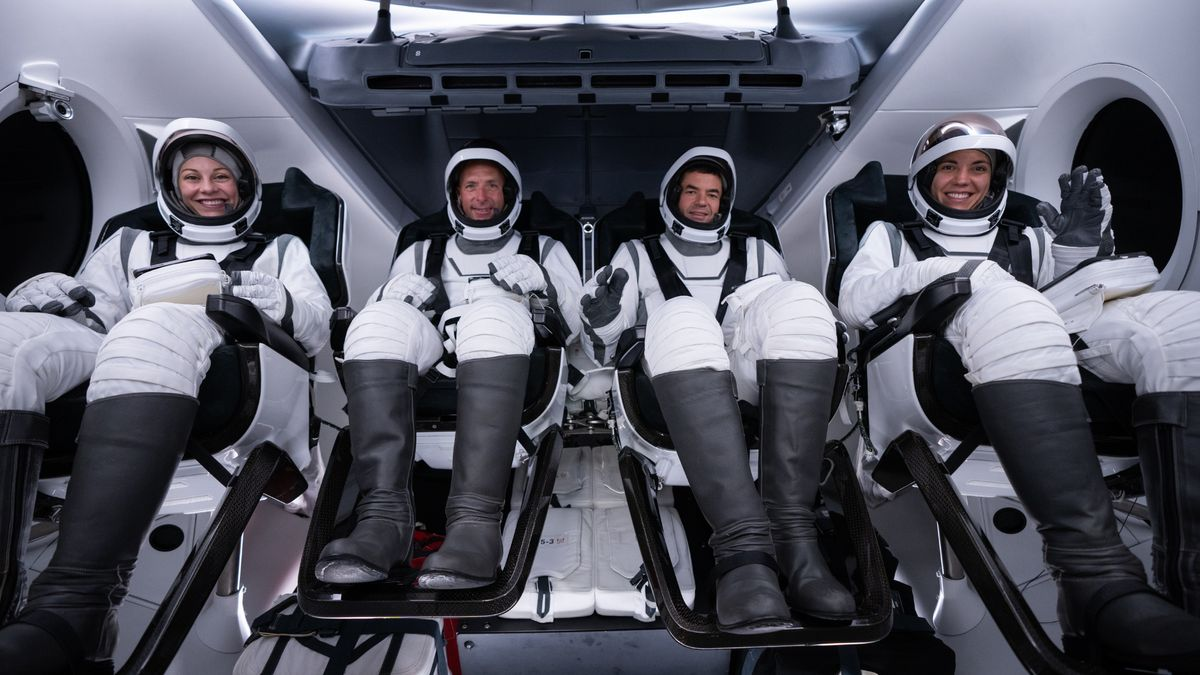
    Image #4: The crew of the Polaris Dawn mission, from left: Anna Menon, Sarah Gillis, Scott “Kidd” Poteet and Jared Isaacman. Credit: Anna Menon, Polaris Program.

    Image #5: The four astronauts of SpaceX’s Polaris Dawn private mission pose in black and white spacesuits inside their Dragon capsule. Credit: SpaceX

  • Space Documentaries and Videos

    How SpaceX & NASA Plan to Establish the First Moon Base!


    ·       May 27, 2023


    SpaceX Reveals NEW Space Station – The Haven 1!


    ·       May 28, 2023


    The Mysterious Journey of Apollo 10’s Lunar Module

    ·       May 26, 2023


    The Mysterious 30 Year Journey of Apollo 12


    ·       January 25, 2023


    Betelgeuse Update: Something Weird Is Happening To The Star


    ·       May 26, 2023


  • RECOLOURING the UNIVERSE

    RECOLOURING the UNIVERSE

    Pencil Code: Colour, Astronomy and Coding

    Using data from NASA’s Chandra X-ray Observatory and other satellites on exploded stars, star-forming regions, and black holes, you’ll learn basic coding. By following the video tutorials below, you will see just how integral coding is in the pursuit of learning about our Universe. It’s an example of the exciting ways that computer science is both part of routine tasks in our everyday lives and part of the exciting quest to explore the cosmos.

    Launch the coding activity now or start with the resources below for background information, facilitator guides, video tutorials and student examples.

    Launch the Coding Activities

    Grades 4-12 students with no prior coding experience can learn how to use computers to create images and understand astronomical data. Participants learn basic coding starting with familiar objects and simple concepts such as shape and colour, graduating to astronomical objects. Following a scaffolded set of activities, and working with data from NASA orbiting telescopes on sources from exploded stars to star-forming regions, to galaxies, to black holes, participants can experience real world application of science, technology and even art.

    Note: This activity can take from 40-75 minutes, depending on the total number of students, the length of time allotted per step, etc.

  • Japan launches spy satellite on penultimate mission of H-2A rocket

    Japan launches spy satellite on penultimate mission of H-2A rocket

    by Mike Wall

    September 26, 2024

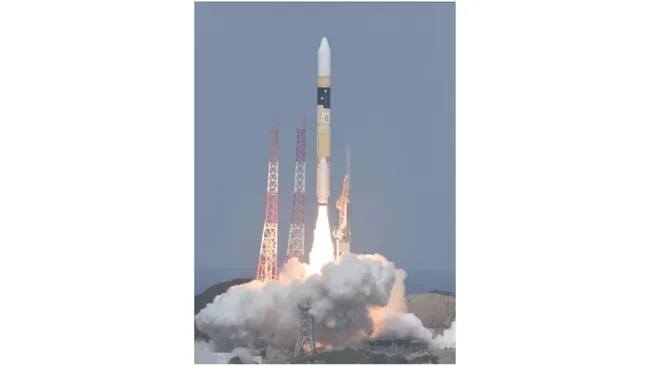
    The IGS-Radar 8 satellite lifted off at 1:24 a.m. ET on Thursday (September 26).

    The rocket deployed the satellite as planned, according to Mitsubishi Heavy Industries, which builds and operates the H-2A.

    According to NextSpaceflight.com, IGS-Radar 8 is headed to sun-synchronous orbit (SSO), a polar path in which satellites cruise over patches of Earth at the same local solar time each day. SSOs are common destinations for spy and weather satellites, because they provide consistent lighting conditions over time.

    IGS-Radar 8 will be operated by Japan’s Cabinet Satellite Information Center, like other members of the IGS (“Information Gathering System”) fleet. As its name suggests, the spacecraft will study Earth in radar light, collecting data for intelligence purposes and for natural-disaster monitoring.

    The IGS fleet of satellites includes both a radar and an optical line. Indeed, the most recent H-2A launch, which occurred this past January, sent the IGS-Optical 8 spy satellite to SSO.

    Mitsubishi Heavy Industries built and operates the H-2A, which debuted in 2001. The 174-foot-tall (53 meters) rocket now has 49 missions under its belt, all of them successful except one; it failed during the November 2003 launch of the IGS 2 satellite.

    The end is near for the workhorse H-2A, however. It will be retired after its 50th launch, which could occur before the end of the year. The H-2A will be replaced by the new H3, which has launched three times to date, most recently on June 30.

  • Education Resources From Space Agencies

    Education Resources From Space Agencies

    Zooniverse – Citizen Scientist Projects

    • The Zooniverse enables everyone to take part in real cutting-edge research in many fields

    across the sciences, humanities, and more. The Zooniverse creates opportunities for you to unlock answers and contribute to real discoveries.

    European Space Agency (ESA) Teach with space – Secondary classroom resources

    • The secondary school level classroom resources are produced for the 14 – 18 years old age

    range (secondary, middle and upper school level) and they cover a wide range of curricular subjects such as: physics, chemistry, astronomy, mathematics, biology, etc. Each classroom resource is composed of a teacher guide and practical activities dedicated to the students.

    European Space Agency (ESA) Teach with space – Primary classroom resources

    • The primary school level classroom resources range from 6 to 12 years of age. They cover a

    wide range of curricular topics related to science, mathematics, technology, engineering and arts. Each classroom resource is composed of a teacher guide and student worksheets with practical activities.

    Code a Mars Helicopter Video Game:

    • Create a video game that lets players explore the Red Planet with a helicopter like the one

    going to Mars with NASA’s Perseverance rover! Use Scratch, a visual programming language and think like NASA space-mission planners to design your game!

    NASA: Pathways to Astronomy Education Resources

    • Welcome to Imagine the Universe! This site is intended for students aged 14 and up, and for anyone interested in learning about our universe.

    NASA’s Starchild: A Learning Centre for Young Astronomers

    • StarChild is a learning center for young astronomers ages 5-13 to learn about the solar system,the Milky Way galaxy, and the universe beyond.