by Kate Green
October 22, 2024
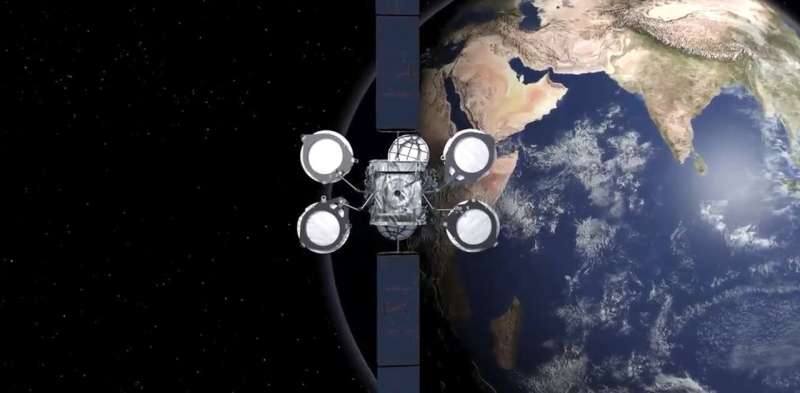
The breakup of the Intelsat 33e satellite, confirmed on October 20 after an apparent power failure, is a significant incident for the satellite communications industry. It raises concerns about the future of space infrastructure as more satellites are launched. While the exact cause of the breakup remains unknown, several factors could be involved, ranging from technical malfunctions to external forces like space debris or heightened solar activity.
Intelsat 33e had a history of operational issues, including thruster malfunctions that affected its orbital positioning and lifespan. These propulsion problems may have played a role in its sudden failure and fragmentation. The satellite broke into at least 20 detectable pieces, but many smaller fragments may have been created that are difficult to track.
This incident adds to the growing challenge of space debris management. With thousands of satellites currently in orbit and more planned, the risk of collisions and breakups increases, potentially leading to a cascade effect known as “Kessler Syndrome,” where debris from one event causes further collisions and generates more debris.
To address this growing issue, space agencies and companies are focusing on improving tracking technologies, enforcing better regulations on satellite de-orbiting, and developing potential debris-cleanup missions. The breakup of Intelsat 33e serves as a reminder of the risks posed by the rapid expansion of space activities and the need for coordinated efforts to manage the increasingly congested space environment.
A Space Mystery
The breakup of Intelsat 33e adds to the growing number of space incidents involving satellite malfunctions and debris generation. Although the exact cause of the satellite’s breakup remains unconfirmed, its history of technical issues may offer some clues. Designed and launched by Boeing in 2016, Intelsat 33e faced operational challenges from the beginning. In 2017, a thruster malfunction delayed its journey to the desired orbit, and further propulsion issues meant it consumed more fuel than planned. This shortened its operational life by several years, leading Intelsat to file a $78 million insurance claim. However, at the time of the breakup, the satellite was no longer insured.
Given the satellite’s troubled past, it’s possible that these technical flaws contributed to its fragmentation. Another satellite of the same model, Boeing’s EpicNG 702 MP, experienced a failure in 2019, suggesting that the design might have inherent vulnerabilities.
While investigations into what exactly went wrong with Intelsat 33e are underway, the larger concern is the growing amount of space debris. Breakups like this one generate small fragments of space junk, which can remain in orbit for decades, posing risks to other spacecraft. The debris from this event is particularly concerning because, while at least 20 pieces have been detected, smaller fragments may be too tiny to track yet still dangerous.
This incident reinforces the need to address the risks posed by space junk as more satellites are launched. It underscores the importance of better satellite design, end-of-life planning, and debris mitigation efforts to avoid adding to the already crowded and hazardous space environment.
30 Blue Whales of Space Junk
The rapid increase in space debris is a growing concern for space safety and the long-term sustainability of Earth’s orbits. According to the European Space Agency (ESA), there are more than 40,000 trackable pieces of debris larger than 10 cm, but the far larger number—over 130 million—of smaller fragments (less than 1 cm) are especially worrisome because they are difficult to track and can still cause significant damage to operational satellites.
The total mass of human-made objects in Earth’s orbit is about 13,000 tons, equivalent to the weight of around 90 blue whales. Roughly a third of this mass – 3, 400 ton – is space debris, largely composed of defunct rocket stages and broken satellite fragments. While tracking large objects is possible, many small fragments go undetected, particularly at higher altitudes, such as the 35,000 km geostationary orbit where Intelsat 33e was located. This is why the breakup of Intelsat 33e is so concerning, as it likely created debris too small to be seen by current ground-based tracking systems.
Over the past few months, several uncontrolled satellite breakups have added to the growing cloud of space debris. The June 2023 fragmentation of the RESURS-P1 satellite in low Earth orbit created over 100 detectable debris pieces, and in July, the DMSP 5D-2 F8 satellite broke up, contributing further debris. In August, a Long March 6A rocket’s upper stage fragmented, generating hundreds of trackable pieces and possibly millions of untrackable fragments. Each of these events demonstrates how fragile the orbital environment has become.
The growing debris field increases the risk of collisions, which can lead to a cascade effect of more breakups, as predicted by the “Kessler Syndrome.” Continuous monitoring and tracking improvements are essential to understanding this evolving debris landscape and preventing further incidents. Technological advancements, regulatory measures, and international cooperation will be key in managing the growing threat of space debris as human activity in space accelerates.
Who is Responsible?
Responsibility for space debris cleanup or monitoring is a complex issue. According to the 1972 Convention on International Liability for Damage Caused by Space Objects, the country that launches an object into space bears responsibility for any damage caused by that object. This includes liability for debris created by their satellites or rockets. However, proving fault and enforcing accountability has been challenging in practice.
In most cases, there is little direct accountability for debris creation, and there are no strong international enforcement mechanisms. Many countries and companies are not compelled to actively remove or manage the debris they generate. The Liability Convention provides a legal framework for claims and damages but doesn’t mandate prevention or cleanup.
However, in 2023, the US Federal Communications Commission (FCC) issued the first-ever fine related to space debris. This marked a new era of regulatory enforcement, as the FCC fined a US company for failing to properly de-orbit a satellite, thus contributing to the growing space debris problem. While this fine set a precedent for holding operators accountable, it remains to be seen whether other regulatory bodies or international organizations will follow suit.
As for Intelsat 33e, it’s not clear yet whether fines or penalties will be applied. Investigations into the cause of the breakup are ongoing, and since the satellite was no longer insured at the time of the incident, any financial repercussions could be limited. The case highlights the need for stronger global agreements and regulatory frameworks that not only address liability but also enforce stricter operational and post-mission procedures to mitigate debris generation.
Efforts to hold operators accountable are still in their infancy, and global cooperation will be essential to ensure that space remains a safe and sustainable environment for future operations.
Looking Ahead
As human activity in space accelerates, the growing congestion in Earth’s orbit presents increasing risks, particularly from space debris. To manage these hazards, continuous monitoring, better tracking technologies, and deliberate efforts to reduce debris creation are essential.
Most satellites operate in low Earth orbit (LEO), which is much closer to the planet than Intelsat 33e’s geostationary orbit. In LEO, satellites can be more easily and safely de-orbited at the end of their missions, either through controlled re-entry into the Earth’s atmosphere where they burn up, or by being guided into “graveyard” orbits. Proper planning for satellite disposal can help prevent the generation of space debris.
A recent example of such planning is the de-orbiting of the ESA’s Cluster 2 “Salsa” satellite in September 2023. This satellite was intentionally brought back into the Earth’s atmosphere, where it burned up safely. Such strategies help mitigate the risk of adding more debris to an already crowded orbit.
However, the risks increase with the size of the objects. Larger satellites or space stations, like the International Space Station (ISS), could produce millions of debris fragments if they were to break up in orbit. NASA’s Orbital Debris Program Office estimates that the ISS could generate over 220 million debris fragments in such an event. To avoid this, careful de-orbiting plans are crucial for large objects. The ISS is planned to be de-orbited by 2030, and SpaceX has been awarded the contract to manage its controlled descent, ensuring a safe re-entry.
Looking ahead, minimizing future debris will require strict end-of-mission protocols, advancements in debris removal technology, and international cooperation. The recent increase in satellite launches, particularly from commercial companies, makes it more urgent to enforce regulations that prevent debris and ensure sustainable use of Earth’s orbits.
Image: Artist’s impression of the Intelsat 33e satellite