Category: Learning & Resources

Educational resources, documentaries and introductory explainers

  • NASA’s James Webb Space Telescope (JWST) – Quick Facts

    NASA’s James Webb Space Telescope (JWST) – Quick Facts

    The James Webb Space Telescope (JWST) is a cutting-edge space telescope developed by NASA in collaboration with the European Space Agency (ESA) and the Canadian Space Agency (CSA).

    It was launched on December 25, 2021, and is designed to be the successor to the Hubble Space Telescope. JWST is the most powerful space telescope ever built, and it’s designed to observe the universe in infrared wavelengths, which allows it to see farther back in time and space than previous telescopes.

    Key Features of the JWST:

    • Primary Mirror: It has a large primary mirror that is 6.5 meters  in diameter, made up of 18 hexagonal segments. This allows it to collect more light and see distant objects with greater clarity.

    • Infrared Observation: JWST primarily observes in the infrared spectrum, which enables it to look through dust clouds and detect the faint light of distant stars and galaxies that formed just a few hundred million years after the Big Bang.

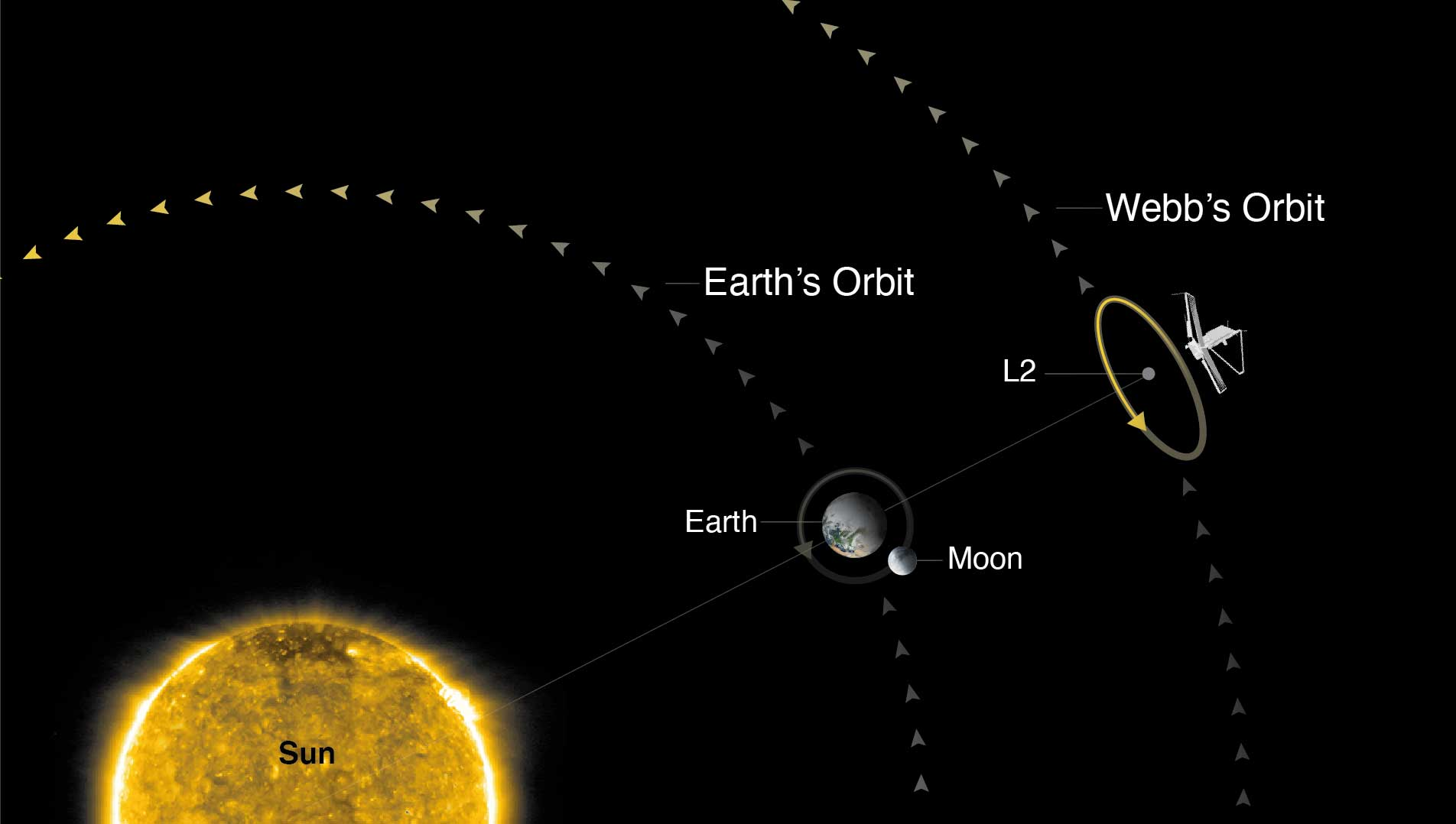
    • L2 Orbit: JWST is positioned at the second Lagrange point (L2), about 1.5 million kilometres from Earth. This location offers a stable environment for observation and helps the telescope stay cool.

    • Advanced Instruments: JWST is equipped with several state-of-the-art instruments, including:

      • NIRCam (Near-Infrared Camera)

      • NIRSpec (Near-Infrared Spectrograph)

      • MIRI (Mid-Infrared Instrument)

      • FGS/NIRISS (Fine Guidance Sensor/Near Infrared Imager and Slitless Spectrograph)

    Major Goals:

    1. Study the formation of stars and planetary systems.

    2. Observe distant galaxies and the early universe, probing the first billion years after the Big Bang.

    3. Explore the atmospheres of exoplanets to search for potential signs of life.

    JWST is revolutionizing our understanding of the universe, giving scientists the ability to explore deep cosmic history, distant planets, and the processes that shaped our solar system.

    Image #1: Webb will orbit the Sun near the second Sun-Earth Lagrange point (L2), which lies approximately 1.5 million kilometres from Earth on the far side of Earth from the Sun. Webb will not be located precisely at L2, but will move in a halo orbit around L2 as it orbits the Sun. In this orbit, Webb can maintain a safe distance from the bright light of the Sun, Earth, and Moon, while also maintaining its position relative to Earth. Credit: STScI.
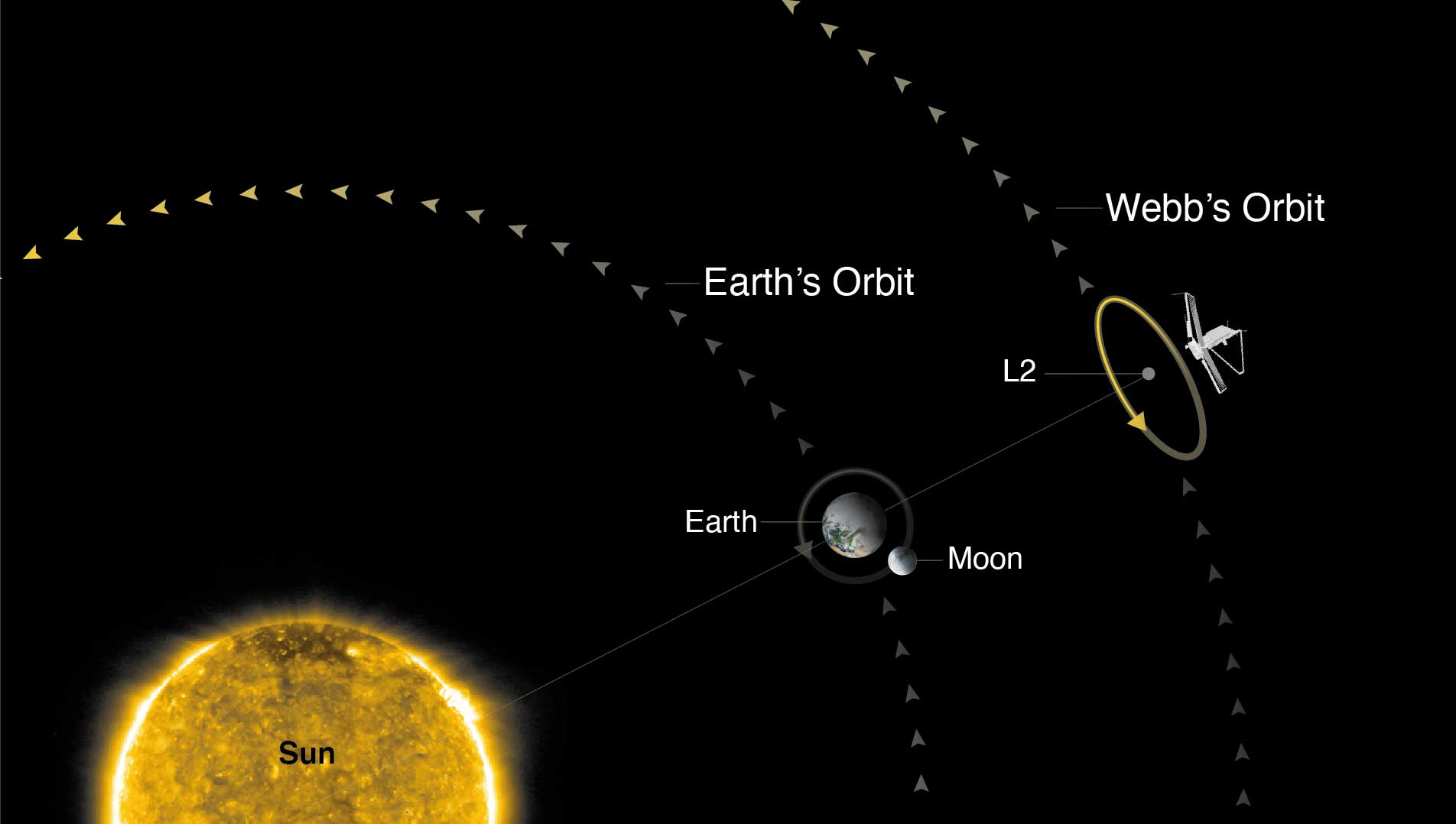
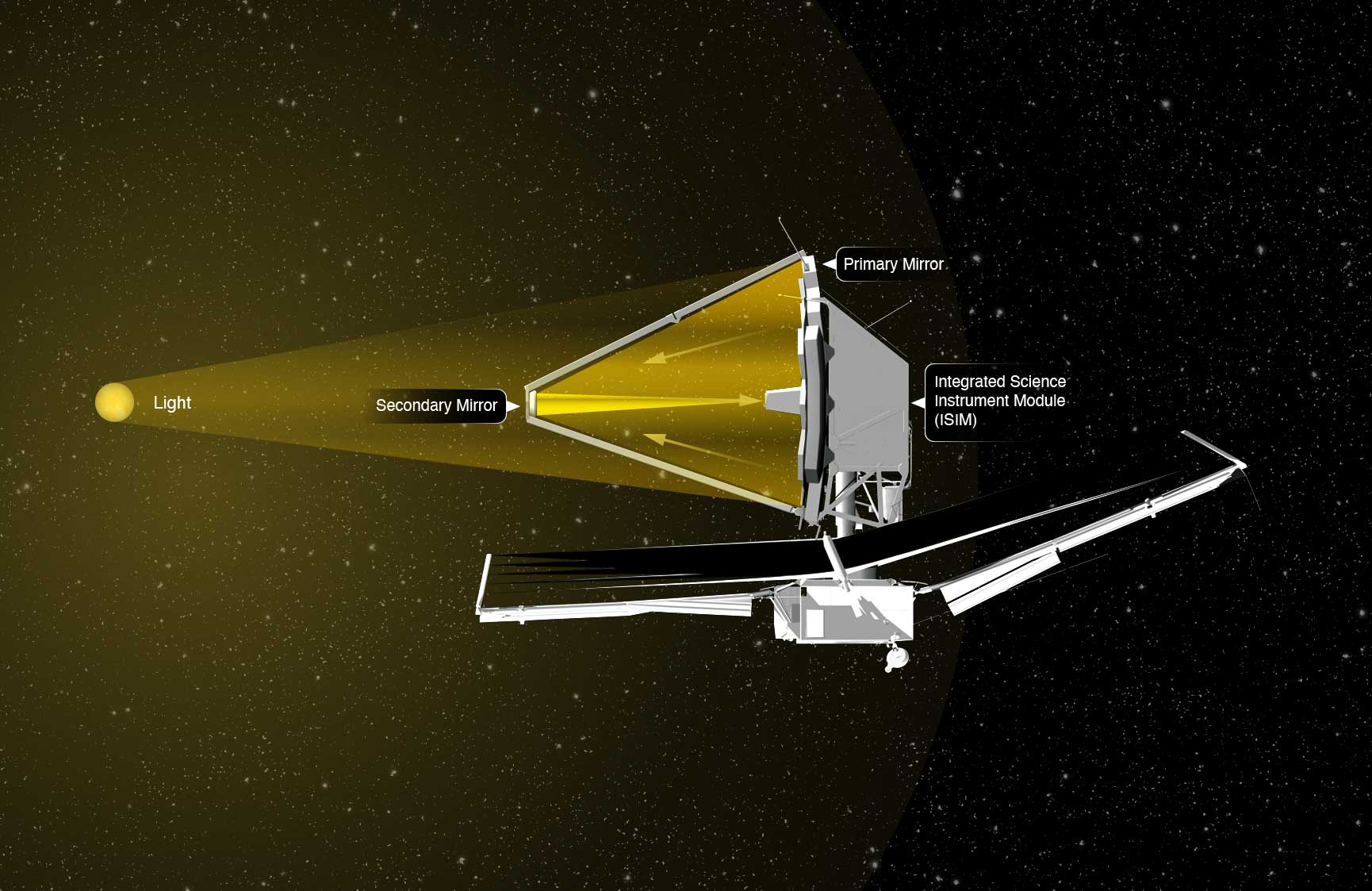
    Image #2: Webb’s primary mirror intercepts red and infrared light traveling through space and reflects it onto a smaller secondary mirror. The secondary mirror then directs the light into the scientific instruments where it is recorded. Credit: STScI.
  • What is Astrophysics?

    What is Astrophysics?

    Astrophysics is a dynamic and interdisciplinary field within space science, that focuses on understanding the universe by applying the principles of physics and chemistry. It explores a wide range of cosmic phenomena and seeks to answer fundamental questions about the nature of the universe and our place within it.

    Key Areas of Astrophysics:

    • Stellar Astrophysics: Studies the life cycle of stars, from their formation in stellar nurseries to their evolution and eventual demise. This includes understanding different types of stars (like red dwarfs, giants, and supernovae) and phenomena such as pulsars and black holes.

    • Planetary Science: Investigates the formation, composition, and dynamics of planets, moons, and other bodies in our solar system and beyond. This includes studying exoplanets and their potential for supporting life.

    • Galactic Astrophysics: Examines the structure and dynamics of galaxies, including our own Milky Way. This area explores the formation and evolution of galaxies, the role of dark matter, and interactions between galaxies.

    • Cosmology: Focuses on the large-scale structure and evolution of the universe as a whole. This includes studying the Big Bang, cosmic inflation, dark energy, and the overall geometry and fate of the universe.

    • High-Energy Astrophysics: Investigates energetic phenomena such as gamma-ray bursts, black holes, and neutron stars. This field often involves understanding the behaviour of matter under extreme conditions.

    • Exoplanetary Science: Looks at planets outside our solar system, exploring their properties, atmospheres, and potential habitability. This involves techniques like transit photometry and radial velocity measurements.

    Relationship with Astronomy and Cosmology

    • Astronomy: Astronomy is often considered the observational counterpart to astrophysics. While astronomy focuses on the collection and analysis of data from telescopes and other instruments, astrophysics interprets these data using physical theories and models. Astronomy includes the study of the positions, motions, and properties of celestial objects.

    • Cosmology: Cosmology is a subfield of astrophysics that specifically deals with the large-scale structure and origin of the universe. It overlaps with astrophysics in areas like the study of the cosmic microwave background radiation and the expansion of the universe. Cosmologists use astrophysical models to understand the universe’s evolution from the Big Bang to its current state.


    Techniques and Tools

    1. Observational Techniques: Astrophysicists use various types of telescopes (optical, radio, infrared, X-ray, etc.) to gather data from different wavelengths. Observations are critical for studying celestial objects and phenomena.

    2. Theoretical Models: Developing and testing models is central to astrophysics. These models use principles from physics and chemistry to simulate and understand cosmic processes. Computational simulations play a significant role in predicting and interpreting astrophysical phenomena.

    3. Laboratory Experiments: In some cases, experiments on Earth can help understand cosmic processes. For example, particle accelerators and detectors can simulate conditions similar to those found in space.

    Notable Achievements and Questions

    • Black Holes: The study of black holes has led to significant insights into general relativity and quantum mechanics. The first image of a black hole’s event horizon, captured by the Event Horizon Telescope, was a landmark achievement in this field.

    • Dark Matter and Dark Energy: These mysterious components make up most of the universe’s mass-energy content. Astrophysics explores their effects and seeks to identify their nature.

    • Origins of the Universe: Understanding the Big Bang and the subsequent evolution of the universe remains a central question. Observations of the cosmic microwave background and large-scale structure provide clues to this early history.

    Astrophysics is a continually evolving field that bridges observations with theoretical understanding to unravel the universe’s mysteries. By integrating data from various sources and applying physical laws, astrophysicists strive to paint a comprehensive picture of the cosmos, from the tiniest particles to the largest structures.

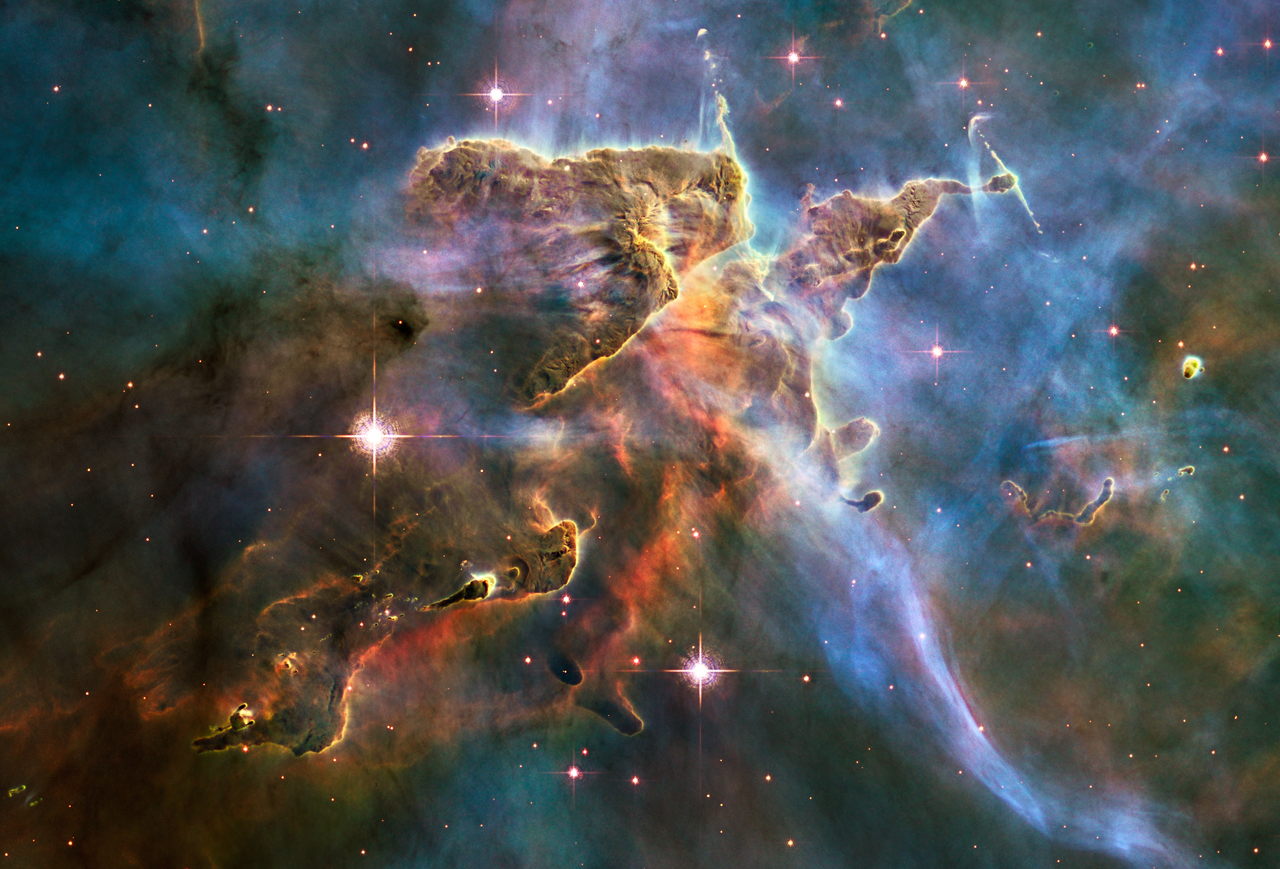
    Image Credit: Eta Carina NASA

  • Why Explore Mars???

    Why Explore Mars???

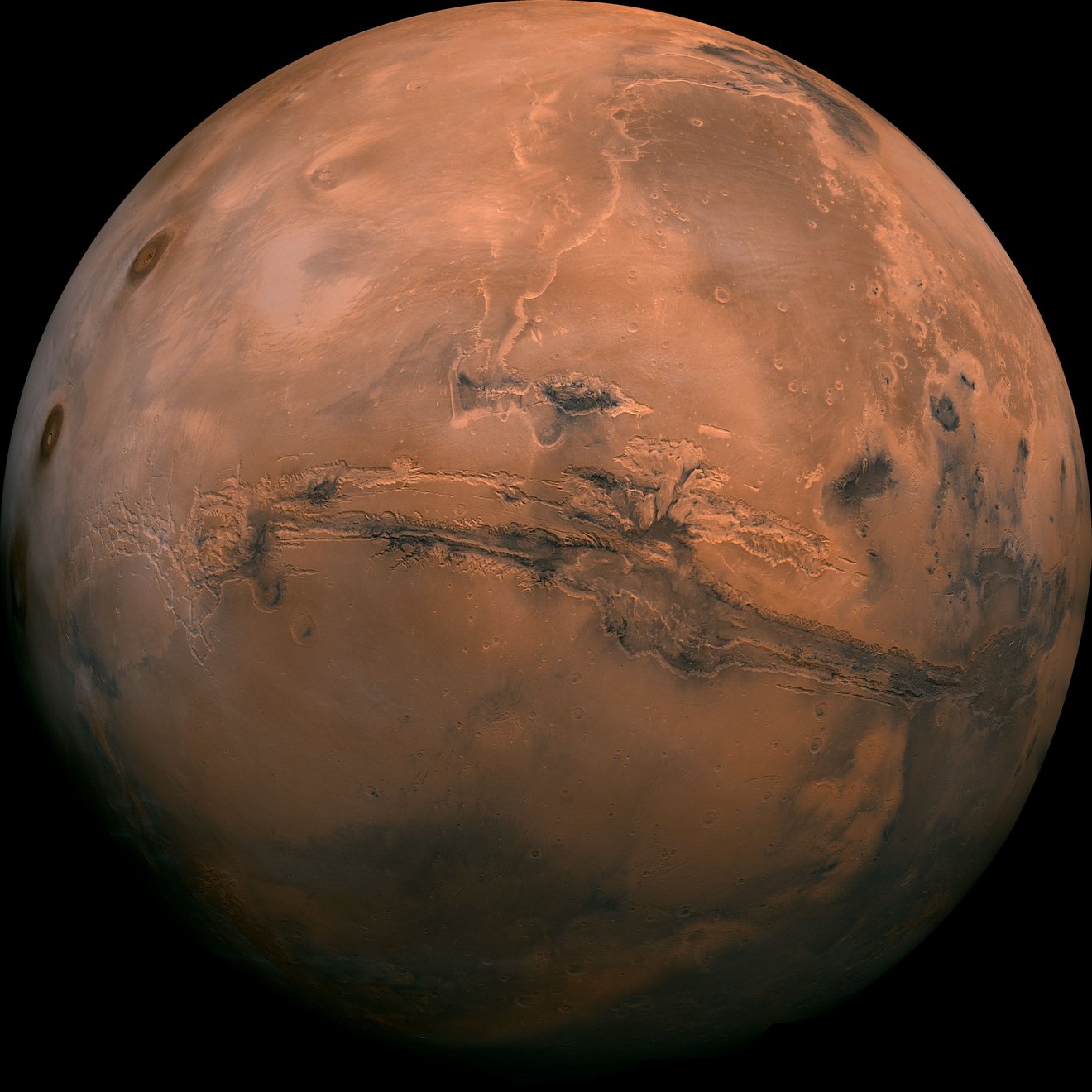
    Mars is a prime candidate for the search for extraterrestrial life due to its similarities to Earth and its potential for past or present habitability.

    Here’s a closer look at why Mars is so important in this quest and what efforts are underway to explore it:

    • Geological Similarities: Mars shares several geological features with Earth, such as polar ice caps, seasonal weather patterns, and evidence of ancient riverbeds and lake basins. These features suggest that Mars may have once had liquid water on its surface, a crucial ingredient for life as we know it.

    • Atmosphere: Although thin, Mars’ atmosphere is composed mainly of carbon dioxide with traces of nitrogen and argon, similar to Earth’s early atmosphere. The presence of water vapor and seasonal ice caps further complicates the picture of Mars’ climate and its potential to support life.

    • Past Conditions: Evidence from rovers and orbiters indicates that Mars had a much warmer and wetter past. The discovery of minerals like clays and sulfates, which form in the presence of water, supports the idea that Mars may have had habitable conditions billions of years ago.

    Key Missions and Discoveries

    1. Rovers: NASA’s rovers, including Curiosity and Perseverance, are crucial in searching for signs of past or present life. Curiosity has been exploring the Gale Crater, analyzing rock samples and searching for organic compounds. Perseverance is focused on the Jezero Crater, which is believed to be an ancient lakebed.

    2. Mars Sample Return: Future missions, including the Mars Sample Return (MSR) mission, aim to bring samples of Martian soil and rock back to Earth for detailed analysis. These samples could provide critical information about Mars’ potential for life and provide vital information to assist with future human missions to the planet.

    3. Missions by Other Agencies: The European Space Agency’s (ESA) ExoMars mission and the Tianwen-1 mission by the China National Space Administration (CNSA) are also contributing valuable data to the Martian exploration effort.

    What We’re Looking For:

    • Microbial Life: Scientists are primarily searching for microbial life or its remnants, as this is the most likely form of life that could have existed on ancient Mars.

    • Organic Molecules: Organic molecules, which are the building blocks of life, have been found in Martian meteorites and by some landers. Understanding their origin and distribution is crucial for assessing Mars’ habitability.

    • Signs of Habitability: Beyond direct evidence of life, researchers are also looking for conditions that could have supported life, such as ancient water sources, energy gradients, and stable climates.

    The Broader Implications:

    Mars continues to be a focal point in the search for life beyond Earth, with ongoing and future missions aimed at unravelling the mysteries of the Red Planet. The quest for life on Mars is not just about finding evidence of extraterrestrial organisms but also about understanding the conditions that could make a planet habitable.

    • Understanding Life’s Origins: Discovering life on Mars would not only address whether life exists elsewhere in the universe but could also provide insights into the origins of life on Earth.

    • Technological Advances: The technology developed for Martian exploration has broader applications, contributing to advancements in robotics, remote sensing, and environmental science.

    • Future Exploration: Mars exploration is a stepping stone for future missions beyond our Solar System. Understanding how to live and work on Mars could pave the way for human exploration of other planets and moons.

    Image Credit: NASA / JPL-Caltech

  • Education Resources From Space Agencies

    Education Resources From Space Agencies

    Zooniverse – Citizen Scientist Projects

    • The Zooniverse enables everyone to take part in real cutting-edge research in many fields

    across the sciences, humanities, and more. The Zooniverse creates opportunities for you to unlock answers and contribute to real discoveries.

    European Space Agency (ESA) Teach with space – Secondary classroom resources

    • The secondary school level classroom resources are produced for the 14 – 18 years old age

    range (secondary, middle and upper school level) and they cover a wide range of curricular subjects such as: physics, chemistry, astronomy, mathematics, biology, etc. Each classroom resource is composed of a teacher guide and practical activities dedicated to the students.

    European Space Agency (ESA) Teach with space – Primary classroom resources

    • The primary school level classroom resources range from 6 to 12 years of age. They cover a

    wide range of curricular topics related to science, mathematics, technology, engineering and arts. Each classroom resource is composed of a teacher guide and student worksheets with practical activities.

    Code a Mars Helicopter Video Game:

    • Create a video game that lets players explore the Red Planet with a helicopter like the one

    going to Mars with NASA’s Perseverance rover! Use Scratch, a visual programming language and think like NASA space-mission planners to design your game!

    NASA: Pathways to Astronomy Education Resources

    • Welcome to Imagine the Universe! This site is intended for students aged 14 and up, and for anyone interested in learning about our universe.

    NASA’s Starchild: A Learning Centre for Young Astronomers

    • StarChild is a learning center for young astronomers ages 5-13 to learn about the solar system,the Milky Way galaxy, and the universe beyond.

  • RECOLOURING the UNIVERSE

    RECOLOURING the UNIVERSE

    Pencil Code: Colour, Astronomy and Coding

    Using data from NASA’s Chandra X-ray Observatory and other satellites on exploded stars, star-forming regions, and black holes, you’ll learn basic coding. By following the video tutorials below, you will see just how integral coding is in the pursuit of learning about our Universe. It’s an example of the exciting ways that computer science is both part of routine tasks in our everyday lives and part of the exciting quest to explore the cosmos.

    Launch the coding activity now or start with the resources below for background information, facilitator guides, video tutorials and student examples.

    Launch the Coding Activities

    Grades 4-12 students with no prior coding experience can learn how to use computers to create images and understand astronomical data. Participants learn basic coding starting with familiar objects and simple concepts such as shape and colour, graduating to astronomical objects. Following a scaffolded set of activities, and working with data from NASA orbiting telescopes on sources from exploded stars to star-forming regions, to galaxies, to black holes, participants can experience real world application of science, technology and even art.

    Note: This activity can take from 40-75 minutes, depending on the total number of students, the length of time allotted per step, etc.

  • Space Documentaries and Videos

    How SpaceX & NASA Plan to Establish the First Moon Base!


    ·       May 27, 2023


    SpaceX Reveals NEW Space Station – The Haven 1!


    ·       May 28, 2023


    The Mysterious Journey of Apollo 10’s Lunar Module

    ·       May 26, 2023


    The Mysterious 30 Year Journey of Apollo 12


    ·       January 25, 2023


    Betelgeuse Update: Something Weird Is Happening To The Star


    ·       May 26, 2023


  • What is the Andromeda Constellation?

    What is the Andromeda Constellation?

    The Andromeda constellation consists of 16 stars visible in the northern sky. Named by ancient Greeks after the mythological Andromeda princess, the constellation contains the Andromeda Galaxy, the nearest full-fledged galaxy to our own Milky Way.

    Andromeda is one of 48 constellations described by the Ancient Greek astronomer Claudius Ptolemy in 150 AD in his famous work “The Almagest.”

    Ptolemy’s list was the first official description of constellations, although these stellar groupings had been known to ancient Greeks, Babylonians, Egyptians and other cultures, who frequently saw them as embodiments of their mythical figures.

    Andromeda is one of the largest of Ptolemy’s constellations.

    Another 40 constellations were added to Ptolemy’s tally over the centuries. Many of these additions reside in the southern sky, which was not visible to Ptolemy, who spent most of his life in Egypt.

    Today, Andromeda is the 19th largest of the 88 constellations recognized by the International Astronomical Union.

    How to find the Andromeda Constellation

    Andromeda is part of a big prominent group of constellations named after mythological figures related to the Perseus and Andromeda myth. The pronounced W-shaped Cassiopeia constellation points directly at Andromeda.

    With a bit of imagination, you can see the constellation as a sprawled figure with its arms extended. The figure’s feet point in the direction of the Perseus constellation, right next to Cassiopeia. The figure’s “head” connects the constellation to the neighboring square of Pegasus.

    The Andromeda Myth

    In ancient Greek mythology, Andromeda was a beautiful daughter of the king Cepheus and queen Cassiopeia. When her mother bragged that Andromeda was better-looking than the famously beautiful Nereid sea nymphs, the sea god Poseidon sent his pet sea monster Cetus to destroy Cepheus’ kingdom.

    It was said, however, that sacrificing Andromeda could save the country and its people. So, the loving parents had their daughter chained to a rock by the sea, so that the sea monster could get her easily. Fortunately, the charming prince Perseus flew past on his winged horse Pegasus and fell in love with Andromeda’s beauty. He killed Cetus and married Andromeda. The two lived happily ever after.

    Stars of the Andromeda Constellation

    The Andromeda Constellation contains nine main named stars, according to Constellation Guide. Three of these stars are brighter than magnitude 3.00, which puts them into the top 100 brightest stars in the sky.

    In addition to the visible stars, one can find many intriguing objects within the Andromeda constellation that are only visible with telescopes or binoculars. The most famous one of these is the Andromeda Galaxy, the closest full-fledged galaxy to the Milky Way. Andromeda is currently about 2.5 million light-years from the Milky Way, and the two galaxies are on a collision course; a few billion years from now, they will smash into each other.

    • Alpheratz (Alpha Andromeda)

      • The brightest star in the Andromeda Constellation is Alpheratz, also called Alpha Andromedae. Alpheratz is essentially Andromeda’s head, but it’s also part of the neighbouring square of Pegasus.

      • Astronomers know today that Alpheratz is located 97 light-years from Earth and is, in fact, a binary star, a system of two stars orbiting a common centre of mass. The bigger of those two stars has a unique chemical composition and is the brightest known star with high levels of mercury and manganese. A so-called subgiant, this star is 200 times brighter than the sun while being less than four times as massive.

      • The smaller star of the Alpheratz binary system is about 10 times as luminous as the sun and orbits the larger star every 97 days, according to the Constellation Guide.

    • Mirach

      • Mirach, also known as Beta Andromedae, is nearly as bright as Alpheratz and located about 200 light-years away from Earth. It is a giant star 1,900 times as bright as the sun, according to the Constellation Guide, and three to four times as massive.

      • Within the Andromeda Constellation, Mirach forms the chained figure’s left hip. Close to Mirach, astronomers can observe two distant dwarf galaxies located some 10 million light-years from Earth.

    • Almach

      • Almach, or Gamma Andramodae, is Andromeda’s foot. It is a multi-star system featuring a central giant orbited by a pair of white dwarfs. The third brightest star of the Andromeda Constellation, Almach is about 350 light-years away from Earth. The star’s central giant is 2,000 times more luminous than the sun.

    • Other stars in the Andromeda Constellation:

      • Other stars in the Andromeda Constellation are Delta Andromedae, Iota Andromedae, Upsilon Andromedae, Adhil (or Xi Andromedae) and Mu Andromedae.

    Andromeda Galaxy

    The Andromeda Galaxy, the Milky Way’s nearest major galactic neighbour, can be found within the Andromeda Constellation. The galaxy, located some 2.5 million light-years away from Earth, is barely visible to the naked eye but can be found with binoculars.

    The Andromeda Galaxy, also known as M31, can be seen as a misty patch on the edge of the Andromeda Constellation to the right of the sprawled figure’s right hip, which is right next to the bright star Mirach. The right V shape of the Cassiopeia constellation points vaguely in the direction of the galaxy.

    Andromedids Meteor Shower

    The constellation also appeared to be the source of the Andromedids Meteor shower that used to occur every few years in November. But the stars of the constellation, obviously, had nothing to do with these shooting stars. The actual source of the space rocks was a trail of debris left behind by Comet Biela, and which Earth used to intersect every November. However, in recent decades, the once mesmerizing display nearly ceased, as our planet’s orbit moved out of the path of the cometary debris.

    References:

    1. IAU, Constellations. https://www.iau.org/public/themes/constellations/

    2. Swinburne University of Technology, Constellation. https://astronomy.swin.edu.au/cosmos/c/Constellation

    3. Britannica, Andromeda Constellation. https://www.britannica.com/place/Andromeda-constellation

    4. University of St. Andrews, Claudius Ptolemy.  https://mathshistory.st-andrews.ac.uk/Biographies/Ptolemy/

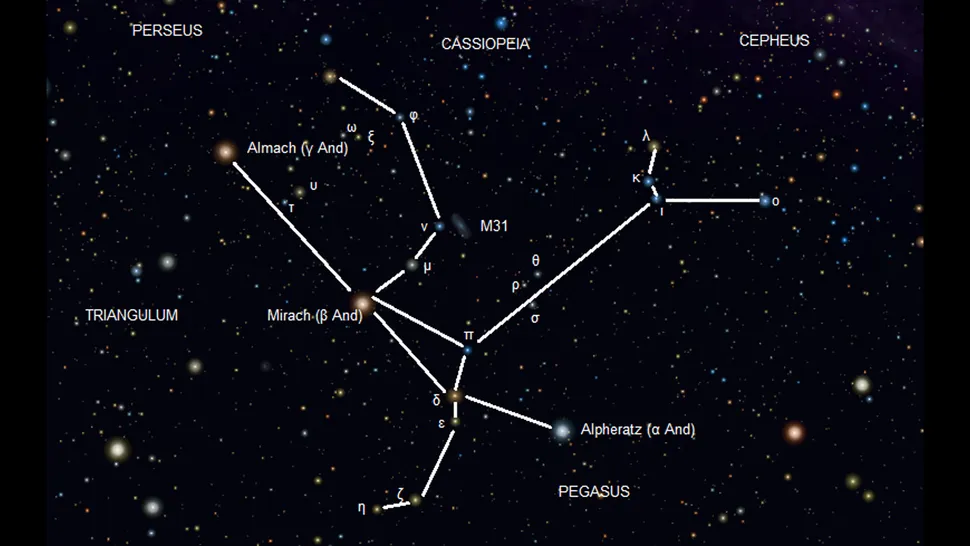
    Image #1: The Andromeda constellation with all Bayer-designated stars marked and the IAU figure drawn in. (Image credit: Wikimedia Commons/Keilana/Roberto Mura)

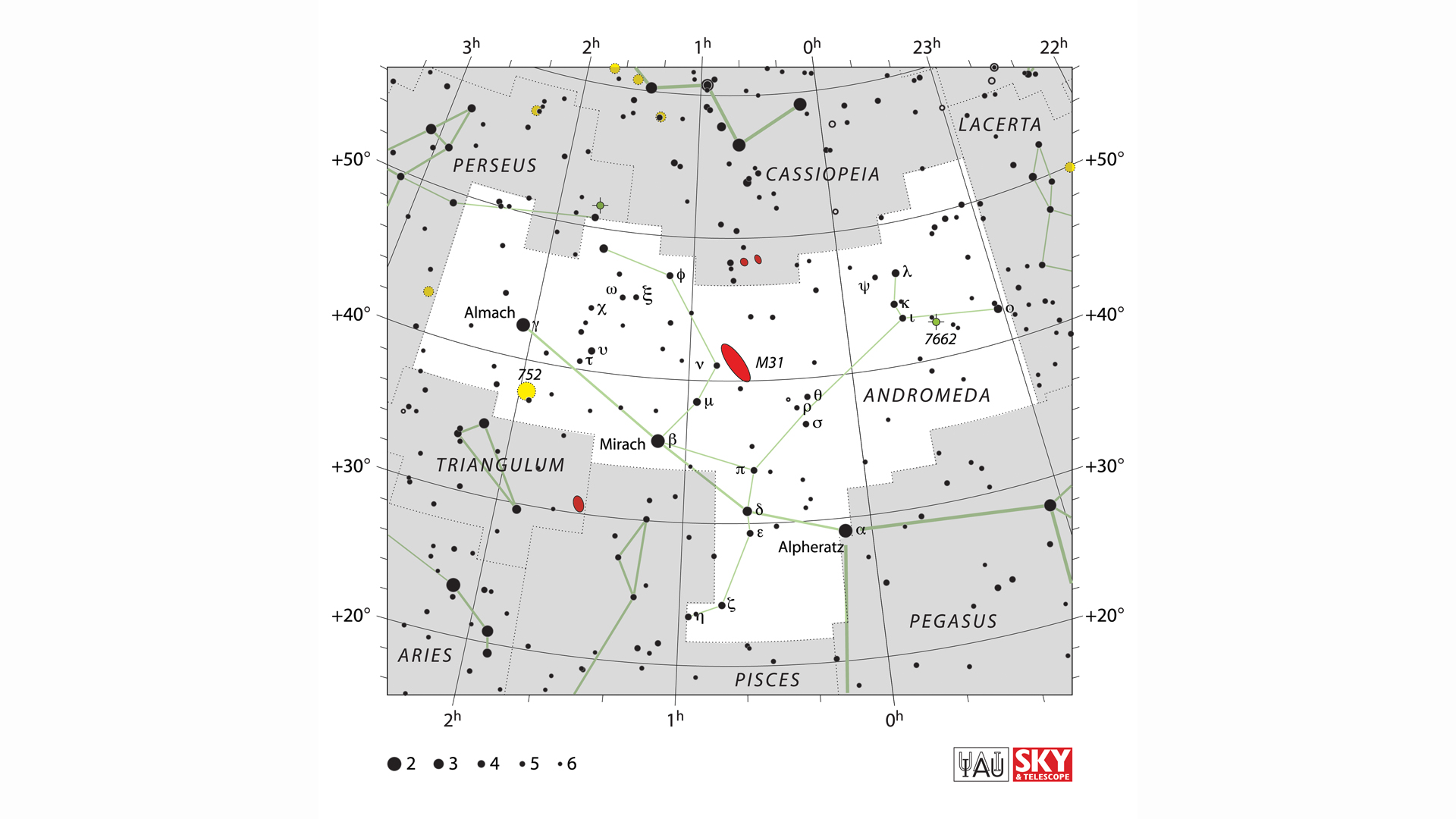
    Image #2: The position of the Andromeda constellation among the other constellations named after characters related to the Perseus myth. (Image credit: IAU)

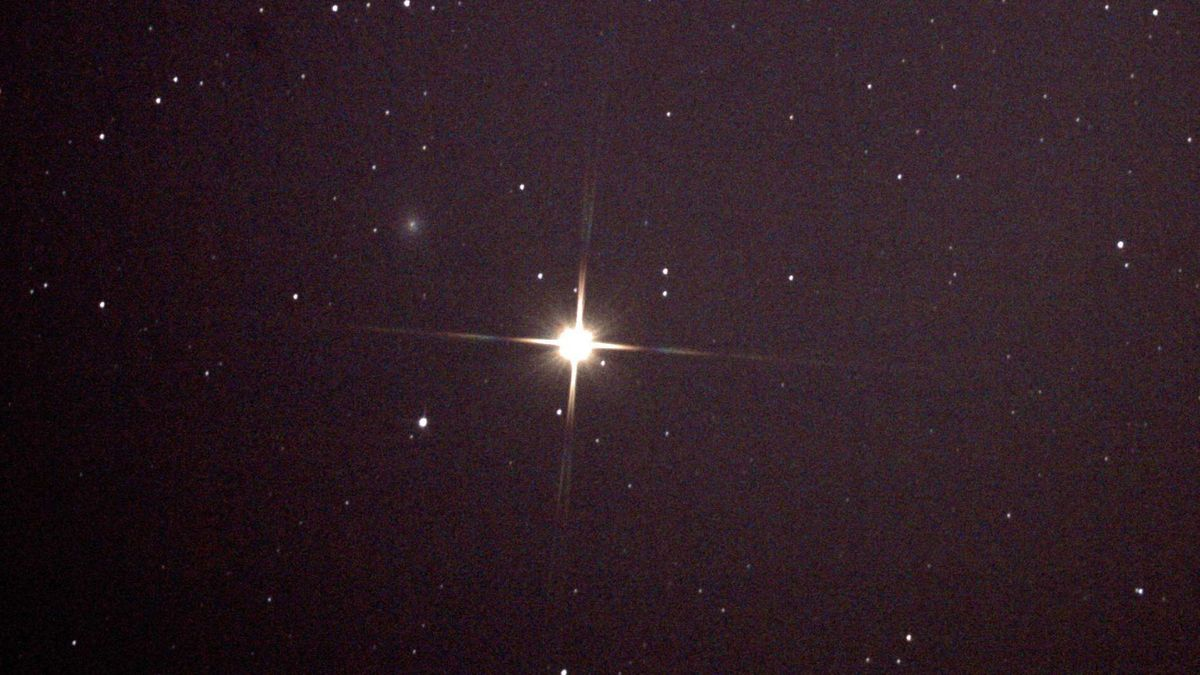
    Image #3: Mirach is one of the brightest stars of the Andromeda constellation. (Image credit: Stub Mandrel)

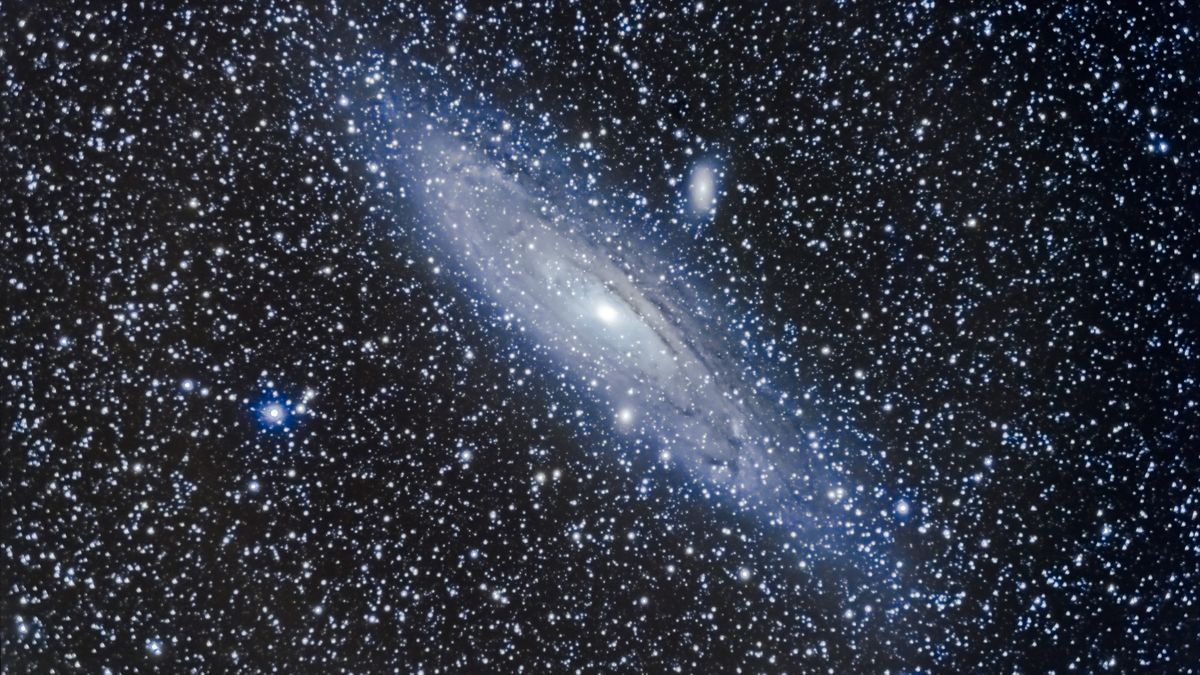
    Image #4: The Andromeda Galaxy can be found on the edges of the Andromeda constellation. (Image credit: Alan Dyer /VW PICS/Universal Images Group via Getty Images)

  • What is the Messier Objects Catalog?

    What is the Messier Objects Catalog?

    Messier objects are a set of 110 astronomical objects cataloged by the French astronomer Charles Messier in the 18th century. Messier, who was primarily searching for comets, created this list to avoid confusing these static, diffuse objects with comets in the night sky.

    These objects include various types of deep-sky objects, such as galaxies, star clusters, and nebulae.

    Categories of Messier Objects:

    1. Galaxies: Large systems of stars, gas, and dust bound together by gravity. Examples include:

      • M31: The Andromeda Galaxy, the closest spiral galaxy to the Milky Way.

      • M87: A giant elliptical galaxy in the Virgo Cluster, known for housing a supermassive black hole.

    2. Star Clusters:

      • Globular Clusters: Dense, spherical collections of stars, typically old. Example: M13 (the Hercules Globular Cluster).

      • Open Clusters: Looser groups of younger stars. Example: M45, known as the Pleiades or “Seven Sisters.”

    3. Nebulae: Clouds of gas and dust where stars are born or remnants of stellar explosions. Examples:

      • M42: The Orion Nebula, a bright emission nebula and star-forming region.

      • M1: The Crab Nebula, the remnant of a supernova explosion.

    4. Planetary Nebulae: Shells of gas ejected by dying stars. Example:

      • M57: The Ring Nebula, a famous planetary nebula in the constellation Lyra.

    Significance:

    Messier’s catalog remains popular with astronomers and stargazers because many of these objects are bright and can be observed with small telescopes or even binoculars.

    The list includes some of the most beautiful and interesting objects in the sky, making it a favorite for amateur astronomers who attempt the Messier Marathon — an event where one tries to observe all 110 objects in a single night.

    Though Messier originally compiled the list to avoid distractions from his comet-hunting, it has become an important and widely used reference in observational astronomy.

    Messier Marathon:

    Since all the Messier objects are fairly bright, finding Messier objects is an ideal project for the beginning stargazer.

    Every year stargazers around the world take part in the Messier marathon. Participants use telescopes or binoculars and attempt to see as many Messier objects as possible throughout 12 continuous hours of darkness. In order to see them all, observations start at sunset and end at sunrise the following morning.

    A few Messier objects are hard to catch because they are only visible very close to the horizon.

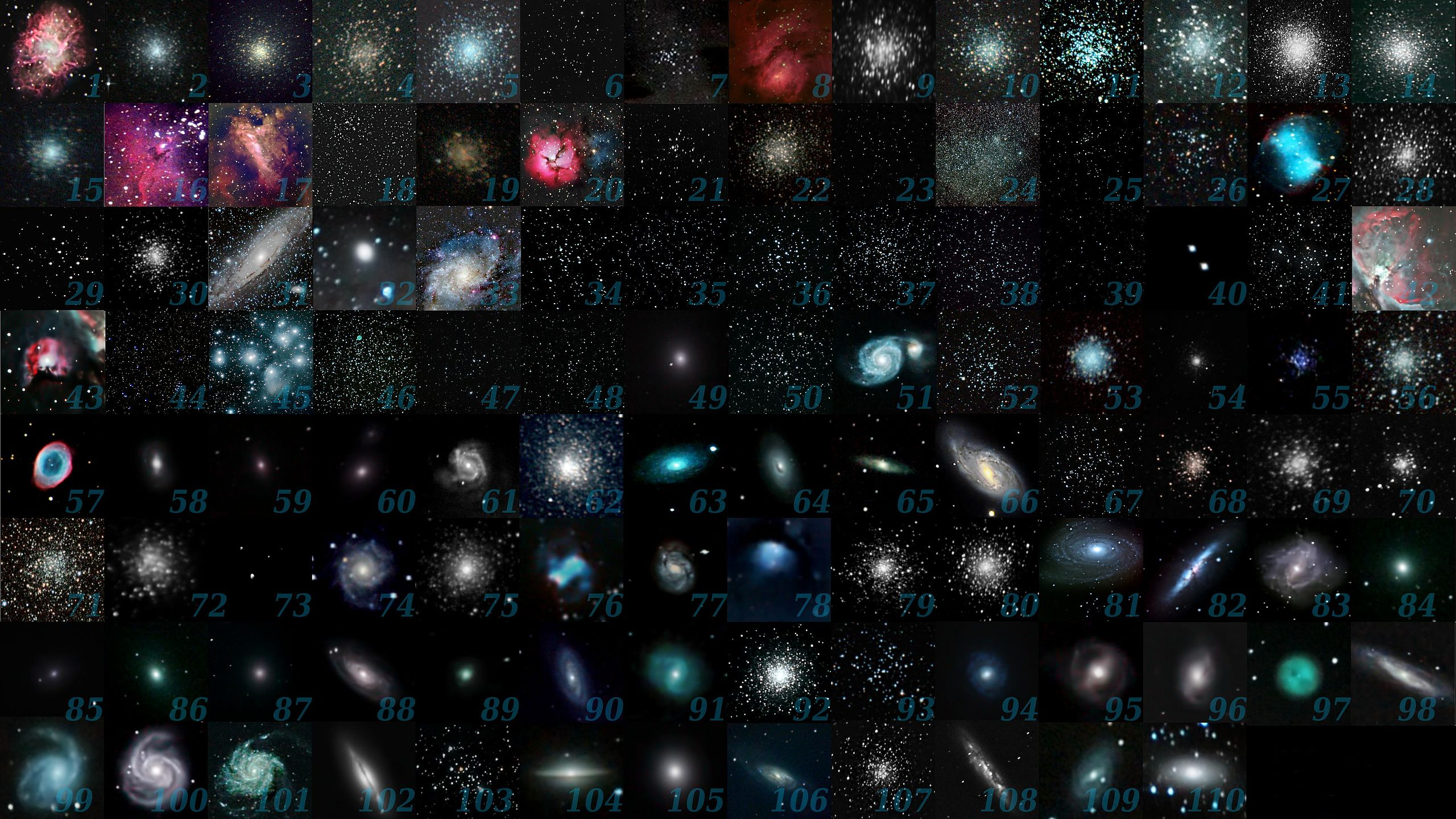
    Image: All 110 Messier objects are shown here with their respective M numbers. Image via Wikipedia.

  • Australian Education – Available Space Resources.

    Australian Education – Available Space Resources.

    by Kate Green

    Career Practitioner & Educators Webinar: https://youtu.be/St9sfDStsVI

    Australian Space Agency (ASA) Resources:

    Australian Space Milestones – https://www.industry.gov.au/sites/def…

    ASA Careers in Space booklet – https://www.industry.gov.au/sites/def…

    ASA A Space for Everyone posters https://www.industry.gov.au/sites/def…

    ASA Interactive Space Quiz – http://space-aus-career-tool.s3-websi…

  • Axions: leading candidate for dark matter or not?

    Axions: leading candidate for dark matter or not?

    by Kate Green

    October 19, 2024

    A collaborative team of physicists from the universities of Amsterdam, Princeton, and Oxford has recently published findings suggesting that extremely light particles known as axions may form large clouds around neutron stars. These axions offer a potential explanation for dark matter, a phenomenon that has long eluded cosmologists. Importantly, the research indicates that these axion clouds might be observable with existing telescopes.

    Background on Axions

    1. Previous Research:

      • The team previously explored axions that escape neutron stars, investigating how they could lead to observable signals when converted into light under certain conditions.

    2. Current Focus:

      • The latest research shifts attention to axions that do not escape the gravitational pull of neutron stars, focusing on those captured and retained by the star’s immense gravity.

    Formation of Axion Clouds

    1. Capturing Axions:

      • Over time, axions that are gravitationally bound to neutron stars accumulate, gradually forming a dense, hazy cloud around the star.

    2. Observational Potential:

      • The formation of these axion clouds raises intriguing questions for astronomers and physicists alike. The existence of such clouds could lead to observable phenomena that might provide insights into both axion physics and the nature of dark matter.

    Why Study Axion Clouds?

    1. Exploration of Dark Matter:

      • Understanding axion clouds could help elucidate the properties and behaviours of dark matter, contributing to a more comprehensive understanding of the universe’s composition.

    2. Observable Signals:

      • The clouds may produce detectable signals that can be studied using current astronomical instruments, enabling researchers to test theories regarding axions and dark matter.

    3. Link to Neutron Stars:

      • Neutron stars represent extreme environments, making them ideal laboratories for studying the fundamental interactions of particles like axions. Observing these clouds could yield valuable data about the physics governing both neutron stars and potential dark matter candidates.

    The study of axion clouds around neutron stars presents a promising avenue for advancing our understanding of dark matter. By focusing on the axions retained by these stars, physicists aim to uncover observable signals that may confirm the existence of axions and provide critical insights into the nature of the universe. This research exemplifies the interconnectedness of particle physics, astrophysics, and cosmology, as scientists strive to unravel one of the most profound mysteries of modern physics.

    Axions: From soap to dark matter

    Introduction to Axions

    1. Understanding Common Particles:

    • Many people are familiar with protons, neutrons, electrons, and photons—fundamental particles that constitute the matter around us. In contrast, axions are less known and remain a theoretical entity.

    1. Hypothetical Nature:

    • Axions are currently only a hypothetical type of particle; no experimental evidence has yet confirmed their existence. Their conception emerged from the need to address theoretical inconsistencies within particle physics.

    Origin and Naming

    1. Naming and Historical Context:

    • Proposed in the 1970s, the term “axion” was inspired by a brand of soap, reflecting its role in “cleaning up” theoretical problems concerning the strong interactions of particles like the neutron.

    1. Theoretical Framework:

    • In particular, axions were introduced as part of the solution to the strong CP problem, which involves the apparent absence of certain types of symmetry violations in strong interactions. Their introduction aimed to reconcile theoretical predictions with observed phenomena.

    Characteristics of Axions

    1. Hypothetical Nature:

    • Despite being a compelling theoretical candidate, axions have not yet been detected. They are predicted to be extremely light—much lighter than protons, neutrons, or electrons—making them difficult to observe directly in laboratory experiments.

    1. Weak Interactions:

    • Axions are theorized to have very weak interactions with other particles, meaning that even if they do exist, they would be challenging to detect with existing experimental setups. This property makes them intriguing candidates for dark matter.

    Axions and Dark Matter

    If axions exist, they could potentially account for a significant portion of the universe’s dark matter due to their ability to cluster and exert gravitational influence on galaxies and cosmic structures.

    1. Dark Matter Overview:

    • Approximately 85% of the universe’s matter content is thought to be “dark matter,” which interacts with normal matter primarily through gravitational forces. This dark matter does not emit, absorb, or reflect light, making it invisible and detectable only through its gravitational effects on visible matter, such as galaxies and galaxy clusters.

    1. Detection Challenges:

    • The notion that axions could contribute to dark matter has gained traction, as they may account for the unseen mass influencing the universe’s structure and behaviour.

    • Despite the theoretical implications, dark matter interactions with normal matter are presumed to be minimal, making it exceptionally difficult to detect.

    The axion remains one of the most intriguing candidates for solving the dark matter mystery, bridging gaps between fundamental physics and the cosmos. Thus, the quest to detect axions continues, with physicists exploring innovative experimental approaches to uncover the nature of dark matter and the universe’s composition. If proven to exist, axions could illuminate our understanding of the universe and provide answers to some of the most profound questions in modern physics. The theoretical possibility that axions could be a key component of dark matter emphasizes the intricate connections between particle physics, cosmology, and our understanding of the universe.

    Neutron stars as magnifying glasses

    The concept of neutron stars acting as “magnifying glasses” for axions is a fascinating approach to addressing the challenge of detecting these elusive particles.

    Here is a deeper dive into how this works and its implications for axion research:

    The Axion-Photon Conversion Mechanism

    1. Electric and Magnetic Fields:

    • Axions are hypothesized to have the ability to convert into photons (light particles) when subjected to electric and magnetic fields. This conversion is a crucial aspect of their potential detectability.

    • However, the interaction strength between axions and photons is expected to be extremely weak, meaning that the amount of light produced from axions under typical conditions would be minimal.

    1. Conditions in Neutron Stars:

    • Neutron stars provide a unique environment due to their extreme density and strong gravitational fields. These stars are typically around 12 to 15 kilometres in radius but contain masses similar to that of the Sun, creating immense pressure and temperature.

    • The magnetic fields around neutron stars can be billions of times stronger than those on Earth, offering an ideal setting for the mass production of axions. Under these conditions, the density of axions could become substantial enough to enhance the likelihood of photon production.

    The Potential for Observable Signals

    1. Enhanced Signal Detection:

    • The dense clouds of axions formed around neutron stars increase the chance of axion-photon conversion events, leading to potentially observable signals.

    • If a significant number of axions can convert into photons due to the extreme magnetic fields present in neutron stars, it may produce a detectable light signature that astronomers can observe.

    1. Types of Signals:

    • Continuous Emission: During the neutron star’s active phase, a steady emission of light could be produced as axions convert to photons. This signal may be detectable over long periods.

    • Transient Events: A dramatic one-time burst of light could occur at the end of a neutron star’s life, potentially offering a clear and unique signal that could be studied in detail.

    Broader Implications for Axion Research

    Testing Dark Matter Theories:

    • Observing these axion-induced signals would provide valuable data that could either support or challenge current models of dark matter. If axions are confirmed to exist and are observed through these mechanisms, it would significantly advance our understanding of the universe’s composition.

    Increased Collaboration:

    • The study of axions in neutron stars could lead to cross-disciplinary collaborations between astrophysicists, particle physicists, and experimental scientists as they work together to develop and deploy observational strategies.

    Future Research Directions:

    • Continued theoretical and computational modelling will be essential to refine predictions about axion clouds and their potential signals. Additionally, the development of new observational techniques and technologies will enhance the search for these elusive particles.

    Neutron stars, with their extreme conditions, present a promising avenue for detecting axions and addressing fundamental questions about dark matter. By leveraging the unique properties of these stellar remnants, researchers are better positioned to uncover new physics and enhance our understanding of the universe. The potential to observe axion-induced light from neutron stars not only offers hope for confirming the existence of these hypothetical particles but also for unravelling the mysteries of dark matter that have puzzled scientists for decades.

    The ones that stay behind

    The authors’ research marks a significant advancement in our understanding of axions, particularly focusing on those that are captured by neutron stars rather than escaping into space. Here is a detailed breakdown of their findings and implications:

    Key Findings

    1. Axion Capture:

    • The study shifts the focus from axions that escape neutron stars to those that are gravitationally bound to them. These captured axions, despite their extremely low mass and weak interactions, can accumulate around the neutron star over millions of years.

    1. Formation of Axion Clouds:

    • The authors argue that axion clouds should exist around most neutron stars due to their gravitational pull, leading to the formation of dense axion clouds. These clouds may be significantly denser—potentially up to twenty orders of magnitude—than local dark matter densities, presenting a unique opportunity for observation.

    1. Observational Signatures

    • The dense axion clouds around neutron stars could produce various observable signals, primarily:

      • Continuous Signals: Emitted over extended periods during the neutron star’s lifetime, providing a steady light source for telescopes to detect.

      • One-Time Bursts: Occurring at the end of a neutron star’s life when it ceases its electromagnetic emissions. This burst could serve as a distinct signal for axion detection.

    Implications for Axion Research

    1. Research Opportunities

    • The presence of axion clouds around neutron stars creates exciting avenues for research. These clouds can be studied to probe the properties and interactions of axions, contributing to our understanding of dark matter and fundamental particle physics.

    1. Utilization of Existing Telescopes:

    • The potential for detection using existing radio telescopes is significant, as it allows for immediate observational efforts without the need for new, complex instrumentation. This accessibility could expedite the search for evidence of axions.

    1. Understanding Neutron Star Dynamics:

    • The formation and characteristics of axion clouds could also provide insights into the dynamics and evolution of neutron stars, enriching our knowledge of stellar physics.

    The authors’ focus on axion clouds around neutron stars opens up a promising frontier in astrophysics. By studying these clouds, researchers may not only advance our understanding of axions as a candidate for dark matter but also enhance the broader understanding of neutron star physics and cosmic structure. The potential to observe distinct signals from axion clouds could lead to groundbreaking discoveries, making this a highly impactful area of research in the ongoing quest to unravel the mysteries of the universe.

    What is next?

    The next steps in the study of axion clouds around neutron stars are multifaceted and aim to deepen our understanding of both axions and neutron stars themselves. Here are some key directions for future research:

    1. Search for Axion Clouds

    • Observational Campaigns: The primary focus will be on conducting thorough searches for axion clouds using existing radio telescopes and observatories. Scientists will look for the predicted signals associated with axion emissions, both continuous and one-time bursts, to confirm their existence.

    1. Theoretical Investigations

    • Dynamics of Neutron Stars: One of the authors is already working on exploring how the presence of axion clouds could influence the dynamics of neutron stars. Understanding these interactions could provide insights into the internal structure and evolution of these dense objects.

    1. Numerical Modelling

    • Refining Predictions: More numerical modelling of axion clouds is essential to provide accurate predictions of their formation, behaviour, and the resulting observational signatures. This modelling will help researchers identify specific parameters to focus on during observations.

    1. Binaries and Axion Clouds

    • Studying Binaries: Many neutron stars exist in binary systems, either with another neutron star or with a black hole. Investigating how axion clouds behave in these environments will be critical. Researchers will need to understand how the dynamics of axion clouds might change in these complex systems and what unique signals they could produce.

    1. Cross-Disciplinary Collaborations

    • Integrative Research: As the study of axions intersects with various fields—particle physics, astrophysics, plasma physics, and observational astronomy—collaborations among experts in these disciplines will be important. This integrative approach can lead to new methodologies and enhance the overall understanding of dark matter and fundamental physics.

    1. Future Theoretical Developments

    • Exploring Alternative Scenarios: Researchers might explore alternative theories and scenarios involving axions and their potential role in the broader context of cosmology, dark matter, and the evolution of the universe.

    The exciting prospect of discovering axion clouds represents a significant step in understanding dark matter and the fundamental forces governing the universe. By establishing a comprehensive research agenda focused on both observational and theoretical advancements, scientists hope to illuminate the mysteries surrounding these elusive particles and their implications for astrophysics. As this field progresses, it may reveal profound insights into the nature of matter and the structure of the cosmos.

    Journal:

    Dion Noordhuis et al, Axion Clouds around Neutron Stars, Physical Review X (2024). DOI: 10.1103/PhysRevX.14.041015

    Image:

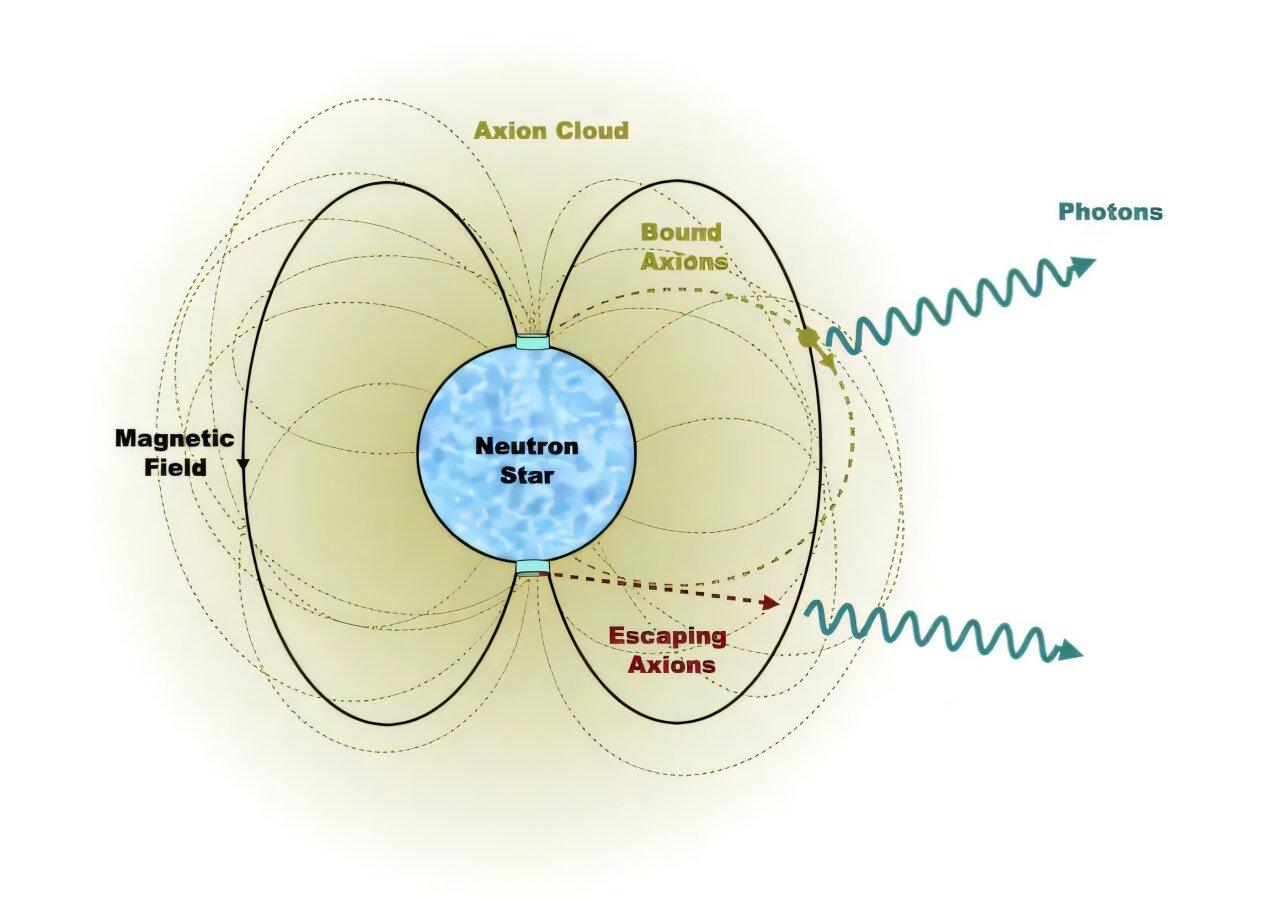
    An axion cloud around a neutron star. While some axions escape the star’s gravitational pull, many remain bound to the star and over a long period of time form a cloud surrounding it. The interaction with the neutron star’s strong magnetic field causes some axions to convert into photons – light that we can eventually detect with our telescopes on Earth. Credit: University of Amsterdam

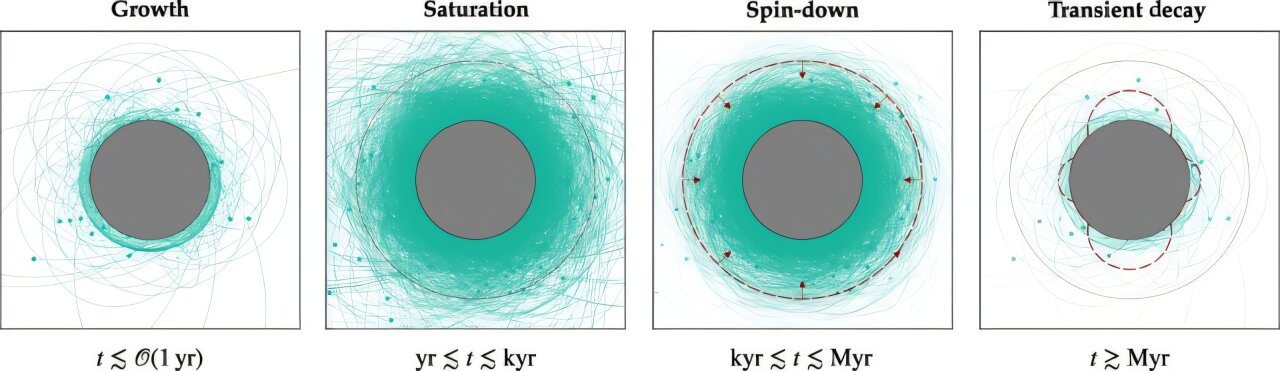
    Image:

    Overview of the four stages characterizing the formation and evolution of axion clouds around neutron stars. Credit: Physical Review X (2024). DOI: 10.1103/PhysRevX.14.041015