Author: Kate Green

  • What Are Black Holes?

    What Are Black Holes?

    by Francis Reddy, NASA

    September 08, 2020

    A black hole is an astronomical object with a gravitational pull so strong that nothing, not even light, can escape it. A black hole’s “surface,” called its event horizon, defines the boundary where the velocity needed to escape exceeds the speed of light, which is the speed limit of the cosmos. Matter and radiation fall in, but they can’t get out.

    Two main classes of black holes have been extensively observed. Stellar-mass black holes with three to dozens of times the Sun’s mass are spread throughout our Milky Way galaxy, while supermassive monsters weighing 100,000 to billions of solar masses are found in the centres of most big galaxies, ours included.

    Astronomers had long suspected an in-between class called intermediate-mass black holes, weighing 100 to more than 10,000 solar masses. While a handful of candidates have been identified with indirect evidence, the most convincing example to date came on May 21, 2019, when the National Science Foundation’s Laser Interferometer Gravitational-wave Observatory (LIGO), located in Livingston, Louisiana, and Hanford, Washington, detected gravitational waves from a merger of two stellar-mass black holes. This event, dubbed GW190521, resulted in a black hole weighing 142 Suns.

    A stellar-mass black hole forms when a star with more than 20 solar masses exhausts the nuclear fuel in its core and collapses under its own weight. The collapse triggers a supernova explosion that blows off the star’s outer layers. But if the crushed core contains more than about three times the Sun’s mass, no known force can stop its collapse to a black hole. The origin of supermassive black holes is poorly understood, but we know they exist from the very earliest days of a galaxy’s lifetime.

    Once born, black holes can grow by accreting matter that falls into them, including gas stripped from neighbouring stars and even other black holes.

    In 2019, astronomers using the Event Horizon Telescope (EHT) — an international collaboration that networked eight ground-based radio telescopes into a single Earth-size dish — captured an image of a black hole for the first time. It appears as a dark circle silhouetted by an orbiting disk of hot, glowing matter. The supermassive black hole is located at the heart of a galaxy called M87, located about 55 million light-years away, and weighs more than 6 billion solar masses. Its event horizon extends so far it could encompass much of our solar system out to well beyond the planets.

    Another important discovery related to black holes came in 2015 when scientists first detected gravitational waves, ripples in the fabric of space-time predicted a century earlier by Albert Einstein’s general theory of relativity. LIGO detected the waves from an event called GW150914, where two orbiting black holes spiraled into each other and merged 1.3 billion years ago. Since then, LIGO and other facilities have observed numerous black hole mergers via the gravitational waves they produce. 


    These are exciting new methods, but astronomers have been studying black holes through the various forms of light they emit for decades. Although light can’t escape a black hole’s event horizon, the enormous tidal forces in its vicinity cause nearby matter to heat up to millions of degrees and emit radio waves and X-rays. Some of the material orbiting even closer to the event horizon may be hurled out, forming jets of particles moving near the speed of light that emit radio, X-rays and gamma rays. Jets from supermassive black holes can extend hundreds of thousands of light-years into space.

    NASA’s Hubble, Chandra, Swift, NuSTAR, and NICER space telescopes, as well as other missions, continue to take the measure of black holes and their environments so we can learn more about these enigmatic objects and their role in the evolution of galaxies and the universe at large.

    Image:

    The first picture of a black hole was made using observations of the center of galaxy M87 taken by the Event Horizon Telescope. The image shows a bright ring formed as light bends in the intense gravity around a black hole 6.5 billion times the Sun’s mass.

    Credit: Event Horizon Telescope Collaboration
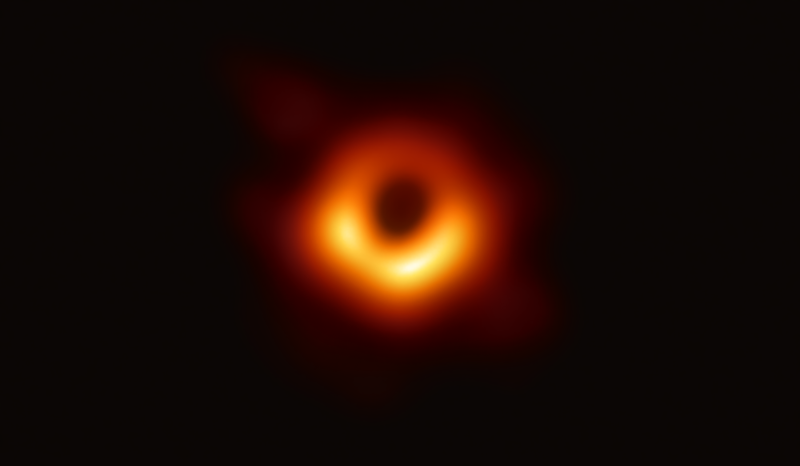
    Image:

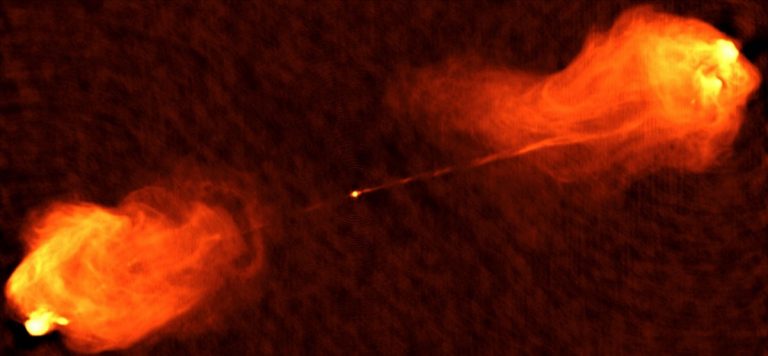
    Radio data from the National Science Foundation’s Very Large Array facility was used to construct this image of Cygnus A, the brightest radio source in the sky located outside our galaxy. Long, thin particle jets produced by a supermassive black hole in the galaxy’s center link to vast lobes where speeding electrons trapped by magnetic fields emit radio waves. From tip to tip, the structure spans half a million light-years.

    Credit: NRAO/AUI
  • Rogue Stars

    Rogue Stars

    by Kate Green

    Intergalactic stars, or rogue stars, are unique stars that are not bound to any particular galaxy, traveling alone through the vast stretches of intergalactic space. Unlike typical stars bound to galaxies by gravitational forces, rogue stars have likely been ejected from their original galaxies due to intense gravitational interactions.

    Origins and Formation

    The exact formation of intergalactic stars is still under study, but scientists propose several main hypotheses:

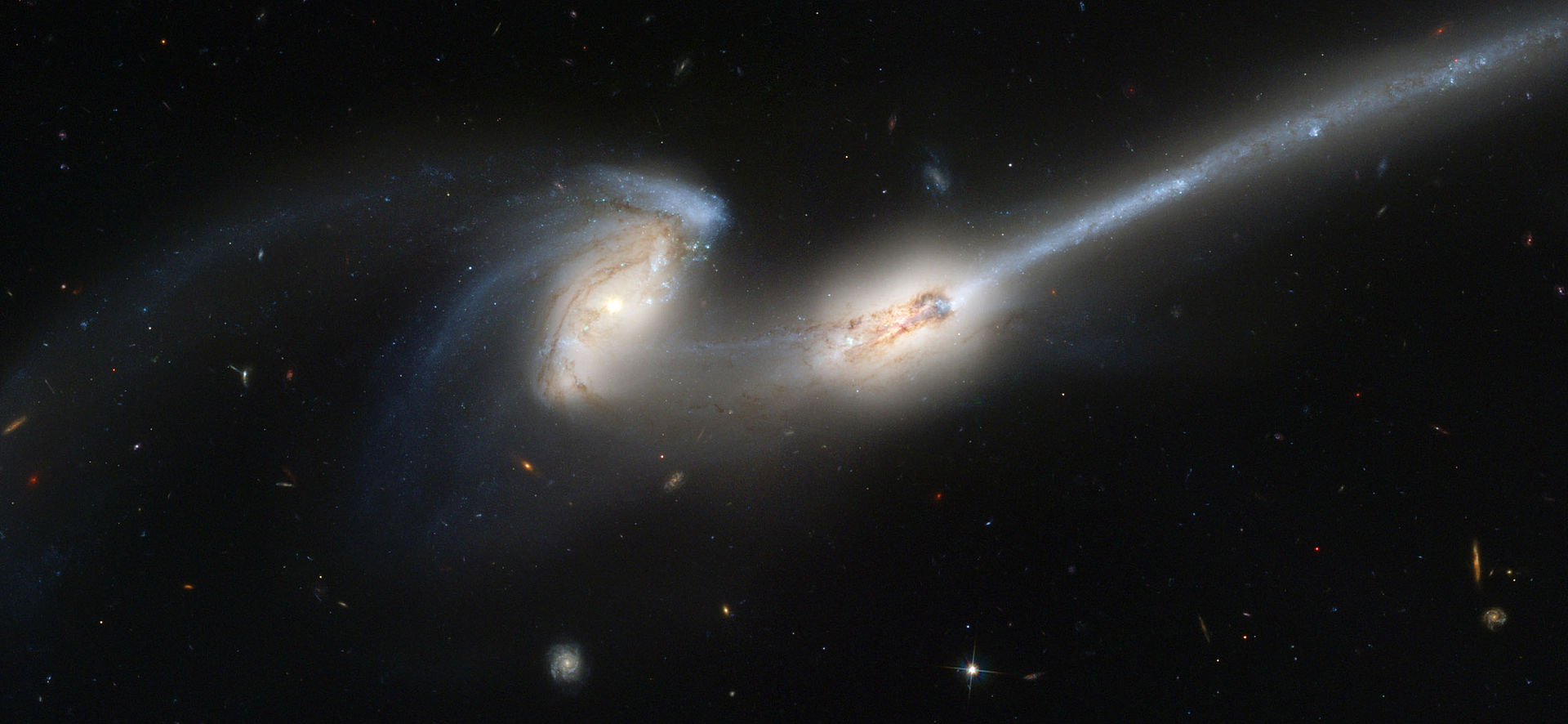
    1. Galactic Collisions: When galaxies collide, gravitational forces can eject stars into intergalactic space, especially in smaller galaxies where the gravitational pull is weaker.

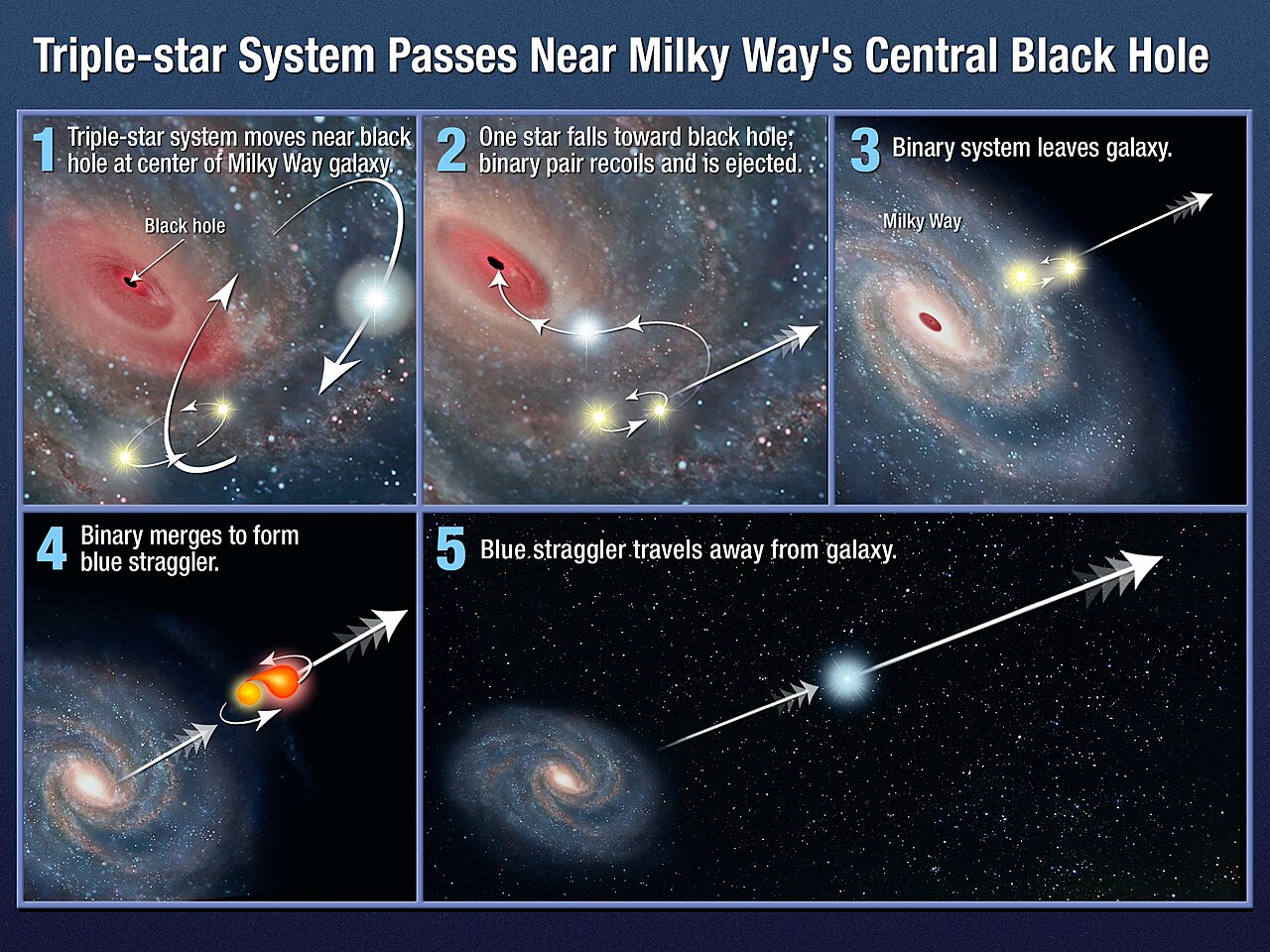
    2. Encounters with Supermassive Black Holes: Stars in multi-star systems that venture too close to a supermassive black hole (common in the centers of galaxies) can be ejected at high speeds. Some of these ejected stars may even reach hypervelocity, escaping the galaxy entirely.

    Discovery

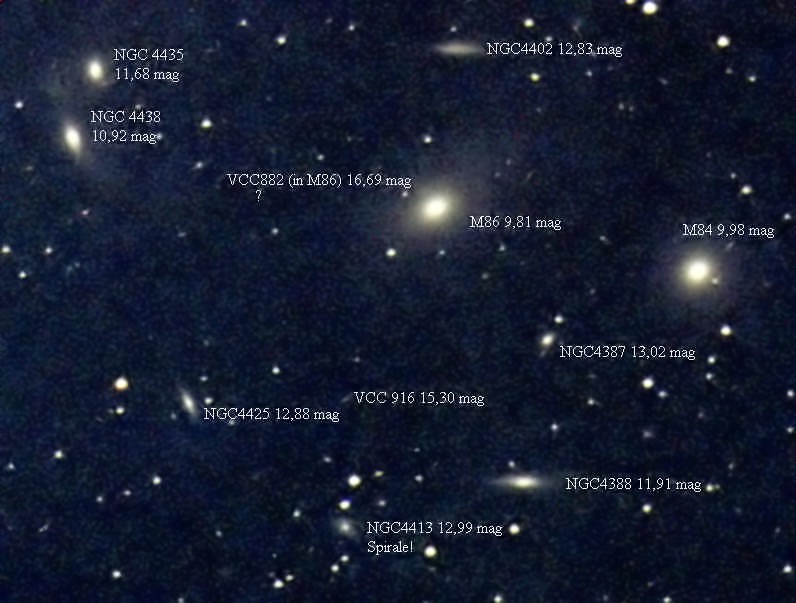
    The existence of intergalactic stars was first confirmed in 1997 when the Hubble Space Telescope identified them in the Virgo Cluster, where up to a trillion intergalactic stars are now estimated to exist.

    Later discoveries include:

    • Fornax Cluster: Intergalactic stars were also found in this cluster following the Virgo findings.

    • Milky Way Edge: Astronomers have identified around 675 rogue stars at the Milky Way’s edge near the Andromeda Galaxy, believed to have been ejected from the Milky Way’s center by its supermassive black hole.

    Observation and Properties

    Intergalactic stars, particularly hypervelocity stars, are observed using the Doppler technique to measure their high speeds. Some of these stars are moving over a million miles per hour, demonstrating the immense forces that expelled them.

    These stars often have distinct characteristics:

    • High Velocity: Some rogue stars, especially hypervelocity stars, can reach speeds exceeding a million miles per hour.

    • Metallicity: Rogue stars often have high metallicity, suggesting they originated in the inner regions of galaxies, where younger, metal-rich stars are more common.

    • Diffuse Radiation: Observations in the 2000s revealed a faint, diffuse glow from the intergalactic medium, likely due to these stars and contributing to the extragalactic background radiation.

    Significance

    • Mass Contribution: It’s estimated that intergalactic stars make up about 10% of the Virgo Cluster’s mass, suggesting their significant presence throughout the universe.

    • Dark Matter and Mass Mystery: Rogue stars may contribute to the dark matter debate by explaining part of the “missing” mass, particularly through the observed diffuse extragalactic radiation.

    Known Locations

    • Virgo Cluster: The first intergalactic stars were observed here, approximately 300,000 light-years from the nearest galaxy.

    • Milky Way’s Edge: Around 675 hypervelocity stars have been identified near the Andromeda Galaxy, suggesting they were likely ejected from the Milky Way.

    The study of rogue stars continues to provide insight into galactic evolution, dark matter, and cosmic dynamics, as these stars challenge our understanding of how galaxies and star systems interact and evolve.

    Image:

    The Virgo cluster of galaxies, where the phenomenon known as intergalactic stars was discovered. Photo of the Centre of the Virgo Cluster of Galaxies with names and magnitudes. Credit: Taken by Bernd Gährken at 14. March 1999 from 1:25 to 1:40 CET on Kodak Pro Gold 400. telescope: 900/150mm 1:5 Newton.

    Image:

    Collisions between galaxies are commonly thought to be a source of intergalactic stars. The Advanced Camera for Surveys (ACS), the newest camera on NASA/ESA Hubble Space Telescope, has captured a spectacular pair of galaxies engaged in a celestial dance of cat and mouse or, in this case, mouse and mouse. Located 300 million light-years away in the constellation Coma Berenices, the colliding galaxies have been nicknamed “The Mice” because of the long tails of stars and gas emanating from each galaxy. Otherwise known as NGC 4676, the pair will eventually merge into a single giant galaxy. Credit: NASA, H. Ford (JHU), G. Illingworth (UCSC/LO), M.Clampin (STScI), G. Hartig (STScI), the ACS Science Team, and ESA – APOD 2004-06-12.

    Image:

    Proposed mechanisms for the ejection of intergalactic stars by supermassive black holes. This illustration shows one possible mechanism for how the star HE 0437-5439 acquired enough energy to be ejected from our Milky Way galaxy. Credit: NASA, ESA, O. Gnedin (University of Michigan, Ann Arbor), and W. Brown (Harvard-Smithsonian Center for Astrophysics, Cambridge, Mass.) – http://hubblesite.org/newscenter/archive/releases/2010/19/image/c/

    References:

    1. Graham, M. L.; Sand, D. J.; Zaritsky, D.; Pritchet, C. J. (2 July 2015). “Confirmation of Hosess y07 (1): 83.

    2. “NewsCenter – Hubble Finds Intergalactic Stars (01/14/1997)”. HubbleSite. 14 January 1997.

    3. Witze, Alexandra (2014). “Half of Stars Lurk Outside Galaxies”. Nature. Nature Publishing Group.

    4. Tillman, Nola Taylor (27 August 2015). “Lonely Supernova Likely Exiled by Merging Black Holes”. Space.com.

    5. Roy Britt, Robert (26 January 2006). “Exiled Stars: Milky Way Boots Members”. Space.com.

    6. “Hyperfast Star Was Booted From Milky Way”. NASA Science. 21 July 2010.

    7. Cooray, Asantha; Smidt, Joseph; De Bernardis, Francesco; et al. (2012). “A measurement of the intrahalo light fraction with near-infrared background anisotropies”. Nature. 490 (7421): 514–516.

    8. Zemcov, Michael; Smidt, Joseph; Arai, Toshiaki; et al. (7 November 2014). “On the origin of near-infrared extragalactic background light anisotropy”. Science. 346 (6210): 732–735.

    9. Salisbury, David (30 April 2012). “Rogue stars ejected from the galaxy found in intergalactic space”. Research News. Vanderbilt University.

    10. Stallard, Brian (7 June 2015). “Between Galaxies: Lonely Supernovae Identified”. Nature World News.

    11. Bromley, Benjamin C.; Kenyon, Scott J.; Brown, Warren R.; Geller, Margaret J. (1 November 2018). “Nearby High-speed Stars in Gaia DR2”. The Astrophysical Journal. 868 (1): 25 (15 pp.).

    12. de la Fuente Marcos, R.; de la Fuente Marcos, C. (8 July 2019). “Flying far and fast: the distribution of distant hypervelocity star candidates from Gaia DR2 data”. Astronomy and Astrophysics. 627: A104 (17 pp.).

    13. “Giant Gas Cloud Surrounds Our Milky Way Galaxy”. Space.com. 24 September 2012.

    14. Choi, Charles Q. (6 November 2014). “Lost in Space: Half of All Stars Drifting Free of Galaxies”. Space. Purch.