Author: Kate Green

  • Observational study supports century-old theory that challenges the Big Bang

    Observational study supports century-old theory that challenges the Big Bang

    by Grant Guggisberg, Kansas State University

    September 11, 2024

    A Kansas State University engineer recently published results from an observational study in support of a century-old theory that directly challenges the validity of the Big Bang theory.

    Lior Shamir, associate professor of computer science, used imaging from a trio of telescopes and more than 30,000 galaxies to measure the redshift of galaxies based on their distance from Earth. Redshift is the change in the frequency of light waves that a galaxy emits, which astronomers use to gauge a galaxy’s speed.

    Shamir’s findings lend support to the century-old “tired light” theory instead of the Big Bang. The findings are published in the journal Particles.

    “In the 1920s, Edwin Hubble and George Lemaitre discovered that the more distant the galaxy is, the faster it moves away from Earth,” Shamir said. “That discovery led to the Big Bang theory, suggesting that the universe started to expand around 13.8 billion years ago. At around the same time, preeminent astronomer Fritz Zwicky proposed that galaxies that were more distant from Earth did not really move faster.”

    Zwicky’s contention was that the redshift observed from Earth is not because the galaxies move but because the light photons lose their energy as they travel through space. The longer the light travels, the more energy it loses, leading to the illusion that galaxies that are more distant from Earth also move faster.

    “The tired light theory was largely neglected, as astronomers adopted the Big Bang theory as the consensus model of the universe,” Shamir said. “But the confidence of some astronomers in the Big Bang theory started to weaken when the powerful James Webb Space Telescope saw first light.

    “The JWST provided deep images of the very early universe, but instead of showing an infant early universe as astronomers expected, it showed large and mature galaxies. If the Big Bang happened as scientists initially believed, these galaxies are older than the universe itself.”

    While new imaging casts doubt on the Big Bang, Shamir’s study used the constant rotational velocity of the Earth around the center of the Milky Way to examine the redshift of galaxies at the Milky Way’s galactic poles that move in different velocities relative to Earth and to test how the change in the redshift responds to the change in velocity.

    “The results showed that galaxies that rotate in the opposite direction relative to the Milky Way have lower redshift compared to galaxies that rotate in the same direction relative to the Milky Way,” Shamir said. “That difference reflects the motion of the Earth as it rotates with the Milky Way. But the results also showed that the difference in the redshift increased when the galaxies were more distant from Earth.

    “Because the rotational velocity of the Earth relative to the galaxies is constant, the reason for the difference can be the distance of the galaxies from Earth. That shows that the redshift of galaxies changes with the distance, which is what Zwicky predicted in his Tired Light theory.”

    Image:

    Northeastern University researchers have shown that our visible universe and invisible dark matter likely co-evolved from the time of the Big Bang. Credit: Pixabay/CC0 Public Domain

    Journal:

    Lior Shamir, An Empirical Consistent Redshift Bias: A Possible Direct Observation of Zwicky’s TL Theory, Particles (2024). DOI: 10.3390/particles7030041

  • NASA / Boeing Starliner Saga Continues

    NASA / Boeing Starliner Saga Continues

    by Kate Green

    October 19, 2024

    NASA’s Starliner spacecraft, developed by Boeing, has faced several delays and technical issues, pushing its next crewed mission to the International Space Station (ISS) to no earlier than 2025.

    Here’s an overview of the situation and its impact on upcoming missions:

    Key Points:

    1. Starliner’s Crewed Mission Delayed:

      • Starliner’s next potential crewed mission to the ISS will occur no sooner than 2025. NASA is currently reviewing Boeing’s path to system certification following issues on the spacecraft’s first crewed test flight earlier this year.

      • The launch of the Crew Flight Test (CFT) on June 5, 2023, experienced propulsion problems during docking. While astronauts Butch Wilmore and Suni Williams reached the ISS safely, five out of 28 thrusters had issues, leading to repeated mission extensions.

    2. Troubleshooting and Delays:

      • Even after extensive ground and space testing, the propulsion issues weren’t fully resolved, prompting NASA to bring Starliner back autonomously on September 6, 2023.

      • Williams and Wilmore, originally expected to return on Starliner, will now return to Earth aboard SpaceX’s Crew Dragon capsule in February 2025 as part of the Crew-9 mission. Crew Dragon’s flexibility allowed for the mission to carry two astronauts instead of the usual four, making space for the Starliner crew.

    3. Certification Uncertainty:

      • NASA and Boeing are still working on determining if Starliner’s CFT mission was successful enough to meet certification requirements for future operational missions like Starliner-1.

      • If necessary, Starliner may require additional test flights with astronauts before being cleared for full operational use.

    4. Starliner’s Propulsion Issues:

      • The propulsion system issues seen in 2024 are not new. Starliner also faced similar problems during its two uncrewed test flights in 2019 and 2022, which NASA and Boeing believed were resolved before sending astronauts onboard.

    5. Upcoming Spaceflight Plans:

      • While Starliner is delayed, NASA’s partnership with SpaceX continues smoothly. SpaceX’s Crew-10 mission is scheduled to launch in February 2025, with a crew that includes NASA astronauts Anne McClain and Nichole Ayers, along with Takuya Onishi (JAXA) and Kirill Peskov (Roscosmos).

      • Crew-11 will follow no earlier than July 2025, though the crew for that mission has yet to be announced.

      • NASA astronauts Scott Tingle, Mike Fincke, and Canadian astronaut Joshua Kutryk are still assigned to Starliner-1, which was expected to fly in 2025. However, their status could change if Starliner requires additional test flights.

    Conclusion:

    Boeing’s Starliner spacecraft continues to face delays and challenges due to propulsion issues that have persisted over multiple flights. NASA is working with Boeing to determine if Starliner can be certified for regular crewed missions to the ISS.

    In the meantime, SpaceX’s Crew Dragon remains the primary vehicle for transporting astronauts to and from the space station, ensuring continuous operations on the ISS while Starliner’s future is assessed.

    Image:

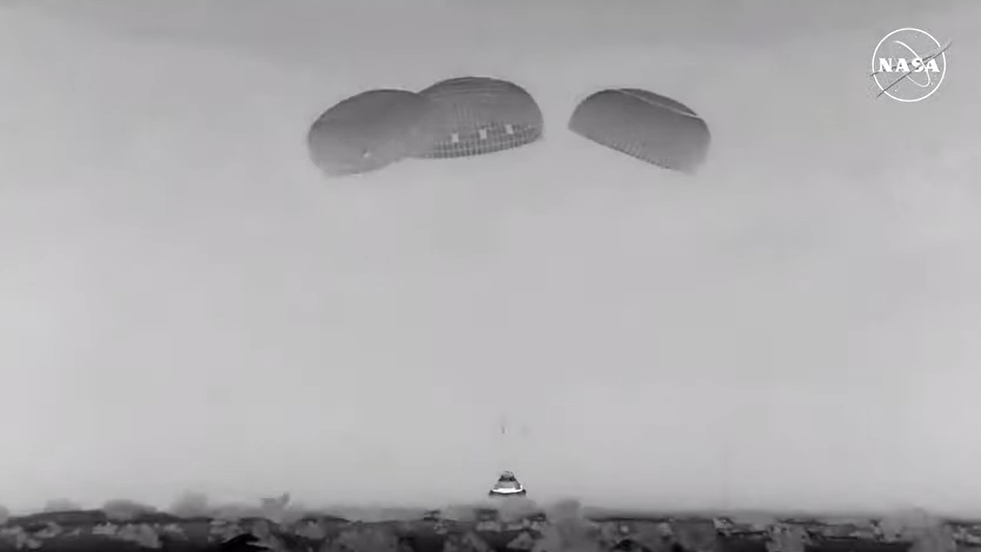
    Boeing’s Starliner Crew Flight Test capsule landing on September 6, 2024. (Image credit: NASA TV)

  • Protecting the ELT from Earthquakes

    by Kate Green

    October 19, 2024

    The Extremely Large Telescope (ELT) in the Atacama Desert is equipped with sophisticated anti-seismic technology to ensure that it remains stable and operational even in the event of an earthquake. Since the region is seismically active, incorporating earthquake-resistant features is critical to protecting the telescope’s delicate instruments and optics. Here’s how this clever technology works:

    1. Base Isolation System:

    One of the key technologies used is base isolation, a system designed to decouple the telescope’s structure from ground motion during an earthquake. Here’s how it works:

    • Elastomeric Bearings: Large rubber and steel bearings are placed between the foundation and the telescope structure. These bearings can deform elastically during seismic activity, absorbing the earthquake’s energy and reducing the amount of shaking transmitted to the telescope.

    • Sliding Bearings: In some systems, sliding bearings are also used, allowing the structure to move slightly relative to the ground, which further reduces the impact of ground movement on the telescope.

    2. Dampers:

    In addition to base isolation, seismic dampers are installed to absorb the energy generated during an earthquake. These are specialized devices that:

    • Dissipate Vibrational Energy: Dampers convert the vibrational energy from the earthquake into heat, reducing the amount of movement the telescope experiences.

    • Shock Absorption: These devices provide a buffering effect, protecting both the mechanical and optical components from shocks.

    3. Structural Flexibility:

    The steel structure of the telescope dome is designed with flexibility in mind, meaning it can absorb and distribute seismic forces without cracking or deforming. The use of flexible joints and materials ensures that the structure bends rather than breaks, which helps protect the telescope’s sensitive optics.

    4. Automated Safety Systems:

    To further safeguard the telescope during seismic events, automated systems are in place to detect the onset of an earthquake. These systems may:

    • Shut Down Operations: Automatically stop observations and move the telescope into a “safe” position to prevent damage to the delicate instruments.

    • Secure Instruments: Lock down movable parts to minimize internal damage.

    Why It’s Crucial:

    Seismic protection is especially important because the ELT’s optics and adaptive systems require an incredibly high degree of precision. Even slight movements or distortions caused by seismic activity could affect the alignment of mirrors or damage equipment, impacting the telescope’s ability to capture high-resolution images.

    By combining these technologies, the ELT is built to withstand the region’s seismic challenges and continue its groundbreaking observations with minimal interruption.

    Video Credit: European Southern Observatory (ESO)

  • Re-analysis of Milky Way’s central supermassive black hole shows elongated structure

    Re-analysis of Milky Way’s central supermassive black hole shows elongated structure

    by National Astronomical Observatory of Japan

    October 25, 2024

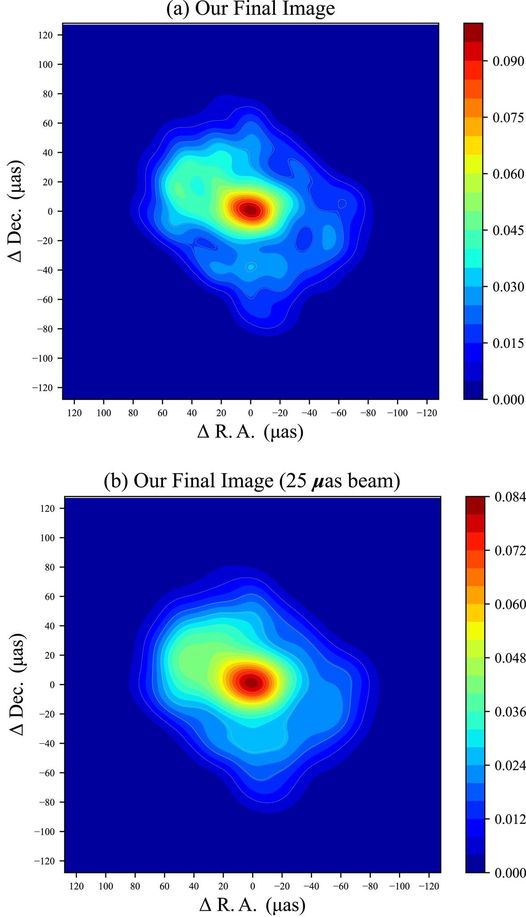
    A research team led by Assistant Professor Makoto Miyoshi of the National Astronomical Observatory of Japan (NAOJ) has independently re-analysed observation data of the supermassive black hole at the centre of the Milky Way galaxy obtained and published by the international joint observation project Event Horizon Telescope (EHT). They found that the structure is slightly elongated in the east-west direction.

    This research, published in the Monthly Notices of the Royal Astronomical Society, takes a new look at the publicly available EHT data and demonstrates the scientific process in which the certainty of the answer increases as different researchers continue to examine and discuss a theory.

    The Milky Way galaxy, in which we live, contains more than 100 billion sun-like stars. There are countless such large galaxies in the universe, most of which are thought to have supermassive black holes at their centres with masses millions to billions of times that of the sun. The Milky Way galaxy also has a supermassive black hole at its centre, called Sagittarius A* (A star).

    The black hole swallows everything, including light, making it impossible to see the supermassive black hole itself, but analysis of stars circling the black hole at high speed indicates that Sagittarius A* has a mass approximately 4 million times that of the sun. By closely observing its surroundings, we can obtain clues to the nature of the invisible black hole.

    The EHT observed Sagittarius A* in 2017 with a network of eight ground-based radio telescopes using a technique known as radio interferometry to combine the results from the various telescopes. The results of these observations were published in 2022, including an image of a bright ring structure surrounding a central dark region, indicating the presence of a black hole.

    In contrast to typical photography, data from observations linking several widely separated radio telescopes contain many gaps in the completeness, so special algorithms are used to construct an image from the data. In this research, the team applied widely used traditional methods to EHT data, as opposed to the EHT’s own original analysis method.

    Miyoshi explains, “Our image is slightly elongated in the east-west direction, and the eastern half is brighter than the western half. We think this appearance means the accretion disk surrounding the black hole is rotating.”

    The EHT’s observational data and analysis methods are freely available, and many researchers have validated the results of EHT analysis. This research is also part of these regular verification activities.

    Radio interferometry connecting telescopes across the globe is a developing technology, and research on data analysis and image processing is ongoing, incorporating knowledge from statistics and other related disciplines.

    The structures presented in this research differ from the results of the EHT team, but both are plausible structures derived from the data using the respective methods. The EHT plays an important role in black hole research by soliciting independent verification and providing open data for verification.

    It is hoped that a more reliable picture of Sagittarius A* will emerge from active discussion by researchers based on improved analysis methods and data from follow-up observations conducted since 2018.

    Journal:

    Makoto Miyoshi et al, An independent hybrid imaging of Sgr A* from the data in EHT 2017 observations, Monthly Notices of the Royal Astronomical Society (2024).

    DOI: 10.1093/mnras/stae1158

    Image:

    Final image of Sgr A* obtained from our imaging process. Credit: Monthly Notices of the Royal Astronomical Society (2024). DOI: 10.1093/mnras/stae1158

  • Increasing Space Debris – Are there solutions?

    Increasing Space Debris – Are there solutions?

    by Kate Green

    October 19, 2024

    The Disney-Pixar movie WALL-E (2008) offers an interesting, if not entirely realistic, portrayal of Earth’s future, including a representation of space debris. While the film primarily focuses on environmental degradation, its depiction of space junk hints at real-world issues related to space debris and human neglect of sustainability.

    The real life growing issue of space debris, or space junk, is a significant challenge for the future of space exploration and satellite operations. As more nations and companies launch satellites and missions into Earth’s orbit, the risk of collisions and disruptions increases.

    Why is Space Debris a Problem?

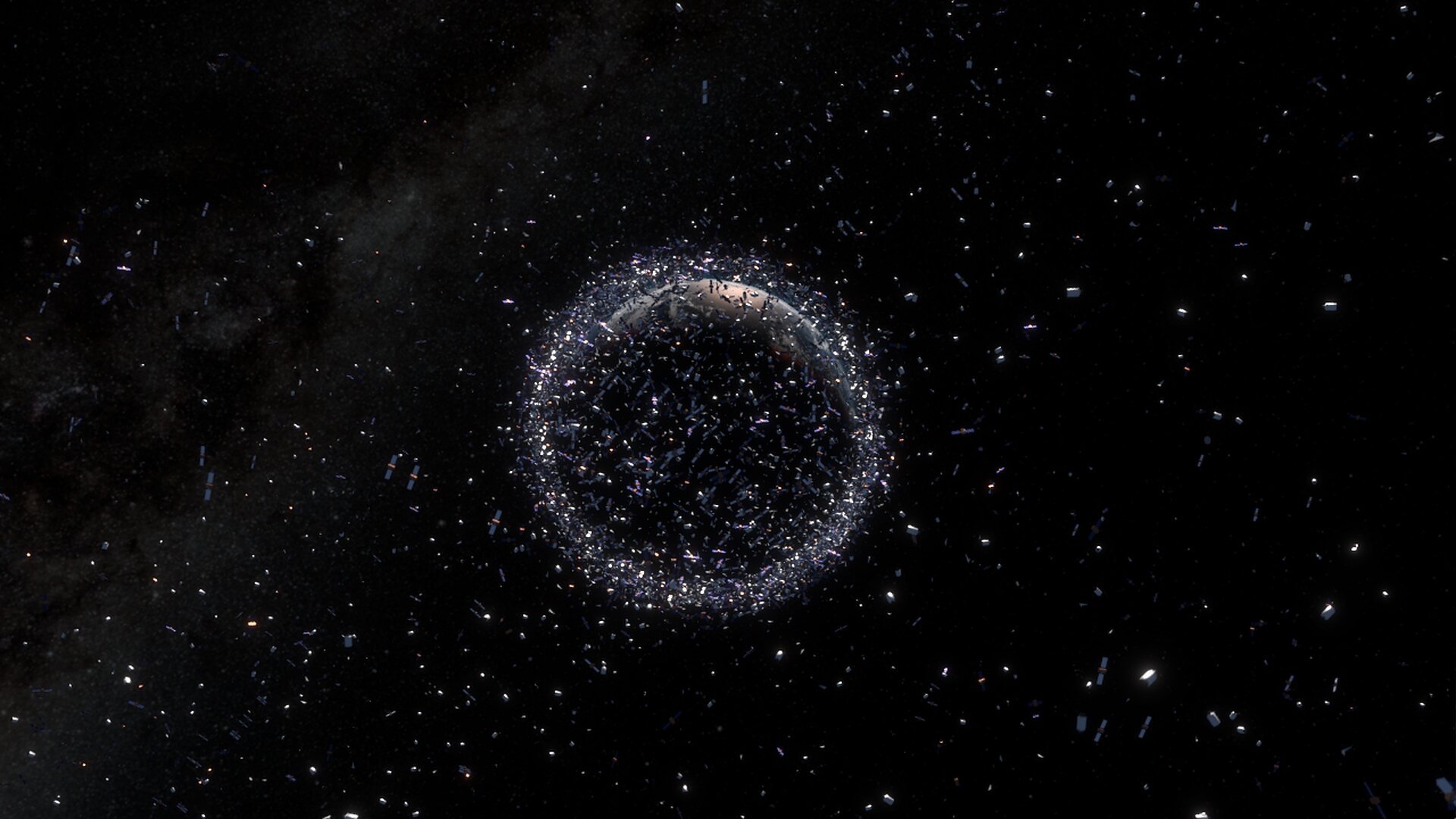
    Space debris includes defunct satellites, spent rocket stages, fragments from collisions, and other non-functional objects in Earth’s orbit. These range from large objects to tiny paint flecks, but even small debris traveling at high velocities (up to 28,000 km/h) can cause severe damage.

    As of October 2024, over 36,000 pieces of debris larger than 10 cm are tracked, but millions of smaller, untracked particles also pose dangers. Collisions between debris and operational spacecraft could lead to a Kessler syndrome, where the density of objects in low Earth orbit (LEO) reaches a point that leads to cascading collisions, rendering orbits unusable for satellites or space missions, trapping humanity on Earth much like in WALL-E.

    Space debris threatens active satellites, the International Space Station (ISS), and future space missions. It also endangers human spaceflight and critical infrastructure like communication and weather satellites.

    Proposed Solutions to the Space Debris Problem

    Active Debris Removal (ADR)

    ADR involves removing large debris objects before they cause collisions. Several concepts are being developed:

    • Space tugs: Satellites equipped with robotic arms or nets could capture and deorbit large debris.

    • Harpoons and nets: Special satellites can harpoon or net debris, dragging it into Earth’s atmosphere to burn up.

    • Lasers: Ground-based or satellite-based lasers could “nudge” debris by altering its orbit slightly, causing it to deorbit and burn up in the atmosphere over time.

    A real life example is the European Space Agency’s (ESA) ClearSpace-1 mission, planned for 2026, which aims to capture and de-orbit a large piece of space debris (a rocket component) using a robotic arm.

    Debris Mitigation

    The reduction in the creation of new debris is crucial with mitigation strategies including:

    • End-of-life protocols: Satellites should be designed to either deorbit themselves or move to a graveyard orbit at the end of their operational life. This is already a regulatory requirement for some missions.

    • Design improvements: Satellites and rockets should minimize the shedding of parts during launch and operations, and be made of materials that degrade more quickly in orbit.

    An example of this is the UN’s Outer Space Treaty and Inter-Agency Space Debris Coordination Committee (IADC)  which recommends guidelines for minimizing debris, though enforcement is challenging.

    International Cooperation and Policy

    • International treaties: Coordinated international policies and agreements will be necessary to enforce space debris regulations, ensuring that all countries follow best practices for debris mitigation and removal.

    • Debris-tracking networks: Nations must work together to enhance global tracking systems. This includes sharing data about debris objects and possible collisions.

    Organizations like the UN Office for Outer Space Affairs (UNOOSA) work to foster international dialogue on space sustainability – but again, not all countries and private / commercial companies are willing to participate.

    Space Traffic Management (STM)

    Just as air traffic control manages airplanes, STM aims to manage and monitor objects in space. By tracking large debris, space agencies can prevent collisions and ensure the safety of space missions. However, as the number of objects in orbit grows, this task becomes more challenging, emphasizing the need for active debris removal and better space traffic management.

    • Real-time tracking: Enhanced debris tracking and collision-avoidance systems could help prevent potential collisions between satellites and debris.

    • Autonomous systems: AI-powered systems onboard satellites could automatically adjust orbits when on a collision course with debris.

    • Tracking Objects Larger than 10 cm: Pieces of debris larger than 10 cm are considered large enough to be tracked with ground-based radar and optical telescopes. Space agencies such as NASA and ESA (European Space Agency) keep continuous track of these objects. Private organizations like the U.S. Space Surveillance Network (SSN) and LeoLabs also track debris and offer collision avoidance services for satellite operators.

    • Catalogued Objects: There are currently over 36,000 pieces of debris larger than 10 cm orbiting Earth that are being tracked. These include defunct satellites, spent rocket stages, and fragments from collisions or disintegration events.

    • Avoidance Manoeuvres: When larger pieces of tracked debris come close to active satellites or the International Space Station (ISS), operators are alerted and sometimes perform avoidance manoeuvres to prevent collisions.

    • Objects Between 1 and 10 cm: Although objects between 1 and 10 cm are harder to track, they are still dangerous. These are often detected using radar, but their precise orbits may not always be catalogued. The number of objects in this size range is estimated to be much higher, in the hundreds of thousands.

    • Smaller Debris: Even smaller debris (under 1 cm) poses risks, especially to spacecraft and Astronauts, though these are too small to track individually. Shielding techniques are used to protect spacecraft from these tiny, high-velocity objects.

    Recycling and Repurposing in Space

    • In-orbit recycling: A future possibility could involve missions that collect debris and repurpose materials in space for manufacturing. This would help clear orbits and provide resources for constructing spacecraft or stations without launching materials from Earth.

    • On-orbit servicing: Some companies are developing satellites that can extend the life of other satellites by refueling or repairing them, preventing them from becoming debris.

    Another private company example is that of Northrop Grumman’s Mission Extension Vehicle (MEV) that successfully extended the life of a communications satellite, showcasing the potential of on-orbit servicing.

    The Path Forward

    While Disney’s WALL-E is an animated science fiction film, its portrayal of space debris serves as a cautionary tale. It highlights the importance of addressing real-world environmental and space sustainability issues before they spiral out of control. It reflects a growing awareness of the need for responsible space exploration, better debris management, and sustainable living on Earth.

    Innovative solutions are being developed with the challenge being implementing these solutions globally and at scale. Active removal efforts combined with strong mitigation policies, technological advances, and international cooperation offer the most promising paths to maintaining a sustainable space environment for future generations.
  • NASA’s SpaceX Crew-8 mission  Astronaut remains Hospitalised

    NASA’s SpaceX Crew-8 mission Astronaut remains Hospitalised

    by Kate Green

    October 25, 2024

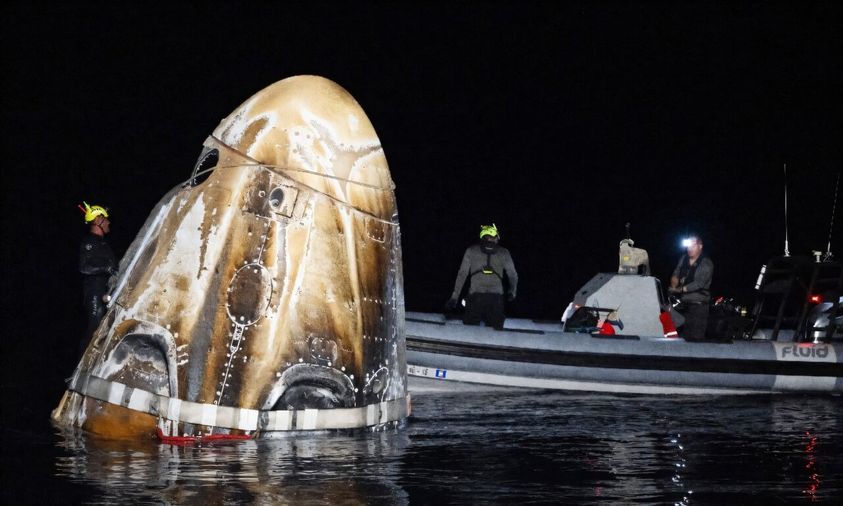
    NASA recently announced that an Astronaut from the Crew-8 mission, who returned from completing a 235-day mission on October 25, is currently hospitalized following a routine medical check.

    The mission, which included NASA astronauts Matthew Dominick, Michael Barratt, and Jeanette Epps, along with Roscosmos cosmonaut Alexander Grebenki, had an uneventful re-entry and splashdown off Florida’s coast.

    After safely splashing down on Earth as part of NASA’s SpaceX Crew-8 mission Friday, a NASA astronaut experienced a medical issue. NASA stated that after initial evaluations were performed aboard the recovery ship, further medical assessments were undertaken as a precautionary measure.

    According to a statement from NASA, “”additional evaluation of the crew members was requested out of an abundance of caution.”

    NASA did not elaborate further.

    The latest update from NASA states that “three crew members have since been released, while one NASA astronaut remains under observation at Ascension Sacred Heart Pensacola as a precautionary measure.”

    The Agency continued to say that they “are grateful to Ascension Sacred Heart for its support during this time, and we are proud of our team for its quick action to ensure the safety of our crew members.”

    NASA has not specified the medical condition to respect the Astronaut’s privacy but has assured the public that they are in stable condition.

    NASA will provide additional information as it becomes available.

    Image: The SpaceX Dragon Endeavour spacecraft shortly after splashdown off the coast of Florida on October 25, 2024.

  • Satellites and their negative impact on space exploration

    Satellites and their negative impact on space exploration

    While satellites have greatly benefited space exploration, they also pose several significant challenges and negative impacts, particularly as their numbers continue to increase.

    Here are some of the primary concerns:

    1. Space Debris (Orbital Junk)

    • Growing Debris Problem: As more satellites are launched into space, especially in low Earth orbit (LEO), the amount of space debris has increased dramatically. Defunct satellites, spent rocket stages, and fragments from collisions or explosions create a cloud of debris orbiting the Earth.

    • Risk to Active Satellites and Missions: Space debris can collide with operational satellites, damaging or destroying them. Even small pieces of debris can cause catastrophic damage due to the high speeds at which they orbit. This increases the risk for active satellites and space missions, including crewed missions to the ISS or beyond.

    • Kessler Syndrome: A worst-case scenario involves the potential onset of the Kessler Syndrome, where the density of objects in orbit is so high that collisions between objects generate even more debris, leading to a cascade of collisions. This could make certain orbits unusable and impede space exploration for decades.

    2. Interference with Astronomy and Space Observation

    • Light Pollution: The increasing number of satellites, especially large constellations like SpaceX’s Starlink, have begun to interfere with ground-based astronomical observations. The satellites reflect sunlight and produce bright streaks in astronomical images, reducing the quality of scientific data and making it more difficult for astronomers to observe faint objects in deep space.

    • Radio Frequency Interference: Satellites transmit signals back to Earth, which can interfere with radio telescopes that are crucial for certain types of space observations. This makes it harder for scientists to conduct radio astronomy, a key method for studying distant cosmic phenomena like black holes and pulsars.

    3. Satellite Collisions

    • Increased Collision Risk: As the number of satellites in orbit grows, the likelihood of collisions increases. Satellites traveling at orbital speeds (about 28,000 km/h or 17,500 mph) can cause immense damage if they collide, either with other satellites or debris.

    • Chain Reaction Collisions: A single collision can generate hundreds or thousands of new pieces of debris, each of which poses a threat to other satellites. This not only endangers other spacecraft but also makes space exploration riskier and more costly.

    4. Environmental Impact

    • Atmospheric Pollution: When satellites re-enter Earth’s atmosphere, especially large satellites or rocket stages, they burn up, releasing aluminum oxide and other materials into the atmosphere. This can potentially affect atmospheric chemistry and contribute to environmental degradation.

    • Rocket Emissions: The launch of satellites requires rockets, which release large amounts of greenhouse gases and other pollutants into the atmosphere. Some estimates suggest that the growing number of satellite launches could have a measurable impact on global warming and the depletion of the ozone layer.

    5. Regulatory and Orbital Traffic Management Issues

    • Lack of Global Regulation: The rapid expansion of satellite constellations, particularly by private companies, has outpaced international regulatory frameworks. This creates challenges in managing orbital traffic, avoiding collisions, and ensuring that satellites do not interfere with each other’s operations.

    • Crowded Orbits: Certain orbits, especially low Earth orbit (LEO) and geostationary orbit (GEO), are becoming increasingly crowded. Without effective management, this congestion increases the risk of collisions and complicates satellite operations, potentially leading to service disruptions or mission failures.

    6. Increased Costs and Risks for Space Exploration

    • Higher Costs for Missions: The need to avoid space debris and manage the risk of satellite collisions increases the complexity and cost of space missions. Spacecraft now require more sophisticated tracking systems, collision avoidance maneuvers, and potentially costly insurance policies to mitigate these risks.

    • Impact on Future Missions: The crowding of orbits and the proliferation of debris may restrict future space missions, both for Earth observation and interplanetary exploration. This could limit humanity’s ability to deploy new scientific instruments or exploratory missions in space, particularly in key orbits.

    7. Monopolization of Space by Private Companies

    • Private Sector Dominance: The increasing privatization of space, driven by companies like SpaceX, Amazon, and OneWeb, may lead to monopolization of key orbital regions. This could limit access to space for smaller countries or organizations and increase costs for space missions that rely on certain orbits.

    • Commercialization vs. Scientific Exploration: With more satellites being launched for commercial purposes (e.g., internet services), there is concern that scientific exploration may take a backseat to profit-driven ventures. The commercialization of space could skew priorities away from pure scientific research.

    8. Potential for Weaponization and Militarization

    • Weaponization of Space: Satellites have strategic military uses, such as surveillance, communication, and navigation for armed forces. The development of anti-satellite (ASAT) weapons and the potential for the militarization of space create new risks, including the possibility of conflicts escalating into space.

    • Global Security Concerns: An arms race in space could lead to more satellite destruction, intentional or accidental, exacerbating the space debris problem and threatening peaceful exploration.

    Conclusion

    Satellites have undoubtedly expanded the horizons of space exploration, but they also come with significant negative impacts. The growing issue of space debris, interference with scientific research, environmental damage, and regulatory challenges are among the major concerns. Addressing these issues will be crucial for ensuring that space remains accessible and sustainable for future generations. Effective international cooperation, improved technology for debris mitigation, and responsible satellite deployment are needed to minimize these risks and allow for continued advancements in space exploration.

  • Scientists delving into the Origin of ‘Rogue Stars’

    Scientists delving into the Origin of ‘Rogue Stars’

    by Kate Green

    November 12, 2024

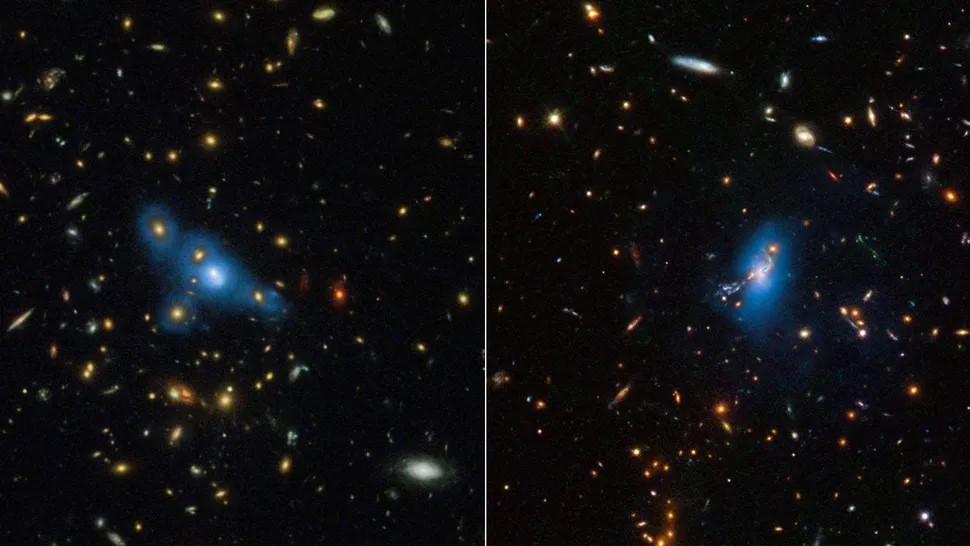
    Scientists are delving into the origin of “rogue stars”—those that wander through space, unbound by gravity to galaxies or star clusters. Although stars usually group together due to gravitational forces, these loners, known as intracluster light, were first observed in 1951 by Fritz Zwicky. However, recent research led by the Hubble Space Telescope has offered new insights into their age and origin.

    The Hubble survey studied ten galactic clusters up to 10 billion light-years away, revealing that the proportion of intracluster light remains consistent across time. This constancy suggests that these stars are ancient—likely billions of years old—rather than recently separated from galaxies by gravitational forces, or “stripping.” If stripping were the cause, scientists would expect an increase in intracluster light over time.

    The researchers theorize that these rogue stars may have formed in small, early galaxies with weaker gravitational pulls, making them susceptible to “bleeding” stars into the vastness of space. Co-author James Jee of Yonsei University notes that current theories can’t fully explain the results, but the team suspects that conditions in the early universe may have led to the widespread dispersal of these stars.

    “We don’t exactly know what made them homeless. Current theories cannot explain our results, but somehow they were produced in large quantities in the early universe,” James Jee, an astronomer at Yonsei University in South Korea and co-author on the new research, said in a statement. “In their early formative years, galaxies might have been pretty small and they bled stars pretty easily because of a weaker gravitational grasp.”

    “If we figure out the origin of intracluster stars, it will help us understand the assembly history of an entire galaxy cluster, and they can serve as visible tracers of dark matter enveloping the cluster,” co-author Hyungjin Joo, also of Yonsei University, said in the same statement.

    The Hubble and James Webb Space Telescopes will continue to investigate these stars, potentially uncovering clues about dark matter—the mysterious force believed to bind galaxies together. By understanding how these wandering stars were created, scientists might reveal the formation history of entire galaxy clusters and gain insight into the dark matter that surrounds them.

    The team’s findings were published on January 04, 2023 in Nature.

    Journal:

    Joo, H., & Jee, M. J. (2023). Intracluster light is already abundant at redshift beyond unity. Nature, 613(7942), 37-41. https://arxiv.org/pdf/2301.01523 

    Image:

    Two panels show blueish glow around stars (Image credit: NASA, ESA, STScI, James Jee (Yonsei University)/IMAGE PROCESSING: Joseph DePasquale (STScI))

  • Shielding the Extremely Large Telescope from the Atacama Desert

    by Kate Green

    October 19, 2024

    The Extremely Large Telescope (ELT), currently under construction in the Atacama Desert, is set to become the world’s largest optical/near-infrared telescope. Once completed, it will have a segmented primary mirror 39 meters in diameter, allowing it to capture unprecedented levels of detail in the universe. The Atacama Desert, with its high altitude, clear skies, and extremely dry conditions, is an ideal location for such an advanced astronomical instrument.

    The harsh environment of the desert poses challenges, such as temperature extremes, wind, and dust. To address this, the ELT’s steel dome is being covered with specialized cladding, which includes insulating layers and sheets of aluminum. This protective covering will help regulate internal temperatures, minimize expansion and contraction of materials, and protect the delicate optics from external elements, such as wind, dust, and thermal variations.

    Balancing structural durability with maintaining a stable internal environment for the telescope’s optics is critical, especially in extreme conditions like those in the Atacama Desert.

    1. Thermal Regulation: The insulating layers in the cladding prevent rapid temperature fluctuations, which can affect both the steel structure and the telescope’s optics. The aluminum sheets reflect sunlight and minimize heat absorption during the day, while insulation prevents heat from escaping too quickly at night. This ensures that the internal environment stays stable despite drastic temperature changes outside.

    2. Vibration Damping: The cladding also helps dampen vibrations caused by wind, reducing their impact on the telescope’s sensitive instruments. Additionally, the steel dome is designed with materials and shapes that absorb or deflect these forces to minimize interference.

    3. Environmental Sealing: The cladding, combined with precise engineering of joints and seals, protects against dust, sand, and moisture. Even in a dry environment, dust particles can be damaging to delicate optics over time. The sealing and layers will prevent these contaminants from infiltrating the dome.

    4. Active Climate Control: In addition to the cladding, the team is using active climate control systems to manage temperature and humidity levels inside the dome. This ensures the telescope’s environment stays within strict operational limits.

    5. Material Selection: The steel used for the dome is designed to withstand the environmental conditions while minimizing thermal expansion. This, combined with the cladding, ensures that structural integrity is maintained without causing stress to the telescope’s components.

    The ELT will play a critical role in advancing our understanding of the universe, contributing to research on exoplanets, black holes, and the formation of galaxies. Its capabilities will surpass those of any existing telescope, making it a key asset for astronomers worldwide.

    Video Credit: European Southern Observatory (ESO)

  • First results from the Axion Dark-Matter Birefringent Cavity experiment establish a new technique for axion se

    First results from the Axion Dark-Matter Birefringent Cavity experiment establish a new technique for axion se

    by Kate Green

    October 20, 2024

    MIT researchers recently published the first results of an experiment aimed at detecting axion dark matter by exploring axion-induced birefringence of electromagnetic waves. Although no axion signals were observed, the findings, published in Physical Review Letters, introduced a new method for axion searches. This approach uses a tuneable optical cavity, allowing researchers to adjust the experimental parameters and expand the range of possible axion masses they can probe. This marks a significant advancement in the search for axions, hypothetical particles thought to be a key component of dark matter.

    Evan Hall, a research scientist at MIT’s LIGO lab, explained that the experiment was first proposed in 2019 through a collaboration between their lab and the MIT Center for Theoretical Physics. The team was exploring new approaches to search for the axion, a hypothetical dark matter particle.

    “Any observable interaction between axions and standard matter is expected to be very faint. We realized that the problem of trying to find a faint signal was a very similar problem to the detection of gravitational waves, which is another kind of very faint kind of signal detected only recently” Hall stated.

    After extensive theoretical discussions, Evan Hall and his colleagues recognized that the lasers and optical instruments used in LIGO’s gravitational wave detection could be adapted for axion searches. This led to the development of the Axion Dark-Matter Birefringent Cavity (ADBC) experiment, which began collecting data in 2022. The experiment repurposes LIGO’s technology to probe for faint signals that could reveal the existence of axions, a type of hypothetical dark matter particle.

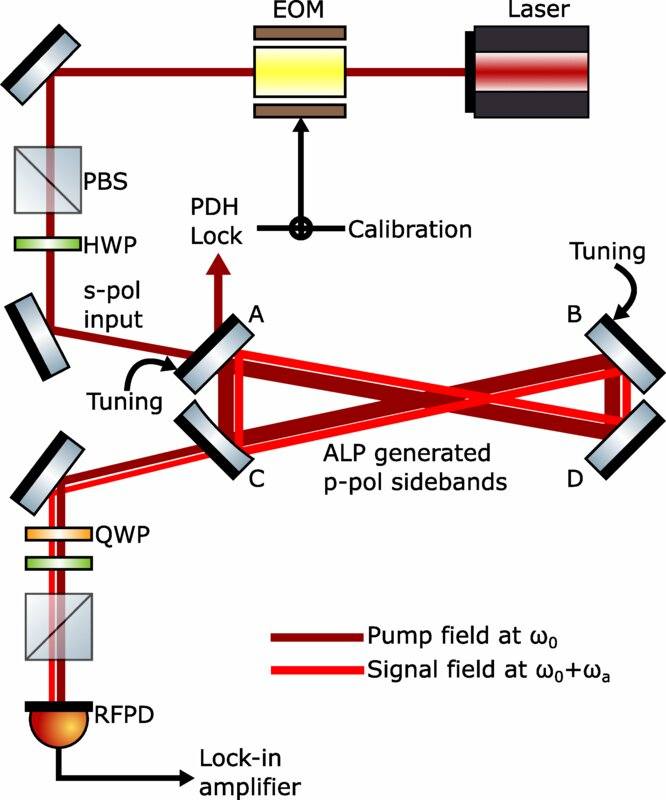
    “We wanted to demonstrate experimentally how to use these tools to pull off an axion search,” explained Hall. “Light comes in two polarizations—horizontal and vertical. Axions, if they exist, are expected to convert one polarization into the other. In our lab, we use a laser to generate vertically polarized light, and we look for any hint that axions have converted some of that light into the horizontal polarization.”

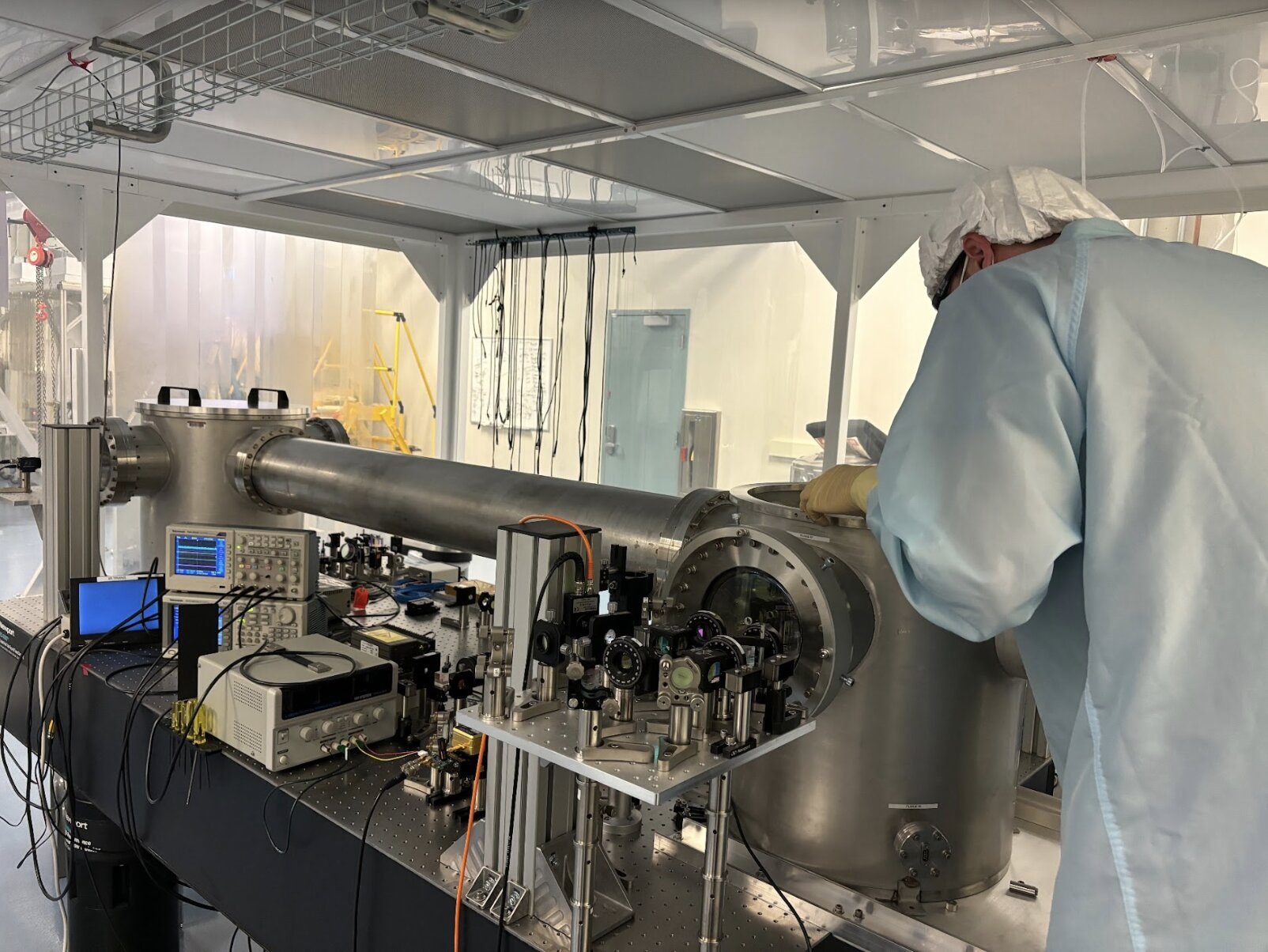
    The ADBC experiment’s detector is composed of four mirrors arranged in an optical cavity, a structure designed to trap and recirculate light. This cavity allows laser-generated light beams to bounce thousands of times, significantly amplifying any faint signals that could be caused by axions. This design enhances the experiment’s ability to detect the subtle interactions expected from these hypothetical dark matter particles.

    In the early stages of the experiment, Hall and his team used the ADBC detector to search for axions with masses around 50 neV (about 10–40 grams). Interestingly, a research group in the United Kingdom has been conducting similar searches for axions, focusing on those with masses around 2 neV, using equipment comparable to that used at MIT. This highlights the growing global interest in axion searches, with different teams probing various mass ranges to uncover these elusive dark matter particles.

    “Our work showed that this new kind of cavity can be tuned to widen the range of possible axion masses that can be searched over,” said Swadha Pandey, fourth year Ph.D. student at MIT. “Specifically, we showed that the cavity can be tuned by adjusting the angles of its four mirrors. Tunability is an important criterion for making the apparatus useful for dark matter searches. Since nobody knows what the axion mass might be, we need to search over a wide range of possible masses.”

    The initial results from the ADBC experiment have placed important constraints on the potential coupling between axion-like particles and photons. While axions have not been detected yet, these findings lay the groundwork for future research, showing that optical cavities can be an effective tool for searching for these hypothetical dark matter particles. This work could inspire further experiments and refinements in the search for axions, bringing researchers closer to their potential experimental discovery.

    “Having shown that this method can work over a broad range of axion masses, the next step would be to build a larger, more sensitive experiment,” added Pandey. “Such an experiment would use more laser light, so that there are more photons interacting with the axions, and the experiment would be larger, to increase the time that the photons can interact with the axions. Automation of the tuning mechanism and clever designs for mirror coatings are also essential for scanning across the entire available range of axion masses.”

    Journal:

    Swadha Pandey et al, First Results from the Axion Dark-Matter Birefringent Cavity (ADBC) Experiment, Physical Review Letters (2024).

    DOI: 10.1103/PhysRevLett.133.111003

    Image:

    Experimental setup at MIT, picture by Swadha Pandey. Our four-mirror detector is housed inside two steel vacuum chambers connected by a pipe. The platform in front of the near vacuum chamber supports optics that direct laser light into and out of the chamber. Credit: Pandey, Hall and Evans.

    Image:

    Experimental setup: bow-tie cavity with A, D, B, C mirrors. ^𝑠-polarized pump field from a 1064 nm Nd:YAG laser enters the cavity at mirror A and is locked to the cavity using a Pound-Drever-Hall lock. ^𝑝-polarized sidebands generated by an axionlike particle (ALP) at the cavity splitting frequency 𝜔𝑎=𝜔sp are resonant in the cavity. Heterodyne readout is performed using pump and signal field transmitted at mirror C. Credit: Physical Review Letters (2024). DOI: 10.1103/PhysRevLett.133.111003