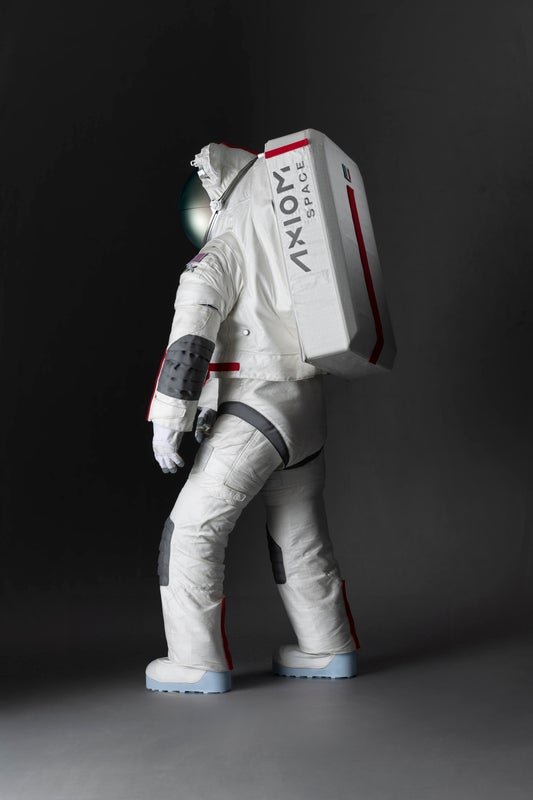
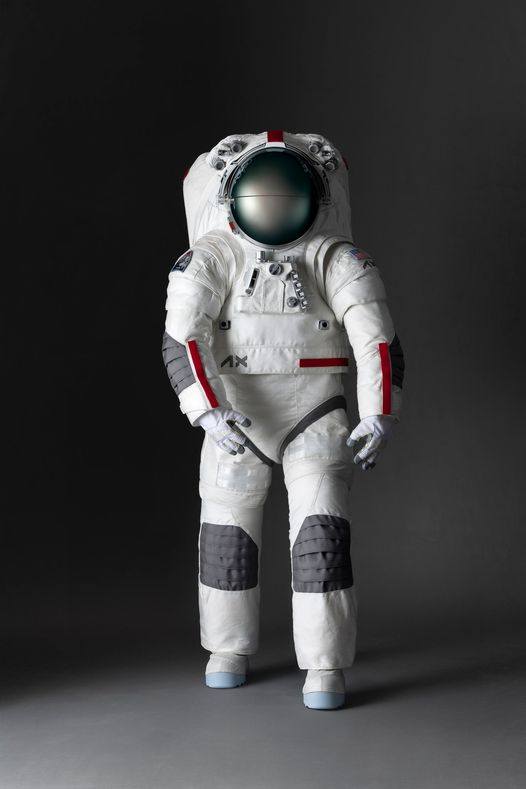
The collaboration between Axiom Space and Prada has unveiled the Axiom Extravehicular Mobility Unit (AxEMU) spacesuit, designed for NASA’s Artemis III mission. This next-gen spacesuit combines creativity with engineering, reflecting how partnerships between diverse industries can drive innovation in space exploration.
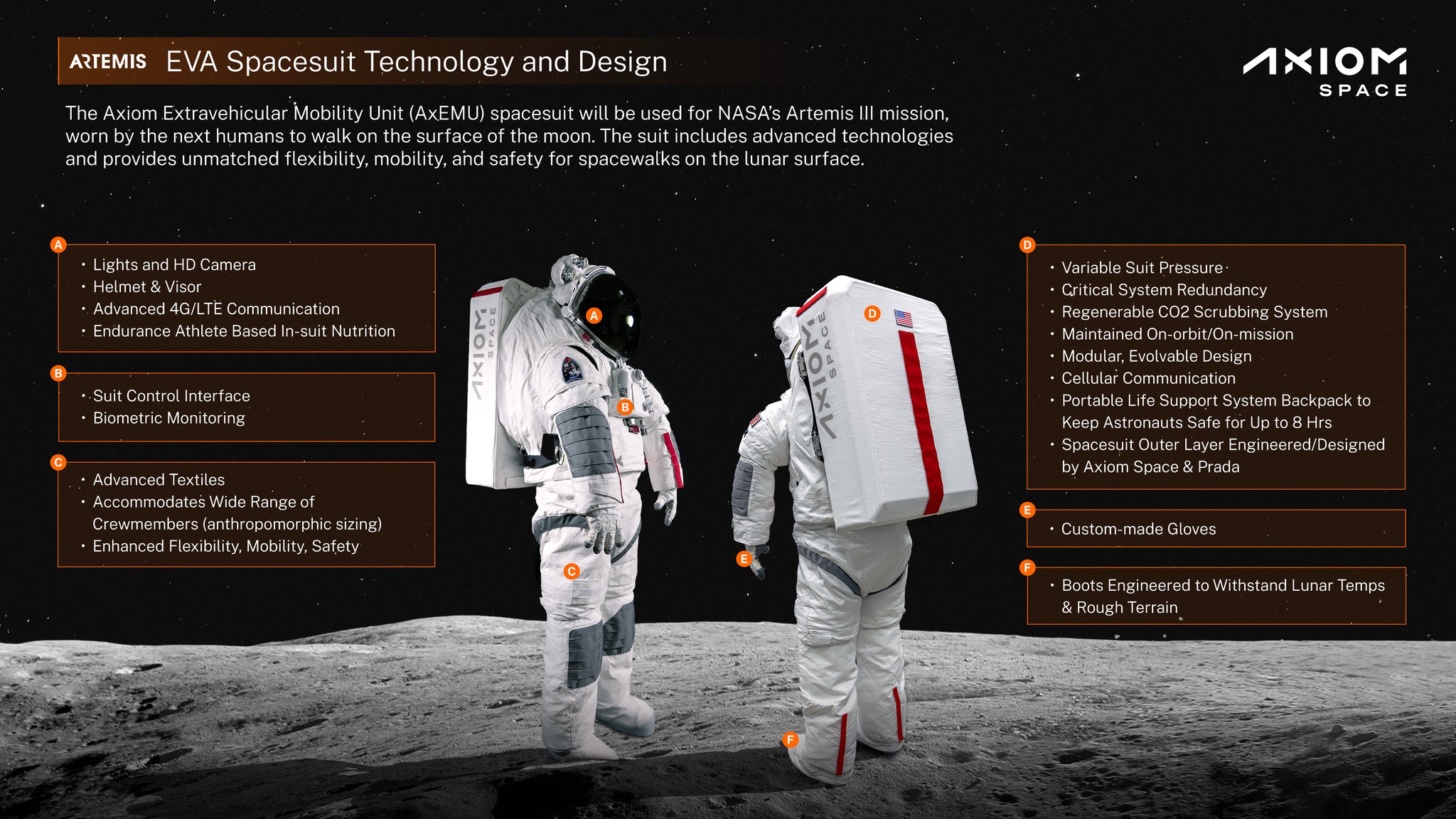
Prada contributed its expertise in high-performance materials and advanced sewing techniques to enhance the suit’s outer-layer design, while Axiom Space integrated its technology for flexibility, safety, and functionality. The AxEMU suit is built to withstand the extreme environment of the lunar surface, including elevated temperatures and lunar dust, and it is scalable for use in low-Earth orbit. Notably, the suit’s design supports a wide range of astronaut sizes, from the first to the 99th percentile.
The AxEMU is built on NASA’s Exploration Extravehicular Mobility Unit (xEMU) design, offering increased mobility, performance, and safety, with specialized features like regenerable CO2 scrubbing and cooling systems. The suit will allow astronauts to perform spacewalks for up to eight hours in the harsh lunar environment, including the permanently shadowed regions of the Moon’s south pole.
Axiom Space and Prada’s collaboration marks a significant step forward in the commercialization of space, blending industry expertise to pioneer innovative solutions for space exploration. The spacesuit is set to undergo further testing, with critical design reviews expected in 2025.
The AxEMU (Axiom Extravehicular Mobility Unit) is a next-generation spacesuit developed by Axiom Space, advancing NASA’s xEMU (Exploration Extravehicular Mobility Unit) design. It enhances flexibility, safety, and performance, crucial for the challenges of the lunar south pole, particularly during the Artemis III mission. The suit is designed to accommodate a broad range of astronaut body types (from the first to the 99th percentile) and endure the Moon’s extreme environments. It can operate in the coldest, permanently shadowed lunar regions for at least two hours and support eight-hour spacewalks.
Key features of the AxEMU:
-
Multiple redundant systems and an onboard diagnostic system to ensure safety.
-
A regenerable CO2 scrubbing system and advanced cooling technology to remove excess heat.
-
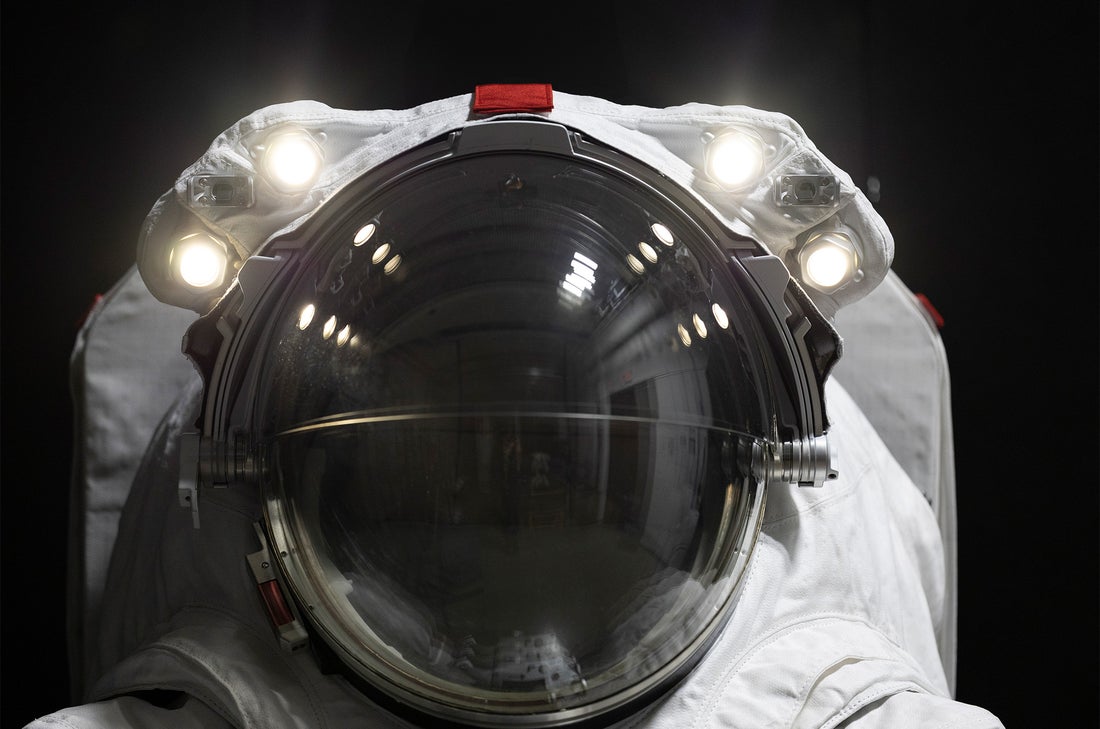
Enhanced coatings on the helmet and visor for better visibility (in collaboration with Oakley).
-
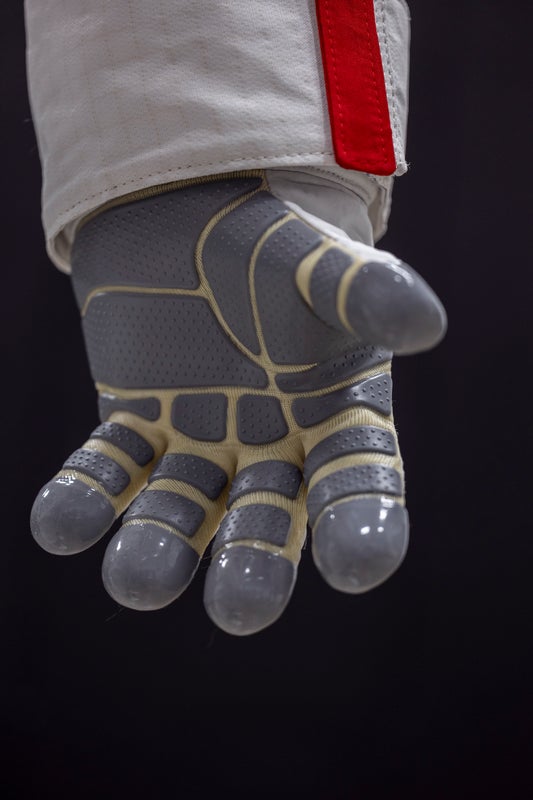
Custom gloves designed in-house with advancements for comfort and usability.
-
A life support system, pressure garments, and avionics integrated into the architecture.
The AxEMU’s modular design allows it to be scalable and adaptable for various missions, whether on the lunar surface or in low-Earth orbit (LEO). Over the past two years, Axiom Space has iteratively improved the suit, conducting extensive testing, including underwater simulations at NASA’s Neutral Buoyancy Laboratory (NBL) and reduced gravity simulations at NASA’s Johnson Space Centre.
Recently, the suit completed a pressurized simulation test with NASA, SpaceX, and Axiom Space, the first since the Apollo era. As the AxEMU approaches the final development stages, it will undergo further crewed tests at the NBL and integrated tests with Artemis Lunar Terrain Vehicle prototypes before the critical design review phase in 2025.
Returning to the Lunar Surface
The Axiom Extravehicular Mobility Unit (AxEMU) spacesuit represents a major leap forward for lunar exploration, providing astronauts with cutting-edge equipment to access, live, and work on the Moon. This next-generation spacesuit, developed by Axiom Space, offers enhanced flexibility and protection tailored to the Artemis III mission and beyond. It builds on NASA’s xEMU design, incorporating innovative technologies to improve mobility, safety, and the ability to perform scientific tasks.
Key advancements of the AxEMU spacesuit:
-
Increased flexibility: Allows astronauts to move more naturally, improving their ability to explore the lunar surface.
-
Greater protection: Designed to withstand the Moon’s harsh conditions, including extreme temperatures, lunar dust, and the challenges of working in low-gravity environments.
-
Specialized tools: Equipped with tools to aid in exploration, enabling astronauts to conduct more extensive scientific research on the lunar surface.
The suit’s modular and flexible design enables astronauts to cover more ground, access new regions, and expand the scope of scientific opportunities, particularly in the lunar south pole. This development marks a significant milestone for U.S. space leadership, supporting NASA’s vision of long-term lunar exploration and setting the stage for future missions that extend human presence deeper into the solar system.
Axiom Space’s work on the AxEMU also highlights the evolving commercial role in space exploration, providing NASA with advanced, commercially developed human systems that help pave the way for the Artemis program’s future missions and beyond.
The Axiom Space AxEMU spacesuit is a breakthrough in both design and functionality, tailored to meet the diverse needs of astronauts, space agencies, and commercial ventures. Its adjustable and versatile sizing accommodates a broad spectrum of body types, providing a customized fit that enhances both comfort and performance for astronauts during critical missions.
-
Adjustable design: The AxEMU’s ability to fit a wide range of body types, from the first to 99th percentile, ensures that astronauts of varying sizes can operate effectively in space. This inclusivity sets a new standard for space missions.
-
Improved comfort: The suit is engineered to increase comfort, which is essential for long-duration spacewalks and other extravehicular activities, allowing astronauts to work efficiently without being hindered by their gear.
Designed for Versatility:
The AxEMU is a cost-effective multipurpose spacesuit, making it adaptable to various mission types, whether on the lunar surface or in low-Earth orbit (LEO). Its agile design meets the stringent demands of different environments with minimal modifications, offering:
-
Dust resistance: The suit is designed to withstand the challenges of the lunar surface, particularly the abrasive lunar dust.
-
Critical interfaces: Key features ensure safe and effective extravehicular activities (EVAs) in microgravity, making the AxEMU suitable for use in various space exploration contexts.
By providing a spacesuit that is adaptable for multiple missions, the AxEMU advances space exploration capabilities while being efficient and cost-effective. This flexibility ensures that astronauts are equipped to perform tasks safely and effectively across a range of space environments.
Designed for Every Mission
The AxEMU is designed as a cost-effective, multipurpose spacesuit, engineered to adapt to a wide variety of missions with minimal modifications. This versatile design ensures that astronauts can safely and efficiently perform tasks in various challenging environments, from the dusty lunar surface to microgravity conditions in low-Earth orbit (LEO).
-
Safety and agility: The AxEMU offers improved safety through advanced technology and increased agility, enabling astronauts to navigate complex terrains and perform tasks with ease.
-
Environmental resilience: It is built to endure the harsh, dusty conditions of the lunar surface, ensuring that astronauts can continue their operations without being impeded by lunar dust.
-
Critical interfaces: Designed to maintain crucial systems and connections, the suit supports safe and effective extravehicular activities (EVAs), allowing astronauts to operate seamlessly in microgravity environments.
By incorporating innovative features that enhance mobility and reliability, the AxEMU provides an adaptable solution for a wide range of exploration needs, making it a versatile asset for current and future space missions.
The AxEMU spacesuit prioritizes safety and reliability by incorporating advancements based on lessons from legacy spacesuits, while integrating new technologies to ensure astronaut protection during missions. Its design centres around mitigating risks and eliminating single-point failures through the use of redundant components.
-
Redundant systems: The AxEMU’s architecture includes multiple layers of redundancy, meaning that if one system fails, backup components will take over to ensure continuous functionality, especially during critical operations like returning to the spacecraft.
-
Enhanced reliability: The suit incorporates state-of-the-art technology, such as advanced life support systems and materials that provide additional protection, ensuring astronauts can operate confidently in challenging environments.
The architecture built around the astronaut ensures that every aspect of the suit is optimized to keep them safe, allowing for seamless operation even in the event of equipment malfunction. By focusing on redundancy and reliability, the AxEMU sets a new standard for safety in space exploration.
The AxEMU spacesuit is designed to deliver superior mobility and agility, essential for astronauts operating in extreme environments. Recognizing that spacesuits must support astronauts in performing complex tasks, the AxEMU integrates a combination of soft and hard joints to significantly improve the range of motion.
Key Mobility Enhancements:
-
Innovative joint design: The combination of flexible soft joints and durable hard joints allows for a greater range of motion, enabling astronauts to walk, bend, and manoeuvre on the Moon’s surface with ease. This ensures they can conduct precise geological and scientific tasks with minimal effort.
-
Optimized for exploration: The suit is tailored to allow astronauts to move more fluidly while walking or working, enhancing their ability to navigate the challenging lunar terrain.
-
Ease of movement in microgravity: The increased agility not only benefits lunar surface missions but also improves astronauts’ ability to move around and translate while working in microgravity environments, such as space stations.
By enhancing comfort and mobility, the AxEMU ensures that astronauts can perform their tasks more efficiently, reducing fatigue and enabling them to stay focused on exploration and scientific research. This advancement in design allows for safer, more productive extravehicular activities, crucial for the success of future space missions.
The AxEMU spacesuit is a product of a truly collaborative effort, bringing together experts from diverse fields and industries. Each hardware component, fabric panel, and integrated system within the suit represents the combined knowledge and skills of individuals from various backgrounds—ranging from sewers and technicians to engineers, medical personnel, and more.
This multidisciplinary approach ensures that every aspect of the suit is crafted with precision, reliability, and innovation, leveraging the best practices from each sector. By combining engineering expertise with innovative materials and production techniques, the AxEMU is not just a spacesuit, but a testament to the power of cross-industry collaboration.
The development process has brought together people with a shared vision of advancing human exploration, creating a spacesuit designed to make history by enabling astronauts to safely walk on the Moon once again. This teamwork exemplifies the idea that groundbreaking achievements are built through the collective efforts of many, pushing the boundaries of space exploration.
Built to last Generations
The AxEMU spacesuit is designed with an agile, future-proof architecture, ensuring it meets the evolving needs of individual, commercial, and government space exploration customers. This adaptable design allows the suit to be tailored to a broad range of mission requirements, making it a versatile tool for various objectives in low-Earth orbit (LEO) and beyond.
Key Features of Longevity:
-
Agile architecture: The suit’s core design is flexible and scalable, enabling it to accommodate a wide range of mission profiles and environmental conditions with minimal modifications.
-
On-orbit maintenance: The AxEMU can be maintained and repaired while in orbit, reducing the need for frequent resupply or costly replacements. This capability significantly lowers operational costs and extends the lifespan of the suit during long-duration missions.
-
Cost-efficiency: The long-lasting design of the AxEMU ensures that space agencies and commercial operators can rely on the suit for multiple missions, enhancing cost-effectiveness by minimizing the time and resources needed for upkeep.
By focusing on durability and adaptability, the AxEMU is built to serve multiple generations of space exploration, supporting the future of low-Earth orbit operations, lunar missions, and even deeper space endeavours. This innovation ensures that the suit remains a vital tool in the continued expansion of human presence in space.
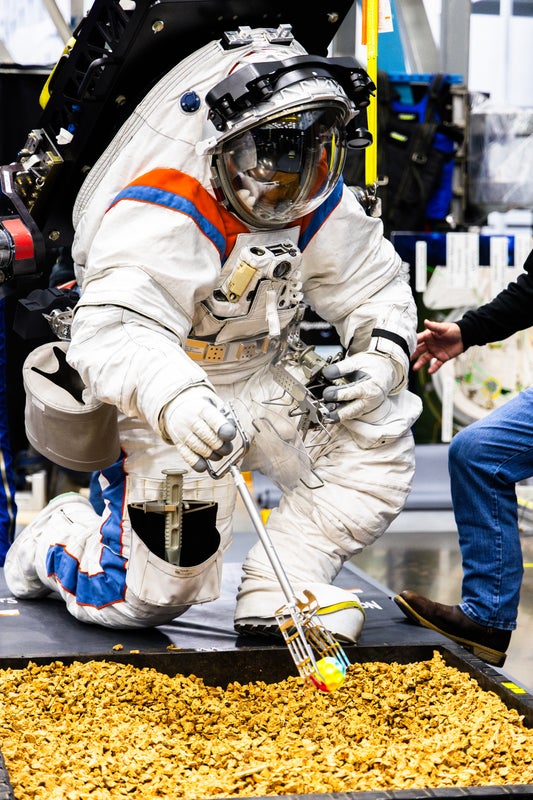
Image: Shown here is the current white cover layer of the Axiom Extravehicular Mobility Unit (AxEMU) spacesuit prototype as it is tested in the Active Response Gravity Offload System (ARGOS) system at NASA’s Johnson Space Center. The person wearing it tests its use with different lunar geology tools.
Image: The AxEMU spacesuit includes custom gloves made in-house featuring several advancements over the gloves currently in use.
Image: The Axiom Extravehicular Mobility Unit (AxEMU) spacesuit includes a helmet with visor, lights, and HD camera.
Image: The AxEMU suit will enable astronauts to perform a spacewalk for at least eight hours and it accommodates a wide range of crewmembers, including males and females from the first to 99th percentile (anthropomorphic sizing).
Image: The single AxEMU architecture is evolvable, scalable and adaptable for missions on the lunar surface and in low-Earth orbit (LEO). The AxEMU has significant advancements in safety, mobility, sizing, and performance.