Category: Space Environment & Sustainability

Space debris and its effects

  • 30 Blue Whales of Space Junk…and Counting!!!

    30 Blue Whales of Space Junk…and Counting!!!

    by Kate Green

    October 22, 2024

    The breakup of the Intelsat 33e satellite, confirmed on October 20 after an apparent power failure, is a significant incident for the satellite communications industry. It raises concerns about the future of space infrastructure as more satellites are launched. While the exact cause of the breakup remains unknown, several factors could be involved, ranging from technical malfunctions to external forces like space debris or heightened solar activity.

    Intelsat 33e had a history of operational issues, including thruster malfunctions that affected its orbital positioning and lifespan. These propulsion problems may have played a role in its sudden failure and fragmentation. The satellite broke into at least 20 detectable pieces, but many smaller fragments may have been created that are difficult to track.

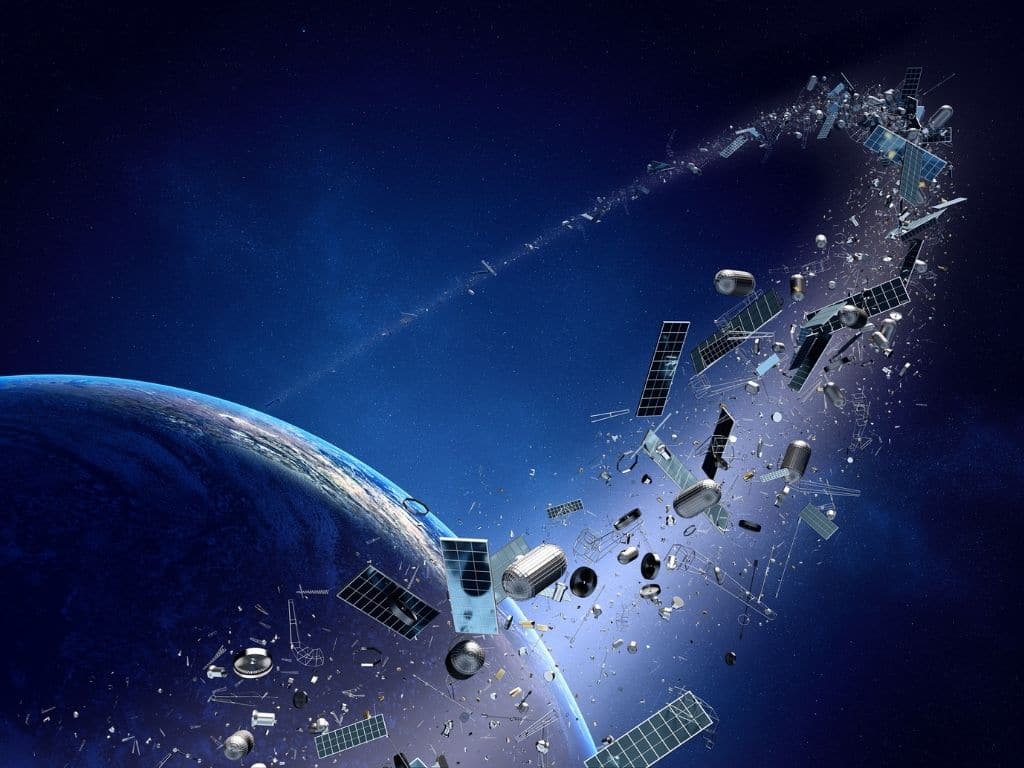
    This incident adds to the growing challenge of space debris management. With thousands of satellites currently in orbit and more planned, the risk of collisions and breakups increases, potentially leading to a cascade effect known as “Kessler Syndrome,” where debris from one event causes further collisions and generates more debris.

    To address this growing issue, space agencies and companies are focusing on improving tracking technologies, enforcing better regulations on satellite de-orbiting, and developing potential debris-cleanup missions. The breakup of Intelsat 33e serves as a reminder of the risks posed by the rapid expansion of space activities and the need for coordinated efforts to manage the increasingly congested space environment.

    A Space Mystery

    The breakup of Intelsat 33e adds to the growing number of space incidents involving satellite malfunctions and debris generation. Although the exact cause of the satellite’s breakup remains unconfirmed, its history of technical issues may offer some clues. Designed and launched by Boeing in 2016, Intelsat 33e faced operational challenges from the beginning. In 2017, a thruster malfunction delayed its journey to the desired orbit, and further propulsion issues meant it consumed more fuel than planned. This shortened its operational life by several years, leading Intelsat to file a $78 million insurance claim. However, at the time of the breakup, the satellite was no longer insured.

    Given the satellite’s troubled past, it’s possible that these technical flaws contributed to its fragmentation. Another satellite of the same model, Boeing’s EpicNG 702 MP, experienced a failure in 2019, suggesting that the design might have inherent vulnerabilities.

    While investigations into what exactly went wrong with Intelsat 33e are underway, the larger concern is the growing amount of space debris. Breakups like this one generate small fragments of space junk, which can remain in orbit for decades, posing risks to other spacecraft. The debris from this event is particularly concerning because, while at least 20 pieces have been detected, smaller fragments may be too tiny to track yet still dangerous.

    This incident reinforces the need to address the risks posed by space junk as more satellites are launched. It underscores the importance of better satellite design, end-of-life planning, and debris mitigation efforts to avoid adding to the already crowded and hazardous space environment.

    30 Blue Whales of Space Junk

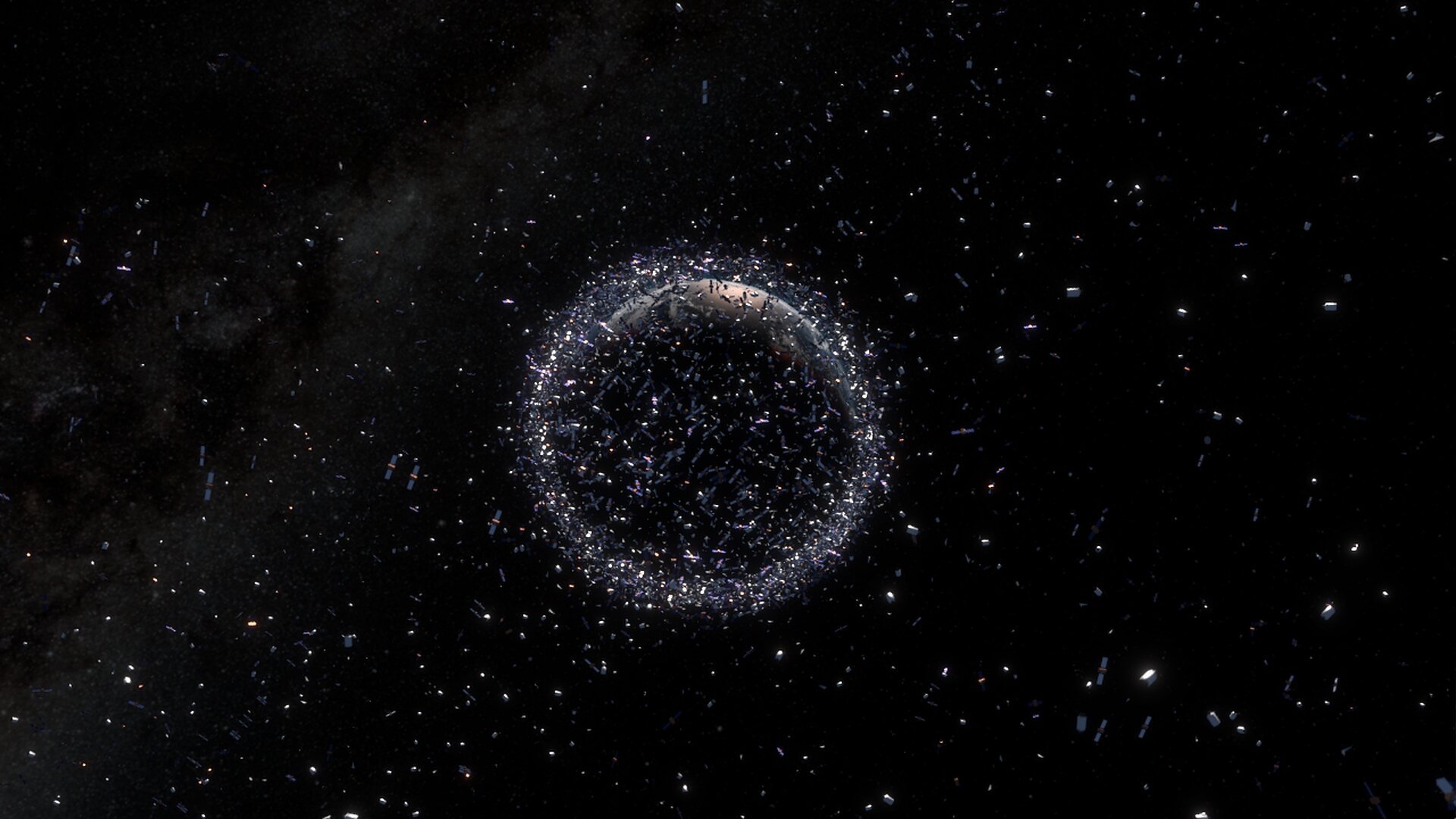
    The rapid increase in space debris is a growing concern for space safety and the long-term sustainability of Earth’s orbits. According to the European Space Agency (ESA), there are more than 40,000 trackable pieces of debris larger than 10 cm, but the far larger number—over 130 million—of smaller fragments (less than 1 cm) are especially worrisome because they are difficult to track and can still cause significant damage to operational satellites.

    The total mass of human-made objects in Earth’s orbit is about 13,000 tons, equivalent to the weight of around 90 blue whales. Roughly a third of this mass – 3, 400 ton – is space debris, largely composed of defunct rocket stages and broken satellite fragments. While tracking large objects is possible, many small fragments go undetected, particularly at higher altitudes, such as the 35,000 km geostationary orbit where Intelsat 33e was located. This is why the breakup of Intelsat 33e is so concerning, as it likely created debris too small to be seen by current ground-based tracking systems.

    Over the past few months, several uncontrolled satellite breakups have added to the growing cloud of space debris. The June 2023 fragmentation of the RESURS-P1 satellite in low Earth orbit created over 100 detectable debris pieces, and in July, the DMSP 5D-2 F8 satellite broke up, contributing further debris. In August, a Long March 6A rocket’s upper stage fragmented, generating hundreds of trackable pieces and possibly millions of untrackable fragments. Each of these events demonstrates how fragile the orbital environment has become.

    The growing debris field increases the risk of collisions, which can lead to a cascade effect of more breakups, as predicted by the “Kessler Syndrome.” Continuous monitoring and tracking improvements are essential to understanding this evolving debris landscape and preventing further incidents. Technological advancements, regulatory measures, and international cooperation will be key in managing the growing threat of space debris as human activity in space accelerates.

    Who is Responsible?

    Responsibility for space debris cleanup or monitoring is a complex issue. According to the 1972 Convention on International Liability for Damage Caused by Space Objects, the country that launches an object into space bears responsibility for any damage caused by that object. This includes liability for debris created by their satellites or rockets. However, proving fault and enforcing accountability has been challenging in practice.

    In most cases, there is little direct accountability for debris creation, and there are no strong international enforcement mechanisms. Many countries and companies are not compelled to actively remove or manage the debris they generate. The Liability Convention provides a legal framework for claims and damages but doesn’t mandate prevention or cleanup.

    However, in 2023, the US Federal Communications Commission (FCC) issued the first-ever fine related to space debris. This marked a new era of regulatory enforcement, as the FCC fined a US company for failing to properly de-orbit a satellite, thus contributing to the growing space debris problem. While this fine set a precedent for holding operators accountable, it remains to be seen whether other regulatory bodies or international organizations will follow suit.

    As for Intelsat 33e, it’s not clear yet whether fines or penalties will be applied. Investigations into the cause of the breakup are ongoing, and since the satellite was no longer insured at the time of the incident, any financial repercussions could be limited. The case highlights the need for stronger global agreements and regulatory frameworks that not only address liability but also enforce stricter operational and post-mission procedures to mitigate debris generation.

    Efforts to hold operators accountable are still in their infancy, and global cooperation will be essential to ensure that space remains a safe and sustainable environment for future operations.

    Looking Ahead

    As human activity in space accelerates, the growing congestion in Earth’s orbit presents increasing risks, particularly from space debris. To manage these hazards, continuous monitoring, better tracking technologies, and deliberate efforts to reduce debris creation are essential.

    Most satellites operate in low Earth orbit (LEO), which is much closer to the planet than Intelsat 33e’s geostationary orbit. In LEO, satellites can be more easily and safely de-orbited at the end of their missions, either through controlled re-entry into the Earth’s atmosphere where they burn up, or by being guided into “graveyard” orbits. Proper planning for satellite disposal can help prevent the generation of space debris.

    A recent example of such planning is the de-orbiting of the ESA’s Cluster 2 “Salsa” satellite in September 2023. This satellite was intentionally brought back into the Earth’s atmosphere, where it burned up safely. Such strategies help mitigate the risk of adding more debris to an already crowded orbit.

    However, the risks increase with the size of the objects. Larger satellites or space stations, like the International Space Station (ISS), could produce millions of debris fragments if they were to break up in orbit. NASA’s Orbital Debris Program Office estimates that the ISS could generate over 220 million debris fragments in such an event. To avoid this, careful de-orbiting plans are crucial for large objects. The ISS is planned to be de-orbited by 2030, and SpaceX has been awarded the contract to manage its controlled descent, ensuring a safe re-entry.

    Looking ahead, minimizing future debris will require strict end-of-mission protocols, advancements in debris removal technology, and international cooperation. The recent increase in satellite launches, particularly from commercial companies, makes it more urgent to enforce regulations that prevent debris and ensure sustainable use of Earth’s orbits.

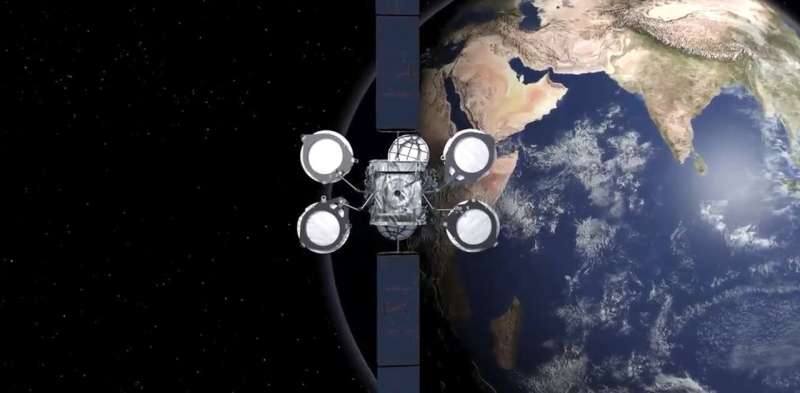
    Image: Artist’s impression of the Intelsat 33e satellite
  • Increasing Space Debris – Are there solutions?

    Increasing Space Debris – Are there solutions?

    by Kate Green

    October 19, 2024

    The Disney-Pixar movie WALL-E (2008) offers an interesting, if not entirely realistic, portrayal of Earth’s future, including a representation of space debris. While the film primarily focuses on environmental degradation, its depiction of space junk hints at real-world issues related to space debris and human neglect of sustainability.

    The real life growing issue of space debris, or space junk, is a significant challenge for the future of space exploration and satellite operations. As more nations and companies launch satellites and missions into Earth’s orbit, the risk of collisions and disruptions increases.

    Why is Space Debris a Problem?

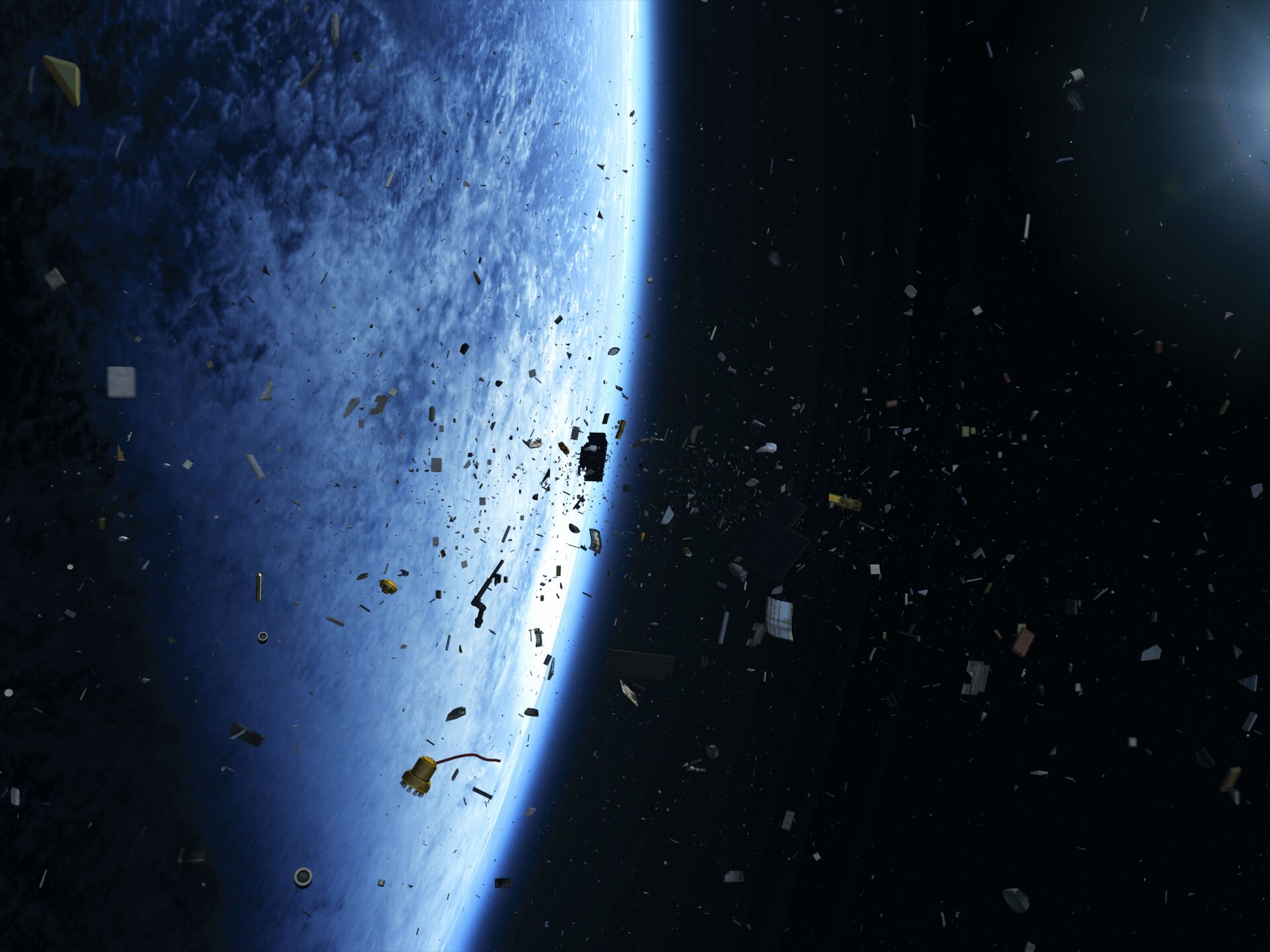
    Space debris includes defunct satellites, spent rocket stages, fragments from collisions, and other non-functional objects in Earth’s orbit. These range from large objects to tiny paint flecks, but even small debris traveling at high velocities (up to 28,000 km/h) can cause severe damage.

    As of October 2024, over 36,000 pieces of debris larger than 10 cm are tracked, but millions of smaller, untracked particles also pose dangers. Collisions between debris and operational spacecraft could lead to a Kessler syndrome, where the density of objects in low Earth orbit (LEO) reaches a point that leads to cascading collisions, rendering orbits unusable for satellites or space missions, trapping humanity on Earth much like in WALL-E.

    Space debris threatens active satellites, the International Space Station (ISS), and future space missions. It also endangers human spaceflight and critical infrastructure like communication and weather satellites.

    Proposed Solutions to the Space Debris Problem

    Active Debris Removal (ADR)

    ADR involves removing large debris objects before they cause collisions. Several concepts are being developed:

    • Space tugs: Satellites equipped with robotic arms or nets could capture and deorbit large debris.

    • Harpoons and nets: Special satellites can harpoon or net debris, dragging it into Earth’s atmosphere to burn up.

    • Lasers: Ground-based or satellite-based lasers could “nudge” debris by altering its orbit slightly, causing it to deorbit and burn up in the atmosphere over time.

    A real life example is the European Space Agency’s (ESA) ClearSpace-1 mission, planned for 2026, which aims to capture and de-orbit a large piece of space debris (a rocket component) using a robotic arm.

    Debris Mitigation

    The reduction in the creation of new debris is crucial with mitigation strategies including:

    • End-of-life protocols: Satellites should be designed to either deorbit themselves or move to a graveyard orbit at the end of their operational life. This is already a regulatory requirement for some missions.

    • Design improvements: Satellites and rockets should minimize the shedding of parts during launch and operations, and be made of materials that degrade more quickly in orbit.

    An example of this is the UN’s Outer Space Treaty and Inter-Agency Space Debris Coordination Committee (IADC)  which recommends guidelines for minimizing debris, though enforcement is challenging.

    International Cooperation and Policy

    • International treaties: Coordinated international policies and agreements will be necessary to enforce space debris regulations, ensuring that all countries follow best practices for debris mitigation and removal.

    • Debris-tracking networks: Nations must work together to enhance global tracking systems. This includes sharing data about debris objects and possible collisions.

    Organizations like the UN Office for Outer Space Affairs (UNOOSA) work to foster international dialogue on space sustainability – but again, not all countries and private / commercial companies are willing to participate.

    Space Traffic Management (STM)

    Just as air traffic control manages airplanes, STM aims to manage and monitor objects in space. By tracking large debris, space agencies can prevent collisions and ensure the safety of space missions. However, as the number of objects in orbit grows, this task becomes more challenging, emphasizing the need for active debris removal and better space traffic management.

    • Real-time tracking: Enhanced debris tracking and collision-avoidance systems could help prevent potential collisions between satellites and debris.

    • Autonomous systems: AI-powered systems onboard satellites could automatically adjust orbits when on a collision course with debris.

    • Tracking Objects Larger than 10 cm: Pieces of debris larger than 10 cm are considered large enough to be tracked with ground-based radar and optical telescopes. Space agencies such as NASA and ESA (European Space Agency) keep continuous track of these objects. Private organizations like the U.S. Space Surveillance Network (SSN) and LeoLabs also track debris and offer collision avoidance services for satellite operators.

    • Catalogued Objects: There are currently over 36,000 pieces of debris larger than 10 cm orbiting Earth that are being tracked. These include defunct satellites, spent rocket stages, and fragments from collisions or disintegration events.

    • Avoidance Manoeuvres: When larger pieces of tracked debris come close to active satellites or the International Space Station (ISS), operators are alerted and sometimes perform avoidance manoeuvres to prevent collisions.

    • Objects Between 1 and 10 cm: Although objects between 1 and 10 cm are harder to track, they are still dangerous. These are often detected using radar, but their precise orbits may not always be catalogued. The number of objects in this size range is estimated to be much higher, in the hundreds of thousands.

    • Smaller Debris: Even smaller debris (under 1 cm) poses risks, especially to spacecraft and Astronauts, though these are too small to track individually. Shielding techniques are used to protect spacecraft from these tiny, high-velocity objects.

    Recycling and Repurposing in Space

    • In-orbit recycling: A future possibility could involve missions that collect debris and repurpose materials in space for manufacturing. This would help clear orbits and provide resources for constructing spacecraft or stations without launching materials from Earth.

    • On-orbit servicing: Some companies are developing satellites that can extend the life of other satellites by refueling or repairing them, preventing them from becoming debris.

    Another private company example is that of Northrop Grumman’s Mission Extension Vehicle (MEV) that successfully extended the life of a communications satellite, showcasing the potential of on-orbit servicing.

    The Path Forward

    While Disney’s WALL-E is an animated science fiction film, its portrayal of space debris serves as a cautionary tale. It highlights the importance of addressing real-world environmental and space sustainability issues before they spiral out of control. It reflects a growing awareness of the need for responsible space exploration, better debris management, and sustainable living on Earth.

    Innovative solutions are being developed with the challenge being implementing these solutions globally and at scale. Active removal efforts combined with strong mitigation policies, technological advances, and international cooperation offer the most promising paths to maintaining a sustainable space environment for future generations.

  • Satellites and their negative impact on space exploration

    Satellites and their negative impact on space exploration

    While satellites have greatly benefited space exploration, they also pose several significant challenges and negative impacts, particularly as their numbers continue to increase.

    Here are some of the primary concerns:

    1. Space Debris (Orbital Junk)

    • Growing Debris Problem: As more satellites are launched into space, especially in low Earth orbit (LEO), the amount of space debris has increased dramatically. Defunct satellites, spent rocket stages, and fragments from collisions or explosions create a cloud of debris orbiting the Earth.

    • Risk to Active Satellites and Missions: Space debris can collide with operational satellites, damaging or destroying them. Even small pieces of debris can cause catastrophic damage due to the high speeds at which they orbit. This increases the risk for active satellites and space missions, including crewed missions to the ISS or beyond.

    • Kessler Syndrome: A worst-case scenario involves the potential onset of the Kessler Syndrome, where the density of objects in orbit is so high that collisions between objects generate even more debris, leading to a cascade of collisions. This could make certain orbits unusable and impede space exploration for decades.

    2. Interference with Astronomy and Space Observation

    • Light Pollution: The increasing number of satellites, especially large constellations like SpaceX’s Starlink, have begun to interfere with ground-based astronomical observations. The satellites reflect sunlight and produce bright streaks in astronomical images, reducing the quality of scientific data and making it more difficult for astronomers to observe faint objects in deep space.

    • Radio Frequency Interference: Satellites transmit signals back to Earth, which can interfere with radio telescopes that are crucial for certain types of space observations. This makes it harder for scientists to conduct radio astronomy, a key method for studying distant cosmic phenomena like black holes and pulsars.

    3. Satellite Collisions

    • Increased Collision Risk: As the number of satellites in orbit grows, the likelihood of collisions increases. Satellites traveling at orbital speeds (about 28,000 km/h or 17,500 mph) can cause immense damage if they collide, either with other satellites or debris.

    • Chain Reaction Collisions: A single collision can generate hundreds or thousands of new pieces of debris, each of which poses a threat to other satellites. This not only endangers other spacecraft but also makes space exploration riskier and more costly.

    4. Environmental Impact

    • Atmospheric Pollution: When satellites re-enter Earth’s atmosphere, especially large satellites or rocket stages, they burn up, releasing aluminum oxide and other materials into the atmosphere. This can potentially affect atmospheric chemistry and contribute to environmental degradation.

    • Rocket Emissions: The launch of satellites requires rockets, which release large amounts of greenhouse gases and other pollutants into the atmosphere. Some estimates suggest that the growing number of satellite launches could have a measurable impact on global warming and the depletion of the ozone layer.

    5. Regulatory and Orbital Traffic Management Issues

    • Lack of Global Regulation: The rapid expansion of satellite constellations, particularly by private companies, has outpaced international regulatory frameworks. This creates challenges in managing orbital traffic, avoiding collisions, and ensuring that satellites do not interfere with each other’s operations.

    • Crowded Orbits: Certain orbits, especially low Earth orbit (LEO) and geostationary orbit (GEO), are becoming increasingly crowded. Without effective management, this congestion increases the risk of collisions and complicates satellite operations, potentially leading to service disruptions or mission failures.

    6. Increased Costs and Risks for Space Exploration

    • Higher Costs for Missions: The need to avoid space debris and manage the risk of satellite collisions increases the complexity and cost of space missions. Spacecraft now require more sophisticated tracking systems, collision avoidance maneuvers, and potentially costly insurance policies to mitigate these risks.

    • Impact on Future Missions: The crowding of orbits and the proliferation of debris may restrict future space missions, both for Earth observation and interplanetary exploration. This could limit humanity’s ability to deploy new scientific instruments or exploratory missions in space, particularly in key orbits.

    7. Monopolization of Space by Private Companies

    • Private Sector Dominance: The increasing privatization of space, driven by companies like SpaceX, Amazon, and OneWeb, may lead to monopolization of key orbital regions. This could limit access to space for smaller countries or organizations and increase costs for space missions that rely on certain orbits.

    • Commercialization vs. Scientific Exploration: With more satellites being launched for commercial purposes (e.g., internet services), there is concern that scientific exploration may take a backseat to profit-driven ventures. The commercialization of space could skew priorities away from pure scientific research.

    8. Potential for Weaponization and Militarization

    • Weaponization of Space: Satellites have strategic military uses, such as surveillance, communication, and navigation for armed forces. The development of anti-satellite (ASAT) weapons and the potential for the militarization of space create new risks, including the possibility of conflicts escalating into space.

    • Global Security Concerns: An arms race in space could lead to more satellite destruction, intentional or accidental, exacerbating the space debris problem and threatening peaceful exploration.

    Conclusion

    Satellites have undoubtedly expanded the horizons of space exploration, but they also come with significant negative impacts. The growing issue of space debris, interference with scientific research, environmental damage, and regulatory challenges are among the major concerns. Addressing these issues will be crucial for ensuring that space remains accessible and sustainable for future generations. Effective international cooperation, improved technology for debris mitigation, and responsible satellite deployment are needed to minimize these risks and allow for continued advancements in space exploration.