Category: Solar System & Exploration

Mars, the Moon and planetary exploration

  • Artemis Returning Humans to the Moon and Beyond.

    Artemis Returning Humans to the Moon and Beyond.

    The Artemis program is a pivotal initiative by NASA which represents a significant leap in human space exploration. Named for Artemis who is the twin sister of Apollo and goddess of the Moon in Greek mythology, the mission will build on the legacy of the Apollo missions by returning humans to the Moon and lay the groundwork for future exploration of Mars and beyond.

    Here’s a comprehensive look at the Artemis missions and their goals.


    Objectives of Artemis Missions

    1. Scientific Discovery: The Artemis missions are designed to explore and conduct scientific research on the Moon. This includes studying the lunar surface, analysing samples, and understanding the Moon’s geology and history. The goal is to gather information that can help us understand the early solar system and the processes that shaped it.

    2. Technology Advancement: Artemis aims to push the boundaries of space technology. This involves developing new spacecraft, landing systems, and habitats that will not only support lunar exploration but also future missions to Mars. Key technologies include the Space Launch System (SLS) rocket, the Orion spacecraft, and the Lunar Gateway.

    3. Sustainable Presence: One of the primary goals of Artemis is to establish a long-term human presence on the Moon. This involves creating sustainable habitats and infrastructure that will allow for extended stays on the lunar surface. The plan includes building the Lunar Gateway, a space station in lunar orbit, and establishing lunar bases that can support ongoing exploration and research.

    4. Preparation for Mars: The experience gained from living and working on the Moon will be crucial for planning human missions to Mars. The Moon serves as a testing ground for technologies and strategies that will be used for longer-duration missions beyond Earth, including Mars.

    5. Inclusivity: Artemis is committed to diversity and inclusion. NASA plans to land the first woman and the first person of colour on the Moon, reflecting its broader goals of expanding representation in space exploration. This inclusive approach is expected to inspire a new generation of scientists, engineers, and explorers.

    Key Components of the Artemis Program

    • Artemis I: This uncrewed mission, launched in November 2021, tested the Space Launch System and the Orion spacecraft. It aimed to validate the systems and perform critical mission profile tests in preparation for crewed missions.

    • Artemis II: Scheduled to launch no earlier than September 2025, it will be the first crewed mission of the Artemis program. Artemis II will carry 4 astronauts -including the first woman and the first person of colour – around the Moon but will not land. This mission will demonstrate the capabilities of the Orion spacecraft with a human crew on board.

    • Artemis III: Planned to be the mission that returns humans to the lunar surface, including landing at the Moon’s South Pole. This mission aims to establish a new era of exploration and scientific research.

    • Lunar Gateway: A planned space station in lunar orbit that will serve as a staging point for lunar missions and as a base for deep space exploration. It will be a collaborative effort with international partners and commercial entities.

    • Lunar Surface Exploration: The Artemis program will utilize various landers and rovers to explore the lunar surface. This includes the development of the Human Landing System (HLS), which will transport astronauts from lunar orbit to the surface.

    Collaboration and Partnerships

    • Commercial Partners: NASA is working with private companies to develop new technologies and systems for lunar exploration. This collaboration is aimed at leveraging commercial innovation and investment to advance space exploration.

    • International Partners: The Artemis program involves collaboration with international space agencies, including the European Space Agency (ESA), the Canadian Space Agency (CSA), and others. These partnerships will contribute to various aspects of the program, including scientific research and the Lunar Gateway.

    Impact and Legacy

    • Inspiration and Education: The Artemis missions are designed to inspire global interest in space exploration and STEM (Science, Technology, Engineering, and Mathematics) fields. By showcasing human achievement and inclusivity, the program aims to motivate future generations.

    • Economic and Scientific Benefits: The technologies and knowledge gained from the Artemis program will have wide-ranging applications beyond space exploration. This includes advancements in materials science, robotics, and remote sensing that can benefit various industries on Earth.

    Through its ambitious goals and collaborative approach, Artemis aims to extend humanity’s presence into the solar system and inspire a new era of discovery and innovation.

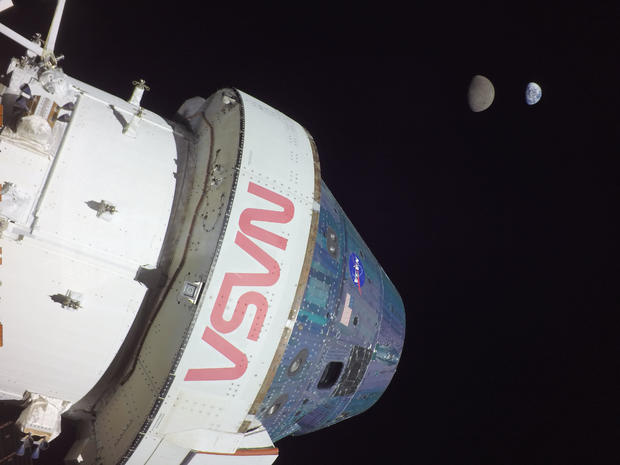
    Image Credit: On November 28, 2022, flight day 13, Orion reached its maximum distance from Earth during the Artemis I mission: 268,563 miles away from our home planet. 

    With that milestone, Orion had traveled farther than any other spacecraft built for humans, although there was no crew on board this flight. NASA.
  • Why Explore Mars???

    Why Explore Mars???

    Mars is a prime candidate for the search for extraterrestrial life due to its similarities to Earth and its potential for past or present habitability.

    Here’s a closer look at why Mars is so important in this quest and what efforts are underway to explore it:

    • Geological Similarities: Mars shares several geological features with Earth, such as polar ice caps, seasonal weather patterns, and evidence of ancient riverbeds and lake basins. These features suggest that Mars may have once had liquid water on its surface, a crucial ingredient for life as we know it.

    • Atmosphere: Although thin, Mars’ atmosphere is composed mainly of carbon dioxide with traces of nitrogen and argon, similar to Earth’s early atmosphere. The presence of water vapor and seasonal ice caps further complicates the picture of Mars’ climate and its potential to support life.

    • Past Conditions: Evidence from rovers and orbiters indicates that Mars had a much warmer and wetter past. The discovery of minerals like clays and sulfates, which form in the presence of water, supports the idea that Mars may have had habitable conditions billions of years ago.

    Key Missions and Discoveries

    1. Rovers: NASA’s rovers, including Curiosity and Perseverance, are crucial in searching for signs of past or present life. Curiosity has been exploring the Gale Crater, analyzing rock samples and searching for organic compounds. Perseverance is focused on the Jezero Crater, which is believed to be an ancient lakebed.

    2. Mars Sample Return: Future missions, including the Mars Sample Return (MSR) mission, aim to bring samples of Martian soil and rock back to Earth for detailed analysis. These samples could provide critical information about Mars’ potential for life and provide vital information to assist with future human missions to the planet.

    3. Missions by Other Agencies: The European Space Agency’s (ESA) ExoMars mission and the Tianwen-1 mission by the China National Space Administration (CNSA) are also contributing valuable data to the Martian exploration effort.

    What We’re Looking For:

    • Microbial Life: Scientists are primarily searching for microbial life or its remnants, as this is the most likely form of life that could have existed on ancient Mars.

    • Organic Molecules: Organic molecules, which are the building blocks of life, have been found in Martian meteorites and by some landers. Understanding their origin and distribution is crucial for assessing Mars’ habitability.

    • Signs of Habitability: Beyond direct evidence of life, researchers are also looking for conditions that could have supported life, such as ancient water sources, energy gradients, and stable climates.

    The Broader Implications:

    Mars continues to be a focal point in the search for life beyond Earth, with ongoing and future missions aimed at unravelling the mysteries of the Red Planet. The quest for life on Mars is not just about finding evidence of extraterrestrial organisms but also about understanding the conditions that could make a planet habitable.

    • Understanding Life’s Origins: Discovering life on Mars would not only address whether life exists elsewhere in the universe but could also provide insights into the origins of life on Earth.

    • Technological Advances: The technology developed for Martian exploration has broader applications, contributing to advancements in robotics, remote sensing, and environmental science.

    • Future Exploration: Mars exploration is a stepping stone for future missions beyond our Solar System. Understanding how to live and work on Mars could pave the way for human exploration of other planets and moons.

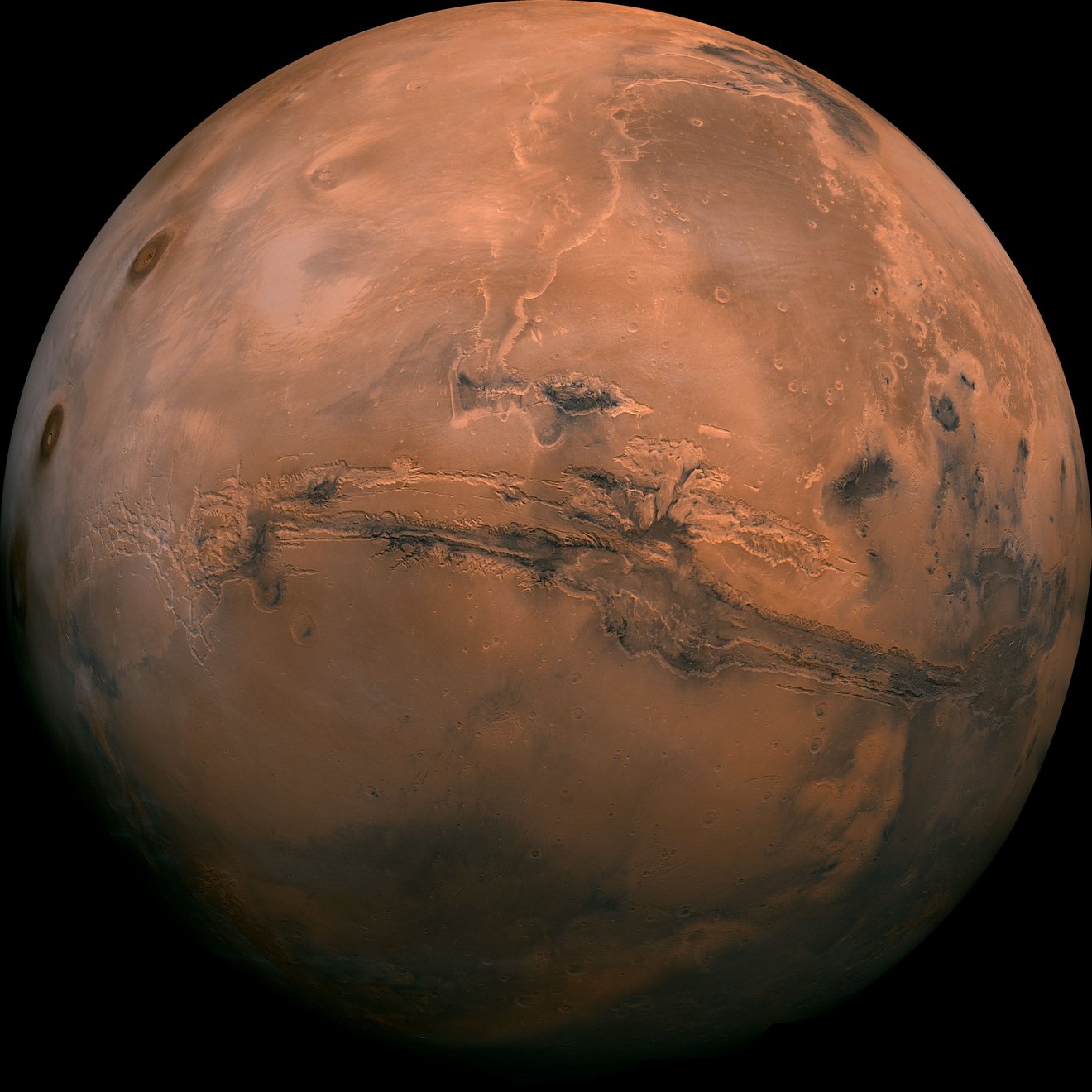
    Image Credit: NASA / JPL-Caltech

  • A wobble from Mars could be sign of dark matter, study finds

    A wobble from Mars could be sign of dark matter, study finds

    by Jennifer Chu, Massachusetts Institute of Technology

    September 17, 2024

    In a new study, MIT physicists propose that if most of the dark matter in the universe is made up of microscopic primordial black holes—an idea first proposed in the 1970s—then these gravitational dwarfs should zoom through our solar system at least once per decade. A flyby like this, the researchers predict, would introduce a wobble into Mars’ orbit, to a degree that today’s technology could actually detect.

    Such a detection could lend support to the idea that primordial black holes are a primary source of dark matter throughout the universe.

    “Given decades of precision telemetry, scientists know the distance between Earth and Mars to an accuracy of about 10 centimeters,” says study author David Kaiser, professor of physics and the Germeshausen Professor of the History of Science at MIT.

    “We’re taking advantage of this highly instrumented region of space to try and look for a small effect. If we see it, that would count as a real reason to keep pursuing this delightful idea that all of dark matter consists of black holes that were spawned in less than a second after the Big Bang and have been streaming around the universe for 14 billion years.”

    Kaiser and his colleagues report their findings in the journal Physical Review D. The study’s co-authors are lead author Tung Tran, who is now a graduate student at Stanford University; Sarah Geller Ph.D., who is now a postdoc at the University of California at Santa Cruz; and MIT Pappalardo Fellow Benjamin Lehmann.

    Beyond particles

    Less than 20% of all physical matter is made from visible stuff, from stars and planets, to the kitchen sink. The rest is composed of dark matter, a hypothetical form of matter that is invisible across the entire electromagnetic spectrum yet is thought to pervade the universe and exert a gravitational force large enough to affect the motion of stars and galaxies.

    Physicists have erected detectors on Earth to try and spot dark matter and pin down its properties. For the most part, these experiments assume that dark matter exists as a form of exotic particle that might scatter and decay into observable particles as it passes through a given experiment. But so far, such particle-based searches have come up empty.

    In recent years, another possibility, first introduced in the 1970s, has regained traction: Rather than taking on a particle form, dark matter could exist as microscopic, primordial black holes that formed in the first moments following the Big Bang.

    Unlike the astrophysical black holes that form from the collapse of old stars, primordial black holes would have formed from the collapse of dense pockets of gas in the very early universe and would have scattered across the cosmos as the universe expanded and cooled.

    These primordial black holes would have collapsed an enormous amount of mass into a tiny space. The majority of these primordial black holes could be as small as a single atom and as heavy as the largest asteroids. It would be conceivable, then, that such tiny giants could exert a gravitational force that could explain at least a portion of dark matter. For the MIT team, this possibility raised an initially frivolous question.

    “I think someone asked me what would happen if a primordial black hole passed through a human body,” recalls Tung, who did a quick pencil-and-paper calculation to find that if such a black hole zinged within 1 meter of a person, the force of the black hole would push the person 6 meters, or about 20 feet away in a single second. Tung also found that the odds were astronomically unlikely that a primordial black hole would pass anywhere near a person on Earth.

    Their interest piqued, the researchers took Tung’s calculations a step further, to estimate how a black hole flyby might affect much larger bodies such as the Earth and the moon.

    “We extrapolated to see what would happen if a black hole flew by Earth and caused the moon to wobble a little bit,” Tung says. “The numbers we got were not very clear. There are many other dynamics in the solar system that could act as some sort of friction to cause the wobble to dampen out.”

    Close encounters

    To get a clearer picture, the team generated a relatively simple simulation of the solar system that incorporates the orbits and gravitational interactions between all the planets, and some of the largest moons.

    “State-of-the-art simulations of the solar system include more than a million objects, each of which has a tiny residual effect,” Lehmann notes. “But even modeling two dozen objects in a careful simulation, we could see there was a real effect that we could dig into.”

    The team worked out the rate at which a primordial black hole should pass through the solar system, based on the amount of dark matter that is estimated to reside in a given region of space and the mass of a passing black hole, which in this case, they assumed to be as massive as the largest asteroids in the solar system, consistent with other astrophysical constraints.

    “Primordial black holes do not live in the solar system. Rather, they’re streaming through the universe, doing their own thing,” says co-author Sarah Geller. “And the probability is, they’re going through the inner solar system at some angle once every 10 years or so.”

    Given this rate, the researchers simulated various asteroid-mass black holes flying through the solar system, from various angles, and at velocities of about 150 miles per second. (The directions and speeds come from other studies of the distribution of dark matter throughout our galaxy.)

    They zeroed in on those flybys that appeared to be “close encounters,” or instances that caused some sort of effect on surrounding objects. They quickly found that any effect on the Earth or the moon was too uncertain to pin to a particular black hole. But Mars seemed to offer a clearer picture.

    The researchers found that if a primordial black hole were to pass within a few hundred million miles of Mars, the encounter would set off a “wobble,” or a slight deviation in Mars’ orbit. Within a few years of such an encounter, Mars’ orbit should shift by about a meter—an incredibly small wobble, given the planet is more than 140 million miles from Earth. And yet, this wobble could be detected by the various high-precision instruments that are monitoring Mars today.

    If such a wobble were detected in the next couple of decades, the researchers acknowledge there would still be much work needed to confirm that the push came from a passing black hole rather than a run-of-the-mill asteroid.

    “We need as much clarity as we can of the expected backgrounds, such as the typical speeds and distributions of boring space rocks, versus these primordial black holes,” Kaiser notes.

    “Luckily for us, astronomers have been tracking ordinary space rocks for decades as they have flown through our solar system, so we could calculate typical properties of their trajectories and begin to compare them with the very different types of paths and speeds that primordial black holes should follow.”

    To help with this, the researchers are exploring the possibility of a new collaboration with a group that has extensive expertise simulating many more objects in the solar system.

    “We are now working to simulate a huge number of objects, from planets to moons and rocks, and how they’re all moving over long-time scales,” Geller says. “We want to inject close encounter scenarios and look at their effects with higher precision.”

    “It’s a very neat test they’ve proposed, and it could tell us if the closest black hole is closer than we realize,” says Matt Caplan, associate professor of physics at Illinois State University, who was not involved in the study.

    “I should emphasize there’s a little bit of luck involved too. Whether or not a search finds a loud and clear signal depends on the exact path a wandering black hole takes through the solar system. Now that they’ve checked this idea with simulations, they have to do the hard part—checking the real data.”

    Image:

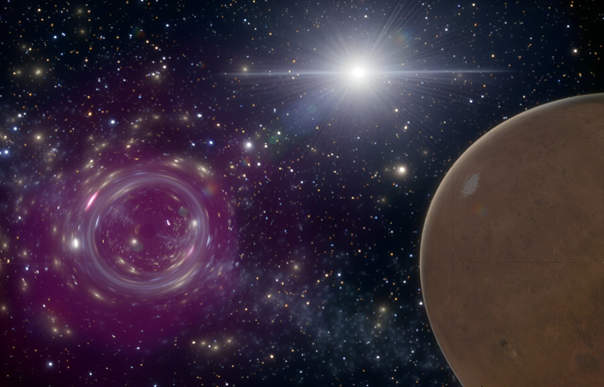
    An artist’s illustration depicts a primordial black hole (at left) flying past, and briefly “wobbling” the orbit of Mars (at right), with the sun in the background. MIT scientists say such a wobble could be detectable by today’s instruments. Credit: Benjamin Lehmann, via SpaceEngine @ Cosmographic Software LLC

    Journal:

    Tung X. Tran et al, Close encounters of the primordial kind: a new observable for primordial black holes as dark matter, Physical Review D (2024).

  • Earth will capture ‘second moon’ this weekend

    Earth will capture ‘second moon’ this weekend

    By Robert Lea

    September 26, 2024

    Earth will get a “second moon” this weekend, but it won’t be sticking around for long.

    NASA scientists have calculated that Earth will capture a “second moon” on Sunday (September 29). The “mini moon” comes in the form of the tiny asteroid 2024 PT5, which usually orbits the sun as part of a small asteroid belt that follows Earth.

    While Earth’s primary companion, the moon, has lingered around our planet for around 4 billion years since its formation in the solar system’s infancy, this asteroid will be a temporary fixture that won’t even see the year out.

    “According to the latest data available from NASA’s Jet Propulsion Laboratory Horizons system, the temporary capture will start at 15:54 EDT and will end at 11:43 EDT on November 25,” mini-moon event expert and Universidad Complutense de Madrid professor Carlos de la Fuente Marcos stated on Wednesday (September 25).

    “The object that is going to pay us a visit belongs to the Arjuna asteroid belt, a secondary asteroid belt made of space rocks that follow orbits very similar to that of Earth at an average distance to the sun of about 150 million kilometres,” Marcos stated. “Objects in the Arjuna asteroid belt are part of the near-Earth object population of asteroids and comets.”

    Though the idea of Earth getting a second moon sounds extraordinary, these gravitational capture events are actually quite common.

    After its brief stay around Earth, the asteroid 2024 PT5 will continue to orbit the sun as part of the Arjuna family of asteroids.

    2024 PT5 isn’t the first asteroid to be captured by Earth to be transformed into a mini moon. Scientists have officially documented two prior “short captures,” a type of asteroid-grabbing event lasting about a week and estimated to occur several times per decade. We also know of two prior and rarer “long-capture” events that can last years rather than weeks that lead to snared asteroids completing one or more full orbits of Earth.

    The fact that asteroid 2024 PT5 will stick around for just a few weeks, as opposed to billions of years, isn’t the only major difference between this “mini moon” and the actual moon.

    Whereas the moon dominates the night sky over Earth for at least half the month, 2024 PT5 won’t be observable to the average skywatcher. However, professional astronomers may be able to grab us some images of this temporary alignment.

    This is mostly due to the massive difference in size between the two bodies. While the moon is an estimated 3,475 km in diameter, 2024 PT5 is believed to be just 37 feet wide. That means the moon is a whopping 308,108 times wider than the lunar pretender asteroid 2024 PT5!

    “The object is too small and dim for typical amateur telescopes and binoculars. However, the object is well within the brightness range of typical telescopes used by professional astronomers,” Marcos concluded. “A telescope with a diameter of at least 30 inches plus a CCD or CMOS detector is needed to observe this object; a 30-inch telescope and a human eye behind it will not be enough.”

    The team’s research is published in the journal The Research Notes of the AAS.

    Journal:

    de la Fuente Marcos, C., & de la Fuente Marcos, R. (2024). A Two-month Mini-moon: 2024 PT5 Captured by Earth from September to November. Research Notes of the AAS, 8(9), 224.


    Image:

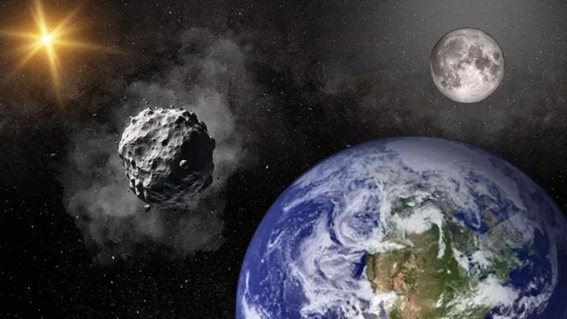
    An illustration showing Earth’s second moon, the mini moon asteroid 2024 PT5. (Image credit: Robert Lea (created with Canva))

  • Cloudspotting on Mars Project

    Cloudspotting on Mars Project

    by Zooniverse

    October 30, 2024

    Get ready to explore the skies of Mars: we’re thrilled to launch Cloudspotting on Mars: Shapes!

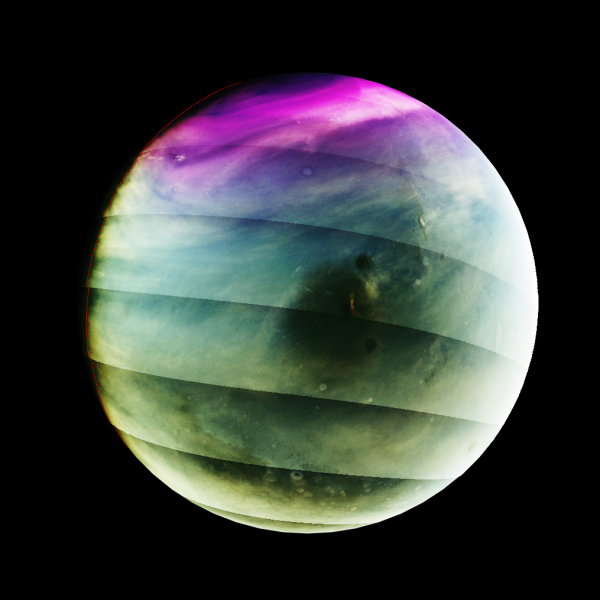
    In this fun new project, you’ll help us identify and map different types of Martian clouds using data from NASA’s MAVEN mission. Dive into the Red Planet’s atmosphere, spot icy clouds, and help scientists unlock the mysteries of Martian weather patterns!

    The MAVEN spacecraft has been snapping stunning images for years, and we need your help to sort through them. Your discoveries will be part of a cool cloud library that will help scientists better understand Mars’ ever-changing atmosphere.

    Join the adventure and start cloudspotting today—visit: https://www.zooniverse.org/projects/matteocrismani/cloudspotting-on-mars-shapes

    Has this new NASA citizen science project sparked your interest? Consider subscribing to our NASA-Zooniverse email list to receive updates and news regarding broader NASA citizen science projects and efforts.

    If interested, please follow these instructions to sign up:

    1. Log in to your Zooniverse account.

    2. Visit https://www.zooniverse.org/settings/email

    3. Click the checkbox under “Zooniverse partner email preferences” to sign up for periodic email updates from NASA.