Category: Cosmology & Dark Matter

Dark matter, dark energy, the Big Bang and cosmological research

  • Advanced data shed light on gravitational basins of attraction that shape the movement of galaxies

    Advanced data shed light on gravitational basins of attraction that shape the movement of galaxies

    by Hebrew University of Jerusalem

    September 27, 2024

    A new study has mapped out the gravitational basins of attraction in the local universe, offering fresh insights into the large-scale cosmic structures that shape the movement of galaxies. The study has been published in Nature Astronomy.

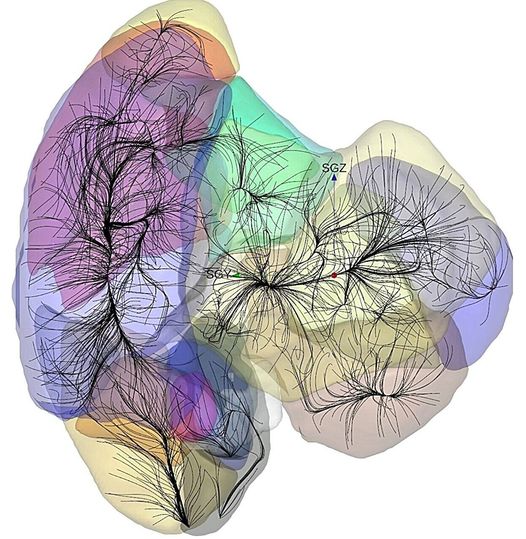
    Using advanced data from the Cosmicflows-4 compilation of distances and velocities of roughly 56,000 galaxies, the international research team applied cutting-edge algorithms to identify regions where gravity dominates, such as the Sloan Great Wall and the Shapley Supercluster.

    This research suggests that our Milky Way most probably resides within the larger Shapley basin, shifting our understanding of cosmic flows and the role of massive structures in shaping the universes evolution.

    A team of international researchers has taken a significant step forward in understanding the vast structure of the universe, identifying key gravitational regions known as basins of attraction.

    The research, led by Dr. Valade during his doctoral work under the supervision of Prof. Yehuda Hoffman from Hebrew University and Prof. Noam Libeskind from AIP Potsdam. The work also involved contributions from Dr. Pomarede from the University of Paris-Saclay, Dr. Pfeifer from AIP Potsdam, and Prof. Tully and Dr. Kourkchi from the University of Hawaii.


    Understanding the structure of the universe

    The study is based on the widely accepted Lambda Cold Dark Matter (ΛCDM) standard model of cosmology, which suggests that the universe’s large-scale structure emerged from quantum fluctuations during the early stages of cosmic inflation.

    These minute fluctuations in density evolved over time, forming the galaxies and clusters we observe today. As these density perturbations grew, they attracted surrounding matter, creating regions where gravitational potential minima, or “basins of attraction,” formed.

    Utilizing the latest data from the Cosmicflows-4 (CF4) compilation, the team employed a Hamiltonian Monte Carlo algorithm to reconstruct the large-scale structure of the universe up to a distance corresponding to roughly a billion light years. This method allowed the researchers to provide a probabilistic assessment of the universe’s gravitational domains, identifying the most significant basins of attraction that govern the movement of galaxies.

    Laniakea and Shapley basins of attraction

    Earlier catalogs had suggested that the Milky Way galaxy was part of a region called the Laniakea Supercluster. However, the new CF4 data offers a slightly different perspective, indicating that Laniakea might be part of the much larger Shapley basin of attraction, which encompasses an even greater volume of the local universe.

    Among the newly identified regions, the Sloan Great Wall stands out as the largest basin of attraction, with a volume of about half a billion cubic light years, more than twice the size of the Shapley basin, which was previously considered the largest. These findings provide an unprecedented look into the gravitational landscape of the local universe, offering new insights into how galaxies and cosmic structures evolve and interact over time.

    A leap forward in cosmological research

    This research offers a deeper understanding of the universe’s intricate gravitational dynamics and the forces that have shaped its structure. The identification of these basins of attraction is a significant advancement in cosmology, potentially reshaping our understanding of cosmic flows and large-scale structures.

    This research is important because it deepens our understanding of the large-scale structure of the universe and the gravitational forces that shape it. By mapping out the basins of attraction—regions where gravity pulls galaxies and matter—the study reveals how massive cosmic structures influence the movement and formation of galaxies over time.

    Understanding these dynamics not only helps us better grasp the universe’s past and its ongoing evolution, but also provides valuable insights into fundamental cosmological questions, such as the distribution of dark matter and the forces driving cosmic expansion. This knowledge has the potential to refine our models of the universe and guide future astronomical research.

    Image:

    Velocity streamlines within the reconstructed volume, with colored envelopes associated with the prominent nearby basins of attraction. The map and streamlines have been cropped to the region covered by Cosmicflows-4 data. The streamlines within a given basin converge onto the region of high concentration of galaxies. Credit: Daniel Pomarède

    Journal:

    Identification of basins of attraction in the local universe, Nature Astronomy (2024).

    DOI: 10.1038/s41550-024-02370-0

  • Dark matter could be annihilating inside white dwarfs

    Dark matter could be annihilating inside white dwarfs

    by Brian Koberlein

    October 02, 2023

    As the search for dark matter particles continues to yield nothing, astronomers continue to look at ways these elusive particles might be found. One general method is to look for evidence of dark matter particle decay. Although dark matter doesn’t interact strongly with regular matter, some dark matter models predict that dark matter particles can interact with each other, causing them to decay into regular particles.

    There have been several searches for this effect, but there’s no clear evidence yet. But a new study, published on the pre-print server arXiv, suggests looking at white dwarfs could be a good approach.

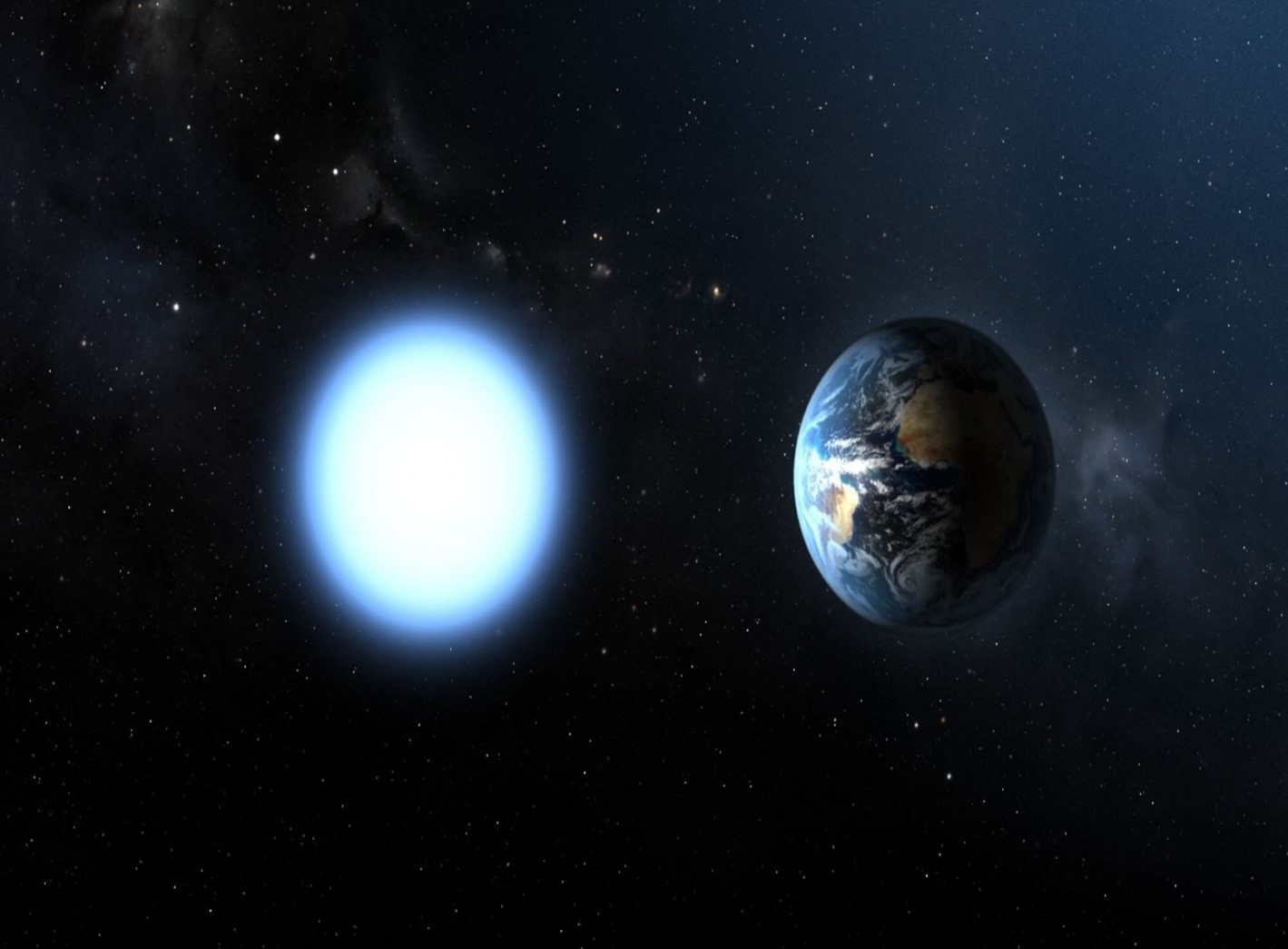
    White dwarfs are the dense remnants of dead stars. They have nearly a sun’s worth of mass compressed into a sphere the size of Earth. White dwarfs are so dense it is the pressure of electrons that keeps them from collapsing. As the authors of this new study point out, white dwarfs have a perfect balance of being dense but not overly tiny like neutron stars. They are also very common throughout the Milky Way, giving astronomers plenty of options to study them.

    For this reason, the authors argue that white dwarfs are perfect sources for dark matter decay. The high density of white dwarfs would tend to attract dark matter particle interactions, and the high surface gravity of white dwarfs would tend to capture dark matter particles over time. The particle decay from dark matter would tend to produce an excess of both heat and gamma rays, and since white dwarf physics is fairly well understood astronomers should be able to distinguish between normal and dark-matter enriched white dwarfs.

    As an example of this, the team considered a simple white dwarf model comprised entirely of carbon-12. They then considered dark matter capture for three particle models, with light, intermediate, and heavy masses. They then calculated the interaction cross-sections between dark matter particles and the nucleons of regular matter in the white dwarf. From this, they determined the observational constraints of dark matter based on current observations.

    There isn’t any evidence of dark matter decay thus far, but the authors suggest that a direct study of individual white dwarf stars could reveal dark matter. White dwarfs near the centre of the Milky Way, or those in nearby globular clusters could be particularly good candidates.

    So nothing yet, but as astronomers continue to search for dark matter, checking out some white dwarfs looking for excess gamma-rays could be a good option.

    Journal:

    Javier F. Acevedo et al, Milky Way White Dwarfs as Sub-GeV to Multi-TeV Dark Matter Detectors, arXiv (2023). DOI: 10.48550/arxiv.2309.10843


    Image:

    The white dwarf Sirius B compared to Earth. Credit: ESA and NASA

  • Dark matter could have helped make supermassive black holes in the early universe

    Dark matter could have helped make supermassive black holes in the early universe

    by Holly Ober, University of California, Los Angeles

    August 27, 2024

    It takes a long time for supermassive black holes, like the one at the center of our Milky Way galaxy, to form. Typically, the birth of a black hole requires a giant star with the mass of at least 50 of our suns to burn out—a process that can take a billion years—and its core to collapse in on itself.

    Even so, at only about 10 solar masses, the resulting black hole is a far cry from the 4 million-solar-masses black hole, Sagittarius A*, found in our Milky Way galaxy, or the billion-solar-mass supermassive black holes found in other galaxies. Such gigantic black holes can form from smaller black holes by accretion of gas and stars, and by mergers with other black holes, which take billions of years.

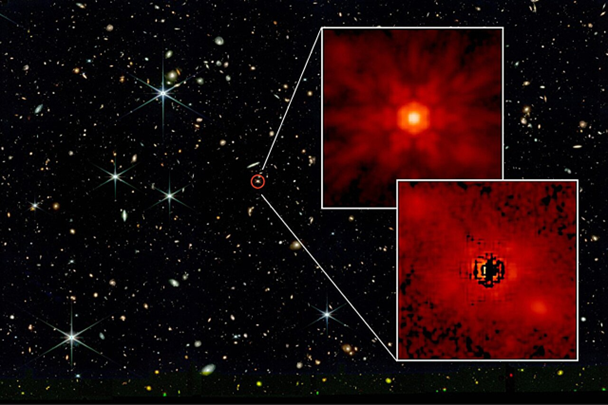
    Why, then, is the James Webb Space Telescope discovering supermassive black holes near the beginning of time itself, eons before they should have been able to form? UCLA astrophysicists have an answer as mysterious as the black holes themselves: Dark matter kept hydrogen from cooling long enough for gravity to condense it into clouds big and dense enough to turn into black holes instead of stars. The finding is published in the journal Physical Review Letters.

    “How surprising it has been to find a supermassive black hole with a billion solar mass when the universe itself is only half a billion years old,” said senior author Alexander Kusenko, a professor of physics and astronomy at UCLA. “It’s like finding a modern car among dinosaur bones and wondering who built that car in the prehistoric times.”

    Some astrophysicists have posited that a large cloud of gas could collapse to make a supermassive black hole directly, bypassing the long history of stellar burning, accretion and mergers. But there’s a catch: Gravity will, indeed, pull a large cloud of gas together, but not into one large cloud. Instead, it gathers sections of the gas into little halos that float near each other but don’t form a black hole.

    The reason is that the gas cloud cools too quickly. As long as the gas is hot, its pressure can counter gravity. However, if the gas cools, pressure decreases, and gravity can prevail in many small regions, which collapse into dense objects before gravity has a chance to pull the entire cloud into a single black hole.

    “How quickly the gas cools has a lot to do with the amount of molecular hydrogen,” said first author and doctoral student Yifan Lu. “Hydrogen atoms bonded together in a molecule dissipate energy when they encounter a loose hydrogen atom. The hydrogen molecules become cooling agents as they absorb thermal energy and radiate it away. Hydrogen clouds in the early universe had too much molecular hydrogen, and the gas cooled quickly and formed small halos instead of large clouds.”

    Lu and postdoctoral researcher Zachary Picker wrote code to calculate all possible processes of this scenario and discovered that additional radiation can heat the gas and dissociate the hydrogen molecules, altering how the gas cools.

    “If you add radiation in a certain energy range, it destroys molecular hydrogen and creates conditions that prevent fragmentation of large clouds,” Lu said.

    But where does the radiation come from?

    Only a very tiny portion of matter in the universe is the kind that makes up our bodies, our planet, the stars and everything else we can observe. The vast majority of matter, detected by its gravitational effects on stellar objects and by the bending of light rays from distant sources, is made of some new particles, which scientists have not yet identified.

    The forms and properties of dark matter are therefore a mystery that remains to be solved. While we don’t know what dark matter is, particle theorists have long speculated that it could contain unstable particles which can decay into photons, the particles of light.

    Including such dark matter in the simulations provided the radiation needed for the gas to remain in a large cloud while it is collapsing into a black hole.

    Dark matter could be made of particles that slowly decay, or it could be made of more than one particle species: some stable and some that decay at early times. In either case, the product of decay could be radiation in the form of photons, which break up molecular hydrogen and prevent hydrogen clouds from cooling too quickly. Even very mild decay of dark matter yielded enough radiation to prevent cooling, forming large clouds and, eventually, supermassive black holes.

    “This could be the solution to why supermassive black holes are found very early on,” Picker said. “If you’re optimistic, you could also read this as positive evidence for one kind of dark matter. If these supermassive black holes formed by the collapse of a gas cloud, maybe the additional radiation required would have to come from the unknown physics of the dark sector.”

    Image:

    A James Webb Telescope image shows the J0148 quasar circled in red. Two insets show, on top, the central black hole, and on bottom, the stellar emission from the host galaxy. Credit: MIT/NASA

    Journal:

    Yifan Lu et al, Direct Collapse Supermassive Black Holes from Relic Particle Decay, Physical Review Letters (2024). DOI: 10.1103/PhysRevLett.133.091001.

    On arXiv: DOI: 10.48550/arxiv.2404.03909

  • Dark matter could have slight interaction with regular matter, study suggests

    Dark matter could have slight interaction with regular matter, study suggests

    by Brian Koberlein

    September 26, 2024

    The reason we call dark matter dark isn’t that it’s some shadowy material. It’s because dark matter doesn’t interact with light. The difference is subtle, but important. Regular matter can be dark because it absorbs light. It’s why, for example, we can see the shadow of molecular clouds against the scattered stars of the Milky Way. This is possible because light and matter have a way to connect.

    Light is an electromagnetic wave, and atoms contain electrically charged electrons and protons, so matter can emit, absorb and scatter light. Dark matter isn’t electrically charged. It has no way to connect with light, and so when light and dark matter meet up they simply pass through each other.

    All of our observations suggest that dark matter and light only have gravity in common. When dark matter is clustered around a galaxy, for example, its gravitational tug can deflect light. Because of this we can map the distribution of dark matter in the universe by observing how light is gravitationally lensed around it.

    We also know that dark and regular matter interact gravitationally. The tug of dark matter causes galaxies to gather together into superclusters. But an unanswered question is whether dark and regular matter only interact gravitationally. If an atom and dark matter particle intersected, would they really just pass through each other?

    Since we haven’t directly observed dark matter particles we can only speculate, but most dark matter models argue that gravity is the only common link with light and regular matter. Dark and regular matter clump around each other, but they don’t collide and merge like interstellar clouds. But a new study suggests the two do interact, which could reveal subtle aspects of the mysterious stuff.

    The study looks at six ultrafaint dwarf galaxies, or UFDs. They are satellite galaxies near the Milky Way that seem to have far fewer stars than their mass would suggest. This is because they are mostly made of dark matter. The findings are published in The Astrophysical Journal Letters.

    If regular and dark matter only interact gravitationally, then the distribution of stars in these small galaxies should follow a certain pattern. If dark and regular matter interact directly, then this distribution will be skewed.

    To test this, the team ran computer simulations of both scenarios. They found that in the non-interacting model the distribution of stars should become more dense in the centre of the UFDs and more diffuse at the edges. In the interacting model the stellar distribution should be more uniform. When they compared these models with observations of the six galaxies, they found the interacting model was a slightly better fit.

    So it seems dark and regular matter interact in ways beyond their gravitational tugs. There isn’t enough data to pin down the exact nature of the interaction, but the fact there is any interaction at all is a surprise. It means that our traditional models of dark matter are at least partly wrong.

    It may also point the way toward new methods of detecting dark matter directly. In time we may finally solve the mystery of this dark, but not entirely invisible, material.

    Journal:

    Jorge Sánchez Almeida et al, The Stellar Distribution in Ultrafaint Dwarf Galaxies Suggests Deviations from the Collisionless Cold Dark Matter Paradigm, The Astrophysical Journal Letters (2024).

    DOI: 10.3847/2041-8213/ad66bc


  • Early dark energy could resolve cosmology’s two biggest puzzles

    Early dark energy could resolve cosmology’s two biggest puzzles

    by Jennifer Chu, Massachusetts Institute of Technology

    September 13, 2024

    A new study by MIT physicists proposes that a mysterious force known as early dark energy could solve two of the biggest puzzles in cosmology and fill in some major gaps in our understanding of how the early universe evolved.

    One puzzle in question is the “Hubble tension,” which refers to a mismatch in measurements of how fast the universe is expanding. The other involves observations of numerous early, bright galaxies that existed at a time when the early universe should have been much less populated.

    Now, the MIT team has found that both puzzles could be resolved if the early universe had one extra, fleeting ingredient: early dark energy. Dark energy is an unknown form of energy that physicists suspect is driving the expansion of the universe today.

    Early dark energy is a similar, hypothetical phenomenon that may have made only a brief appearance, influencing the expansion of the universe in its first moments before disappearing entirely.

    Some physicists have suspected that early dark energy could be the key to solving the Hubble tension, as the mysterious force could accelerate the early expansion of the universe by an amount that would resolve the measurement mismatch.

    The MIT researchers have now found that early dark energy could also explain the baffling number of bright galaxies that astronomers have observed in the early universe. In their new study, reported in the Monthly Notices of the Royal Astronomical Society, the team modeled the formation of galaxies in the universe’s first few hundred million years.

    When they incorporated a dark energy component only in that earliest sliver of time, they found the number of galaxies that arose from the primordial environment bloomed to fit astronomers’ observations.

    “You have these two looming open-ended puzzles,” says study co-author Rohan Naidu, a postdoc in MIT’s Kavli Institute for Astrophysics and Space Research. “We find that, in fact, early dark energy is a very elegant and sparse solution to two of the most pressing problems in cosmology.”

    The study’s co-authors include lead author and Kavli postdoc Xuejian (Jacob) Shen, and MIT professor of physics Mark Vogelsberger, along with Michael Boylan-Kolchin at the University of Texas at Austin, and Sandro Tacchella at the University of Cambridge.


    Big city lights

    Based on standard cosmological and galaxy formation models, the universe should have taken its time spinning up the first galaxies. It would have taken billions of years for primordial gas to coalesce into galaxies as large and bright as the Milky Way.

    But in 2023, NASA’s James Webb Space Telescope (JWST) made a startling observation. With an ability to peer farther back in time than any observatory to date, the telescope uncovered a surprising number of bright galaxies as large as the modern Milky Way within the first 500 million years, when the universe was just 3% of its current age.

    “The bright galaxies that JWST saw would be like seeing a clustering of lights around big cities, whereas theory predicts something like the light around more rural settings like Yellowstone National Park,” Shen says. “And we don’t expect that clustering of light so early on.”

    For physicists, the observations imply that there is either something fundamentally wrong with the physics underlying the models or a missing ingredient in the early universe that scientists have not accounted for. The MIT team explored the possibility of the latter, and whether the missing ingredient might be early dark energy.

    Physicists have proposed that early dark energy is a sort of antigravitational force that is turned on only at very early times. This force would counteract gravity’s inward pull and accelerate the early expansion of the universe in a way that would resolve the mismatch in measurements. Early dark energy, therefore, is considered the most likely solution to the Hubble tension.

    Galaxy skeleton

    The MIT team explored whether early dark energy could also be the key to explaining the unexpected population of large, bright galaxies detected by JWST. In their new study, the physicists considered how early dark energy might affect the early structure of the universe that gave rise to the first galaxies. They focused on the formation of dark matter halos—regions of space where gravity happens to be stronger, and where matter begins to accumulate.

    “We believe that dark matter halos are the invisible skeleton of the universe,” Shen explains. “Dark matter structures form first, and then galaxies form within these structures. So, we expect the number of bright galaxies should be proportional to the number of big dark matter halos.”

    The team developed an empirical framework for early galaxy formation, which predicts the number, luminosity, and size of galaxies that should form in the early universe, given some measures of “cosmological parameters.” Cosmological parameters are the basic ingredients, or mathematical terms, that describe the evolution of the universe.

    Physicists have determined that there are at least six main cosmological parameters, one of which is the Hubble constant—a term that describes the universe’s rate of expansion. Other parameters describe density fluctuations in the primordial soup, immediately after the Big Bang, from which dark matter halos eventually form.

    The MIT team reasoned that if early dark energy affects the universe’s early expansion rate in a way that resolves the Hubble tension, then it could affect the balance of the other cosmological parameters, in a way that might increase the number of bright galaxies that appear at early times.

    To test their theory, they incorporated a model of early dark energy (the same one that happens to resolve the Hubble tension) into an empirical galaxy formation framework to see how the earliest dark matter structures evolve and give rise to the first galaxies.

    “What we show is, the skeletal structure of the early universe is altered in a subtle way where the amplitude of fluctuations goes up, and you get bigger halos, and brighter galaxies that are in place at earlier times, more so than in our more vanilla models,” Naidu says. “It means things were more abundant, and more clustered in the early universe.”

    “A priori, I would not have expected the abundance of JWST’s early bright galaxies to have anything to do with early dark energy, but their observation that EDE pushes cosmological parameters in a direction that boosts the early-galaxy abundance is interesting,” says Marc Kamionkowski, professor of theoretical physics at Johns Hopkins University, who was not involved with the study.

    “I think more work will need to be done to establish a link between early galaxies and EDE, but regardless of how things turn out, it’s a clever—and hopefully ultimately fruitful—thing to try.”

    “We demonstrated the potential of early dark energy as a unified solution to the two major issues faced by cosmology. This might be evidence for its existence if the observational findings of JWST get further consolidated,” Vogelsberger concludes.

    “In the future, we can incorporate this into large cosmological simulations to see what detailed predictions we get.”

    Image:

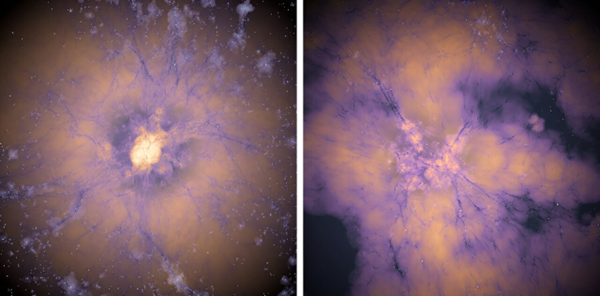
    Early dark energy could have triggered the formation of numerous bright galaxies, very early in the universe, a new study finds. The mysterious unknown force could have caused early seeds of galaxies (depicted at left) to sprout many more bright galaxies (at right) than theory predicts. Credit: Josh Borrow/Thesan Team


    Journal:

    Xuejian Shen et al, Early Galaxies and Early Dark Energy: A Unified Solution to the Hubble Tension and Puzzles of Massive Bright Galaxies revealed by JWST, Monthly Notices of the Royal Astronomical Society (2024). DOI: 10.1093/mnras/stae1932.


  • A wobble from Mars could be sign of dark matter, study finds

    A wobble from Mars could be sign of dark matter, study finds

    by Jennifer Chu, Massachusetts Institute of Technology

    September 17, 2024

    In a new study, MIT physicists propose that if most of the dark matter in the universe is made up of microscopic primordial black holes—an idea first proposed in the 1970s—then these gravitational dwarfs should zoom through our solar system at least once per decade. A flyby like this, the researchers predict, would introduce a wobble into Mars’ orbit, to a degree that today’s technology could actually detect.

    Such a detection could lend support to the idea that primordial black holes are a primary source of dark matter throughout the universe.

    “Given decades of precision telemetry, scientists know the distance between Earth and Mars to an accuracy of about 10 centimeters,” says study author David Kaiser, professor of physics and the Germeshausen Professor of the History of Science at MIT.

    “We’re taking advantage of this highly instrumented region of space to try and look for a small effect. If we see it, that would count as a real reason to keep pursuing this delightful idea that all of dark matter consists of black holes that were spawned in less than a second after the Big Bang and have been streaming around the universe for 14 billion years.”

    Kaiser and his colleagues report their findings in the journal Physical Review D. The study’s co-authors are lead author Tung Tran, who is now a graduate student at Stanford University; Sarah Geller Ph.D., who is now a postdoc at the University of California at Santa Cruz; and MIT Pappalardo Fellow Benjamin Lehmann.

    Beyond particles

    Less than 20% of all physical matter is made from visible stuff, from stars and planets, to the kitchen sink. The rest is composed of dark matter, a hypothetical form of matter that is invisible across the entire electromagnetic spectrum yet is thought to pervade the universe and exert a gravitational force large enough to affect the motion of stars and galaxies.

    Physicists have erected detectors on Earth to try and spot dark matter and pin down its properties. For the most part, these experiments assume that dark matter exists as a form of exotic particle that might scatter and decay into observable particles as it passes through a given experiment. But so far, such particle-based searches have come up empty.

    In recent years, another possibility, first introduced in the 1970s, has regained traction: Rather than taking on a particle form, dark matter could exist as microscopic, primordial black holes that formed in the first moments following the Big Bang.

    Unlike the astrophysical black holes that form from the collapse of old stars, primordial black holes would have formed from the collapse of dense pockets of gas in the very early universe and would have scattered across the cosmos as the universe expanded and cooled.

    These primordial black holes would have collapsed an enormous amount of mass into a tiny space. The majority of these primordial black holes could be as small as a single atom and as heavy as the largest asteroids. It would be conceivable, then, that such tiny giants could exert a gravitational force that could explain at least a portion of dark matter. For the MIT team, this possibility raised an initially frivolous question.

    “I think someone asked me what would happen if a primordial black hole passed through a human body,” recalls Tung, who did a quick pencil-and-paper calculation to find that if such a black hole zinged within 1 meter of a person, the force of the black hole would push the person 6 meters, or about 20 feet away in a single second. Tung also found that the odds were astronomically unlikely that a primordial black hole would pass anywhere near a person on Earth.

    Their interest piqued, the researchers took Tung’s calculations a step further, to estimate how a black hole flyby might affect much larger bodies such as the Earth and the moon.

    “We extrapolated to see what would happen if a black hole flew by Earth and caused the moon to wobble a little bit,” Tung says. “The numbers we got were not very clear. There are many other dynamics in the solar system that could act as some sort of friction to cause the wobble to dampen out.”

    Close encounters

    To get a clearer picture, the team generated a relatively simple simulation of the solar system that incorporates the orbits and gravitational interactions between all the planets, and some of the largest moons.

    “State-of-the-art simulations of the solar system include more than a million objects, each of which has a tiny residual effect,” Lehmann notes. “But even modeling two dozen objects in a careful simulation, we could see there was a real effect that we could dig into.”

    The team worked out the rate at which a primordial black hole should pass through the solar system, based on the amount of dark matter that is estimated to reside in a given region of space and the mass of a passing black hole, which in this case, they assumed to be as massive as the largest asteroids in the solar system, consistent with other astrophysical constraints.

    “Primordial black holes do not live in the solar system. Rather, they’re streaming through the universe, doing their own thing,” says co-author Sarah Geller. “And the probability is, they’re going through the inner solar system at some angle once every 10 years or so.”

    Given this rate, the researchers simulated various asteroid-mass black holes flying through the solar system, from various angles, and at velocities of about 150 miles per second. (The directions and speeds come from other studies of the distribution of dark matter throughout our galaxy.)

    They zeroed in on those flybys that appeared to be “close encounters,” or instances that caused some sort of effect on surrounding objects. They quickly found that any effect on the Earth or the moon was too uncertain to pin to a particular black hole. But Mars seemed to offer a clearer picture.

    The researchers found that if a primordial black hole were to pass within a few hundred million miles of Mars, the encounter would set off a “wobble,” or a slight deviation in Mars’ orbit. Within a few years of such an encounter, Mars’ orbit should shift by about a meter—an incredibly small wobble, given the planet is more than 140 million miles from Earth. And yet, this wobble could be detected by the various high-precision instruments that are monitoring Mars today.

    If such a wobble were detected in the next couple of decades, the researchers acknowledge there would still be much work needed to confirm that the push came from a passing black hole rather than a run-of-the-mill asteroid.

    “We need as much clarity as we can of the expected backgrounds, such as the typical speeds and distributions of boring space rocks, versus these primordial black holes,” Kaiser notes.

    “Luckily for us, astronomers have been tracking ordinary space rocks for decades as they have flown through our solar system, so we could calculate typical properties of their trajectories and begin to compare them with the very different types of paths and speeds that primordial black holes should follow.”

    To help with this, the researchers are exploring the possibility of a new collaboration with a group that has extensive expertise simulating many more objects in the solar system.

    “We are now working to simulate a huge number of objects, from planets to moons and rocks, and how they’re all moving over long-time scales,” Geller says. “We want to inject close encounter scenarios and look at their effects with higher precision.”

    “It’s a very neat test they’ve proposed, and it could tell us if the closest black hole is closer than we realize,” says Matt Caplan, associate professor of physics at Illinois State University, who was not involved in the study.

    “I should emphasize there’s a little bit of luck involved too. Whether or not a search finds a loud and clear signal depends on the exact path a wandering black hole takes through the solar system. Now that they’ve checked this idea with simulations, they have to do the hard part—checking the real data.”

    Image:

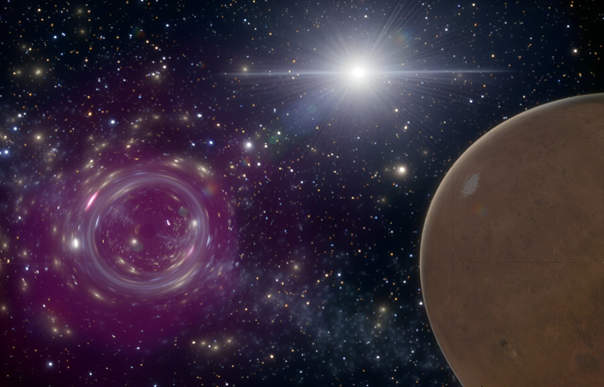
    An artist’s illustration depicts a primordial black hole (at left) flying past, and briefly “wobbling” the orbit of Mars (at right), with the sun in the background. MIT scientists say such a wobble could be detectable by today’s instruments. Credit: Benjamin Lehmann, via SpaceEngine @ Cosmographic Software LLC

    Journal:

    Tung X. Tran et al, Close encounters of the primordial kind: a new observable for primordial black holes as dark matter, Physical Review D (2024).

  • Axions: leading candidate for dark matter or not?

    Axions: leading candidate for dark matter or not?

    by Kate Green

    October 19, 2024

    A collaborative team of physicists from the universities of Amsterdam, Princeton, and Oxford has recently published findings suggesting that extremely light particles known as axions may form large clouds around neutron stars. These axions offer a potential explanation for dark matter, a phenomenon that has long eluded cosmologists. Importantly, the research indicates that these axion clouds might be observable with existing telescopes.

    Background on Axions

    1. Previous Research:

      • The team previously explored axions that escape neutron stars, investigating how they could lead to observable signals when converted into light under certain conditions.

    2. Current Focus:

      • The latest research shifts attention to axions that do not escape the gravitational pull of neutron stars, focusing on those captured and retained by the star’s immense gravity.

    Formation of Axion Clouds

    1. Capturing Axions:

      • Over time, axions that are gravitationally bound to neutron stars accumulate, gradually forming a dense, hazy cloud around the star.

    2. Observational Potential:

      • The formation of these axion clouds raises intriguing questions for astronomers and physicists alike. The existence of such clouds could lead to observable phenomena that might provide insights into both axion physics and the nature of dark matter.

    Why Study Axion Clouds?

    1. Exploration of Dark Matter:

      • Understanding axion clouds could help elucidate the properties and behaviours of dark matter, contributing to a more comprehensive understanding of the universe’s composition.

    2. Observable Signals:

      • The clouds may produce detectable signals that can be studied using current astronomical instruments, enabling researchers to test theories regarding axions and dark matter.

    3. Link to Neutron Stars:

      • Neutron stars represent extreme environments, making them ideal laboratories for studying the fundamental interactions of particles like axions. Observing these clouds could yield valuable data about the physics governing both neutron stars and potential dark matter candidates.

    The study of axion clouds around neutron stars presents a promising avenue for advancing our understanding of dark matter. By focusing on the axions retained by these stars, physicists aim to uncover observable signals that may confirm the existence of axions and provide critical insights into the nature of the universe. This research exemplifies the interconnectedness of particle physics, astrophysics, and cosmology, as scientists strive to unravel one of the most profound mysteries of modern physics.

    Axions: From soap to dark matter

    Introduction to Axions

    1. Understanding Common Particles:

    • Many people are familiar with protons, neutrons, electrons, and photons—fundamental particles that constitute the matter around us. In contrast, axions are less known and remain a theoretical entity.

    1. Hypothetical Nature:

    • Axions are currently only a hypothetical type of particle; no experimental evidence has yet confirmed their existence. Their conception emerged from the need to address theoretical inconsistencies within particle physics.

    Origin and Naming

    1. Naming and Historical Context:

    • Proposed in the 1970s, the term “axion” was inspired by a brand of soap, reflecting its role in “cleaning up” theoretical problems concerning the strong interactions of particles like the neutron.

    1. Theoretical Framework:

    • In particular, axions were introduced as part of the solution to the strong CP problem, which involves the apparent absence of certain types of symmetry violations in strong interactions. Their introduction aimed to reconcile theoretical predictions with observed phenomena.

    Characteristics of Axions

    1. Hypothetical Nature:

    • Despite being a compelling theoretical candidate, axions have not yet been detected. They are predicted to be extremely light—much lighter than protons, neutrons, or electrons—making them difficult to observe directly in laboratory experiments.

    1. Weak Interactions:

    • Axions are theorized to have very weak interactions with other particles, meaning that even if they do exist, they would be challenging to detect with existing experimental setups. This property makes them intriguing candidates for dark matter.

    Axions and Dark Matter

    If axions exist, they could potentially account for a significant portion of the universe’s dark matter due to their ability to cluster and exert gravitational influence on galaxies and cosmic structures.

    1. Dark Matter Overview:

    • Approximately 85% of the universe’s matter content is thought to be “dark matter,” which interacts with normal matter primarily through gravitational forces. This dark matter does not emit, absorb, or reflect light, making it invisible and detectable only through its gravitational effects on visible matter, such as galaxies and galaxy clusters.

    1. Detection Challenges:

    • The notion that axions could contribute to dark matter has gained traction, as they may account for the unseen mass influencing the universe’s structure and behaviour.

    • Despite the theoretical implications, dark matter interactions with normal matter are presumed to be minimal, making it exceptionally difficult to detect.

    The axion remains one of the most intriguing candidates for solving the dark matter mystery, bridging gaps between fundamental physics and the cosmos. Thus, the quest to detect axions continues, with physicists exploring innovative experimental approaches to uncover the nature of dark matter and the universe’s composition. If proven to exist, axions could illuminate our understanding of the universe and provide answers to some of the most profound questions in modern physics. The theoretical possibility that axions could be a key component of dark matter emphasizes the intricate connections between particle physics, cosmology, and our understanding of the universe.

    Neutron stars as magnifying glasses

    The concept of neutron stars acting as “magnifying glasses” for axions is a fascinating approach to addressing the challenge of detecting these elusive particles.

    Here is a deeper dive into how this works and its implications for axion research:

    The Axion-Photon Conversion Mechanism

    1. Electric and Magnetic Fields:

    • Axions are hypothesized to have the ability to convert into photons (light particles) when subjected to electric and magnetic fields. This conversion is a crucial aspect of their potential detectability.

    • However, the interaction strength between axions and photons is expected to be extremely weak, meaning that the amount of light produced from axions under typical conditions would be minimal.

    1. Conditions in Neutron Stars:

    • Neutron stars provide a unique environment due to their extreme density and strong gravitational fields. These stars are typically around 12 to 15 kilometres in radius but contain masses similar to that of the Sun, creating immense pressure and temperature.

    • The magnetic fields around neutron stars can be billions of times stronger than those on Earth, offering an ideal setting for the mass production of axions. Under these conditions, the density of axions could become substantial enough to enhance the likelihood of photon production.

    The Potential for Observable Signals

    1. Enhanced Signal Detection:

    • The dense clouds of axions formed around neutron stars increase the chance of axion-photon conversion events, leading to potentially observable signals.

    • If a significant number of axions can convert into photons due to the extreme magnetic fields present in neutron stars, it may produce a detectable light signature that astronomers can observe.

    1. Types of Signals:

    • Continuous Emission: During the neutron star’s active phase, a steady emission of light could be produced as axions convert to photons. This signal may be detectable over long periods.

    • Transient Events: A dramatic one-time burst of light could occur at the end of a neutron star’s life, potentially offering a clear and unique signal that could be studied in detail.

    Broader Implications for Axion Research

    Testing Dark Matter Theories:

    • Observing these axion-induced signals would provide valuable data that could either support or challenge current models of dark matter. If axions are confirmed to exist and are observed through these mechanisms, it would significantly advance our understanding of the universe’s composition.

    Increased Collaboration:

    • The study of axions in neutron stars could lead to cross-disciplinary collaborations between astrophysicists, particle physicists, and experimental scientists as they work together to develop and deploy observational strategies.

    Future Research Directions:

    • Continued theoretical and computational modelling will be essential to refine predictions about axion clouds and their potential signals. Additionally, the development of new observational techniques and technologies will enhance the search for these elusive particles.

    Neutron stars, with their extreme conditions, present a promising avenue for detecting axions and addressing fundamental questions about dark matter. By leveraging the unique properties of these stellar remnants, researchers are better positioned to uncover new physics and enhance our understanding of the universe. The potential to observe axion-induced light from neutron stars not only offers hope for confirming the existence of these hypothetical particles but also for unravelling the mysteries of dark matter that have puzzled scientists for decades.

    The ones that stay behind

    The authors’ research marks a significant advancement in our understanding of axions, particularly focusing on those that are captured by neutron stars rather than escaping into space. Here is a detailed breakdown of their findings and implications:

    Key Findings

    1. Axion Capture:

    • The study shifts the focus from axions that escape neutron stars to those that are gravitationally bound to them. These captured axions, despite their extremely low mass and weak interactions, can accumulate around the neutron star over millions of years.

    1. Formation of Axion Clouds:

    • The authors argue that axion clouds should exist around most neutron stars due to their gravitational pull, leading to the formation of dense axion clouds. These clouds may be significantly denser—potentially up to twenty orders of magnitude—than local dark matter densities, presenting a unique opportunity for observation.

    1. Observational Signatures

    • The dense axion clouds around neutron stars could produce various observable signals, primarily:

      • Continuous Signals: Emitted over extended periods during the neutron star’s lifetime, providing a steady light source for telescopes to detect.

      • One-Time Bursts: Occurring at the end of a neutron star’s life when it ceases its electromagnetic emissions. This burst could serve as a distinct signal for axion detection.

    Implications for Axion Research

    1. Research Opportunities

    • The presence of axion clouds around neutron stars creates exciting avenues for research. These clouds can be studied to probe the properties and interactions of axions, contributing to our understanding of dark matter and fundamental particle physics.

    1. Utilization of Existing Telescopes:

    • The potential for detection using existing radio telescopes is significant, as it allows for immediate observational efforts without the need for new, complex instrumentation. This accessibility could expedite the search for evidence of axions.

    1. Understanding Neutron Star Dynamics:

    • The formation and characteristics of axion clouds could also provide insights into the dynamics and evolution of neutron stars, enriching our knowledge of stellar physics.

    The authors’ focus on axion clouds around neutron stars opens up a promising frontier in astrophysics. By studying these clouds, researchers may not only advance our understanding of axions as a candidate for dark matter but also enhance the broader understanding of neutron star physics and cosmic structure. The potential to observe distinct signals from axion clouds could lead to groundbreaking discoveries, making this a highly impactful area of research in the ongoing quest to unravel the mysteries of the universe.

    What is next?

    The next steps in the study of axion clouds around neutron stars are multifaceted and aim to deepen our understanding of both axions and neutron stars themselves. Here are some key directions for future research:

    1. Search for Axion Clouds

    • Observational Campaigns: The primary focus will be on conducting thorough searches for axion clouds using existing radio telescopes and observatories. Scientists will look for the predicted signals associated with axion emissions, both continuous and one-time bursts, to confirm their existence.

    1. Theoretical Investigations

    • Dynamics of Neutron Stars: One of the authors is already working on exploring how the presence of axion clouds could influence the dynamics of neutron stars. Understanding these interactions could provide insights into the internal structure and evolution of these dense objects.

    1. Numerical Modelling

    • Refining Predictions: More numerical modelling of axion clouds is essential to provide accurate predictions of their formation, behaviour, and the resulting observational signatures. This modelling will help researchers identify specific parameters to focus on during observations.

    1. Binaries and Axion Clouds

    • Studying Binaries: Many neutron stars exist in binary systems, either with another neutron star or with a black hole. Investigating how axion clouds behave in these environments will be critical. Researchers will need to understand how the dynamics of axion clouds might change in these complex systems and what unique signals they could produce.

    1. Cross-Disciplinary Collaborations

    • Integrative Research: As the study of axions intersects with various fields—particle physics, astrophysics, plasma physics, and observational astronomy—collaborations among experts in these disciplines will be important. This integrative approach can lead to new methodologies and enhance the overall understanding of dark matter and fundamental physics.

    1. Future Theoretical Developments

    • Exploring Alternative Scenarios: Researchers might explore alternative theories and scenarios involving axions and their potential role in the broader context of cosmology, dark matter, and the evolution of the universe.

    The exciting prospect of discovering axion clouds represents a significant step in understanding dark matter and the fundamental forces governing the universe. By establishing a comprehensive research agenda focused on both observational and theoretical advancements, scientists hope to illuminate the mysteries surrounding these elusive particles and their implications for astrophysics. As this field progresses, it may reveal profound insights into the nature of matter and the structure of the cosmos.

    Journal:

    Dion Noordhuis et al, Axion Clouds around Neutron Stars, Physical Review X (2024). DOI: 10.1103/PhysRevX.14.041015

    Image:

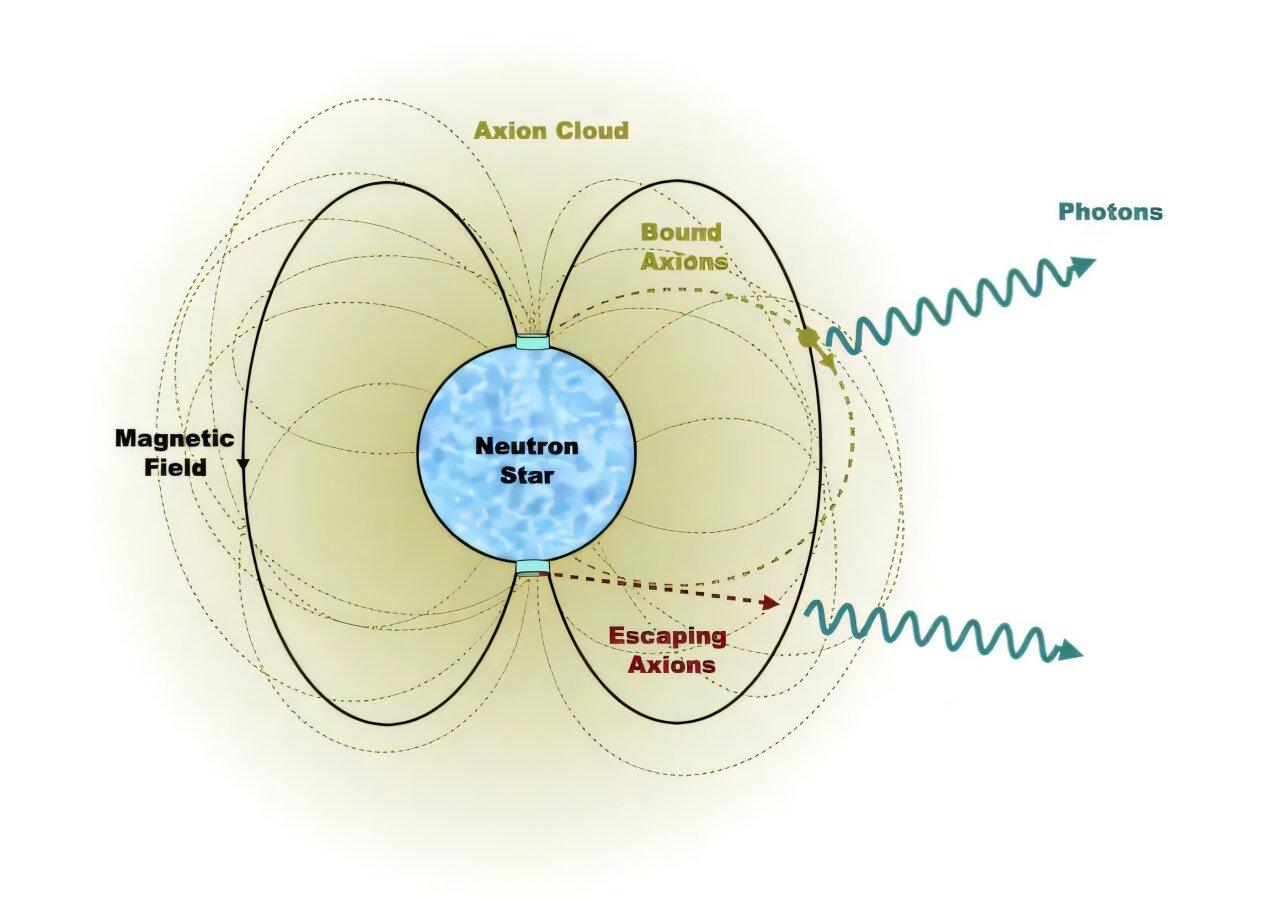
    An axion cloud around a neutron star. While some axions escape the star’s gravitational pull, many remain bound to the star and over a long period of time form a cloud surrounding it. The interaction with the neutron star’s strong magnetic field causes some axions to convert into photons – light that we can eventually detect with our telescopes on Earth. Credit: University of Amsterdam

    Image:

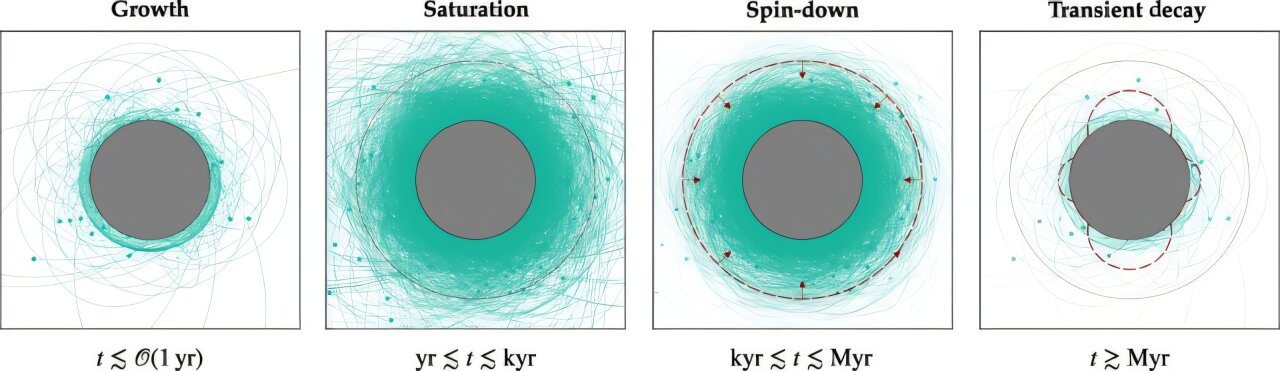
    Overview of the four stages characterizing the formation and evolution of axion clouds around neutron stars. Credit: Physical Review X (2024). DOI: 10.1103/PhysRevX.14.041015

  • First results from the Axion Dark-Matter Birefringent Cavity experiment establish a new technique for axion se

    First results from the Axion Dark-Matter Birefringent Cavity experiment establish a new technique for axion se

    by Kate Green

    October 20, 2024

    MIT researchers recently published the first results of an experiment aimed at detecting axion dark matter by exploring axion-induced birefringence of electromagnetic waves. Although no axion signals were observed, the findings, published in Physical Review Letters, introduced a new method for axion searches. This approach uses a tuneable optical cavity, allowing researchers to adjust the experimental parameters and expand the range of possible axion masses they can probe. This marks a significant advancement in the search for axions, hypothetical particles thought to be a key component of dark matter.

    Evan Hall, a research scientist at MIT’s LIGO lab, explained that the experiment was first proposed in 2019 through a collaboration between their lab and the MIT Center for Theoretical Physics. The team was exploring new approaches to search for the axion, a hypothetical dark matter particle.

    “Any observable interaction between axions and standard matter is expected to be very faint. We realized that the problem of trying to find a faint signal was a very similar problem to the detection of gravitational waves, which is another kind of very faint kind of signal detected only recently” Hall stated.

    After extensive theoretical discussions, Evan Hall and his colleagues recognized that the lasers and optical instruments used in LIGO’s gravitational wave detection could be adapted for axion searches. This led to the development of the Axion Dark-Matter Birefringent Cavity (ADBC) experiment, which began collecting data in 2022. The experiment repurposes LIGO’s technology to probe for faint signals that could reveal the existence of axions, a type of hypothetical dark matter particle.

    “We wanted to demonstrate experimentally how to use these tools to pull off an axion search,” explained Hall. “Light comes in two polarizations—horizontal and vertical. Axions, if they exist, are expected to convert one polarization into the other. In our lab, we use a laser to generate vertically polarized light, and we look for any hint that axions have converted some of that light into the horizontal polarization.”

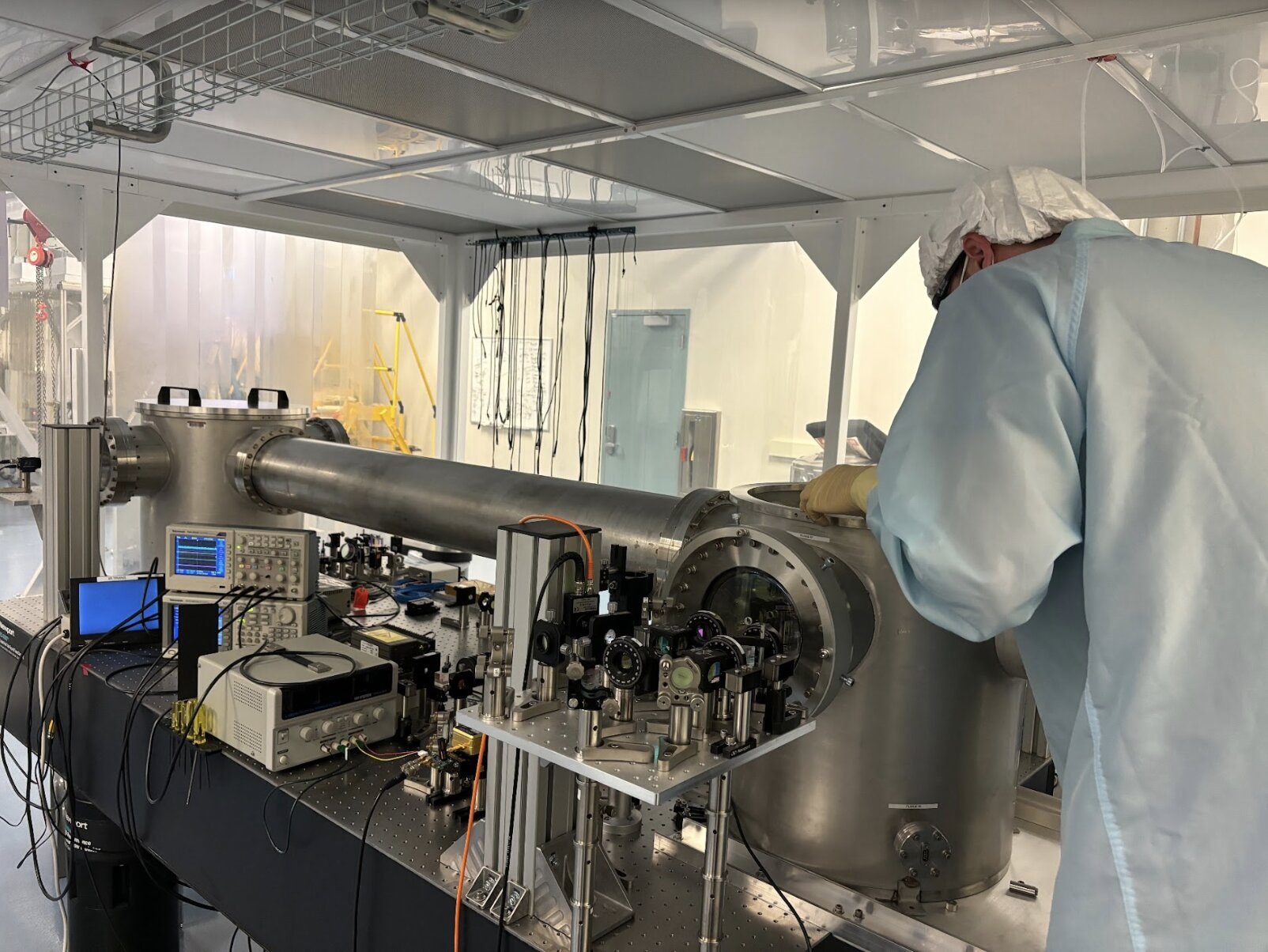
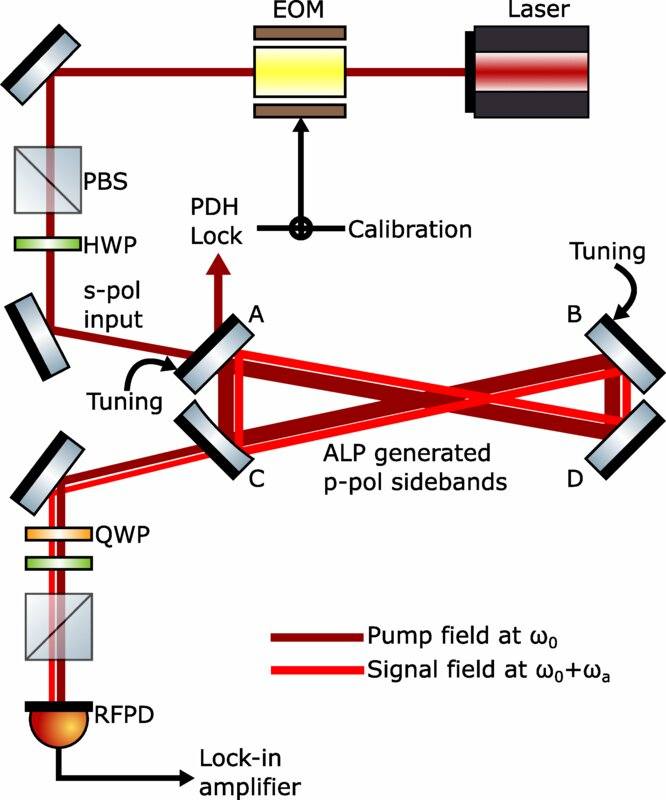
    The ADBC experiment’s detector is composed of four mirrors arranged in an optical cavity, a structure designed to trap and recirculate light. This cavity allows laser-generated light beams to bounce thousands of times, significantly amplifying any faint signals that could be caused by axions. This design enhances the experiment’s ability to detect the subtle interactions expected from these hypothetical dark matter particles.

    In the early stages of the experiment, Hall and his team used the ADBC detector to search for axions with masses around 50 neV (about 10–40 grams). Interestingly, a research group in the United Kingdom has been conducting similar searches for axions, focusing on those with masses around 2 neV, using equipment comparable to that used at MIT. This highlights the growing global interest in axion searches, with different teams probing various mass ranges to uncover these elusive dark matter particles.

    “Our work showed that this new kind of cavity can be tuned to widen the range of possible axion masses that can be searched over,” said Swadha Pandey, fourth year Ph.D. student at MIT. “Specifically, we showed that the cavity can be tuned by adjusting the angles of its four mirrors. Tunability is an important criterion for making the apparatus useful for dark matter searches. Since nobody knows what the axion mass might be, we need to search over a wide range of possible masses.”

    The initial results from the ADBC experiment have placed important constraints on the potential coupling between axion-like particles and photons. While axions have not been detected yet, these findings lay the groundwork for future research, showing that optical cavities can be an effective tool for searching for these hypothetical dark matter particles. This work could inspire further experiments and refinements in the search for axions, bringing researchers closer to their potential experimental discovery.

    “Having shown that this method can work over a broad range of axion masses, the next step would be to build a larger, more sensitive experiment,” added Pandey. “Such an experiment would use more laser light, so that there are more photons interacting with the axions, and the experiment would be larger, to increase the time that the photons can interact with the axions. Automation of the tuning mechanism and clever designs for mirror coatings are also essential for scanning across the entire available range of axion masses.”

    Journal:

    Swadha Pandey et al, First Results from the Axion Dark-Matter Birefringent Cavity (ADBC) Experiment, Physical Review Letters (2024).

    DOI: 10.1103/PhysRevLett.133.111003

    Image:

    Experimental setup at MIT, picture by Swadha Pandey. Our four-mirror detector is housed inside two steel vacuum chambers connected by a pipe. The platform in front of the near vacuum chamber supports optics that direct laser light into and out of the chamber. Credit: Pandey, Hall and Evans.

    Image:

    Experimental setup: bow-tie cavity with A, D, B, C mirrors. ^𝑠-polarized pump field from a 1064 nm Nd:YAG laser enters the cavity at mirror A and is locked to the cavity using a Pound-Drever-Hall lock. ^𝑝-polarized sidebands generated by an axionlike particle (ALP) at the cavity splitting frequency 𝜔𝑎=𝜔sp are resonant in the cavity. Heterodyne readout is performed using pump and signal field transmitted at mirror C. Credit: Physical Review Letters (2024). DOI: 10.1103/PhysRevLett.133.111003

  • Observational study supports century-old theory that challenges the Big Bang

    Observational study supports century-old theory that challenges the Big Bang

    by Grant Guggisberg, Kansas State University

    September 11, 2024

    A Kansas State University engineer recently published results from an observational study in support of a century-old theory that directly challenges the validity of the Big Bang theory.

    Lior Shamir, associate professor of computer science, used imaging from a trio of telescopes and more than 30,000 galaxies to measure the redshift of galaxies based on their distance from Earth. Redshift is the change in the frequency of light waves that a galaxy emits, which astronomers use to gauge a galaxy’s speed.

    Shamir’s findings lend support to the century-old “tired light” theory instead of the Big Bang. The findings are published in the journal Particles.

    “In the 1920s, Edwin Hubble and George Lemaitre discovered that the more distant the galaxy is, the faster it moves away from Earth,” Shamir said. “That discovery led to the Big Bang theory, suggesting that the universe started to expand around 13.8 billion years ago. At around the same time, preeminent astronomer Fritz Zwicky proposed that galaxies that were more distant from Earth did not really move faster.”

    Zwicky’s contention was that the redshift observed from Earth is not because the galaxies move but because the light photons lose their energy as they travel through space. The longer the light travels, the more energy it loses, leading to the illusion that galaxies that are more distant from Earth also move faster.

    “The tired light theory was largely neglected, as astronomers adopted the Big Bang theory as the consensus model of the universe,” Shamir said. “But the confidence of some astronomers in the Big Bang theory started to weaken when the powerful James Webb Space Telescope saw first light.

    “The JWST provided deep images of the very early universe, but instead of showing an infant early universe as astronomers expected, it showed large and mature galaxies. If the Big Bang happened as scientists initially believed, these galaxies are older than the universe itself.”

    While new imaging casts doubt on the Big Bang, Shamir’s study used the constant rotational velocity of the Earth around the center of the Milky Way to examine the redshift of galaxies at the Milky Way’s galactic poles that move in different velocities relative to Earth and to test how the change in the redshift responds to the change in velocity.

    “The results showed that galaxies that rotate in the opposite direction relative to the Milky Way have lower redshift compared to galaxies that rotate in the same direction relative to the Milky Way,” Shamir said. “That difference reflects the motion of the Earth as it rotates with the Milky Way. But the results also showed that the difference in the redshift increased when the galaxies were more distant from Earth.

    “Because the rotational velocity of the Earth relative to the galaxies is constant, the reason for the difference can be the distance of the galaxies from Earth. That shows that the redshift of galaxies changes with the distance, which is what Zwicky predicted in his Tired Light theory.”

    Image:

    Northeastern University researchers have shown that our visible universe and invisible dark matter likely co-evolved from the time of the Big Bang. Credit: Pixabay/CC0 Public Domain

    Journal:

    Lior Shamir, An Empirical Consistent Redshift Bias: A Possible Direct Observation of Zwicky’s TL Theory, Particles (2024). DOI: 10.3390/particles7030041

  • The universe is smoother than the standard model of cosmology suggests. So is the theory broken?

    The universe is smoother than the standard model of cosmology suggests. So is the theory broken?

    by Ian G. McCarthy

    September 26, 2024

    Given how unfathomably large the universe is, it is perhaps understandable that we haven’t yet cracked all its secrets. But there are actually some pretty basic features, ones we used to think we could explain, that cosmologists are increasingly struggling to make sense of.

    Recent measurements of the distribution of matter in the universe (so-called large-scale structure) appear to be in conflict with the predictions of the standard model of cosmology, our best understanding of how the universe works.

    The standard model originated some 25 years ago and has successfully reproduced a whole plethora of observations. But some of the latest measurements of large-scale structure, a topic on which I work, indicate that the matter is less clustered (smoother) than it ought to be according to the standard model.

    This result has cosmologists scratching their heads looking for explanations. Some solutions are relatively mundane, such as unknown systematic errors in the measurements. But there are more radical solutions. These include rethinking the nature of dark energy (the force causing the universe’s expansion to accelerate), invoking a new force of nature or even tweaking Einstein’s theory of gravity on the largest of scales.

    At present, the data cannot easily distinguish between different competing ideas. But the measurements from forthcoming surveys are poised to take a giant leap forward in precision. We may be on the cusp of finally breaking the standard model of cosmology.

    The early universe

    To understand the nature of the current tension and its possible solutions, it is important to understand how structure in the universe formed and subsequently evolved. Much of our understanding comes from measurements of the cosmic microwave background (CMB). The CMB is radiation that fills the universe and is a leftover relic from the first few hundred thousand years of cosmic evolution after the Big Bang (for comparison, the universe is estimated to be 13.7 billion years old).

    Scientists discovered the CMB by accident in 1964 (garnering them a Nobel prize), but its existence and properties had been predicted years earlier.

    In excellent agreement with some of the earliest theoretical work, the observed temperature of the CMB today is an incredibly chilly 3 Kelvin (-270°C). However, at very early times, it was sufficiently hot (millions of degrees) to enable the fusion of all of the light elements in the universe, including helium and lithium, into heavier ones.

    The CMB’s spectrum (light broken down by wavelength) suggests it must have been in thermal equilibrium with matter in the past—meaning they had the same distribution of energies. Matter and radiation can only reach thermal equilibrium in very dense environments. So measurements of the CMB convincingly demonstrate that the universe was once an extremely hot and dense place, with all the matter and radiation packed into a very small space.

    As the universe expanded, it quickly cooled. And as it did so, some of the free electrons that existed at the time were captured by protons, forming atoms of hydrogen. This “era of recombination” happened around 300,000 years after the Big Bang. After this point, the universe was suddenly less dense, so the CMB radiation was “released” to travel without impediment, and it has not significantly interacted with matter since.

    As the radiation is very old, when we make measurements of the CMB today, we are learning about the conditions of the early universe. But detailed mapping of the CMB tells us a great deal more than this.

    A key insight from CMB maps obtained with the Planck telescope is that the universe was also exceptionally smooth at early times. There was only a 0.001% variation from place to place in the density and temperature of the matter and radiation in the universe. If there had been more extreme variation, that matter and radiation would have been much more clustered.

    These variations, or “fluctuations,” are of fundamental importance to how structure subsequently evolved in the universe. Without these fluctuations, there would be no galaxies, no stars or planets—and no life. A very interesting question is: Where did these fluctuations come from?

    Our current understanding is that they are a result of quantum mechanics, the theory of the microcosmos of atoms and particles. Quantum mechanics shows that empty space has some background energy that allows sudden, local changes, such as particles popping in and out of existence. The quantum nature of matter and energy has been verified to remarkable accuracy in the laboratory.

    These fluctuations are thought to have been blown up to large scales in a very rapid period of expansion in the early universe called “inflation,” although the detailed mechanism behind inflation is still not fully understood.

    Over time, these fluctuations grew and the arrangement of matter and radiation in the universe became more clustered. Regions that were slightly denser had a stronger gravitational pull and so attracted even more matter, which increased the density, which strengthened the gravitational pull, and so on. Regions of slightly lower density lost out, becoming emptier with time—a cosmic case of the rich getting richer and the poor getting poorer.

    The fluctuations grew to such an extent over time that galaxies and stars started to form, with galaxies being distributed in and along the familiar filaments and nodes that make up a “cosmic web.”

    The standard explanation

    The rate at which fluctuations grow over time, and how they are clustered in space, depends on several factors: the nature of gravity, the constituent components of matter and energy in the universe, and how these components interact (both with themselves and with each other).

    These factors are encapsulated in the standard model of cosmology. The model is based on a solution to Einstein’s general theory of relativity (our best understanding of gravity) that assumes the universe is homogeneous and isotropic on large scales—meaning it looks the same in every direction to every observer.

    It also assumes that the matter and energy in the universe is composed of normal matter (“baryons”), dark matter consisting of relatively heavy and slow-moving particles (“cold” dark matter) and a constant amount of dark energy (Einstein’s cosmological constant, denoted Lambda).

    Since its origin approximately 25 years ago, the model has successfully explained a great many observations of the universe on large scales, including the detailed properties of the CMB.

    And until very recently, it also provided excellent fits to a variety of measurements of the clustering of large-scale structure at late times. In fact, some measurements of large-scale structure are still very well described by the standard model, and this may provide an important clue as to the origin of the current tension.

    Remember that the CMB shows us the clustering of matter (the fluctuations) at early times. So we can use the standard model to evolve that forward in time and predict what it should, theoretically, look like today. If there is a fit between this prediction and observations, that is a very strong indication that the ingredients of the standard model are correct.

    The ‘S8’ tension

    What has changed recently is that our measurements of large-scale structure, particularly at very late times, have significantly improved in their precision. Various surveys such as the Dark Energy Survey and the Kilo Degree Survey have found evidence for inconsistencies between observations and the standard model.

    In other words, there is a mismatch between the early time and late time fluctuations: The late-time fluctuations are not as large as expected. Cosmologists refer to this clash as the “S8 tension,” as S8 is a parameter that we use to characterize the clustering of matter in the late-time universe.

    Depending on the particular data set, the chance of the tension being a statistical fluke may be as low as 0.3%. But from a statistical point of view, that is not enough to firmly rule out the standard model.

    However, there are strong hints of the tension in a variety of independent observations. And attempts to explain it away due to systematic uncertainties in the measurements or modelling have simply not been successful to date.

    For example, it had previously been suggested that perhaps energetic non-gravitational processes, such as winds and jets from supermassive black holes, could inject enough energy to alter the clustering of matter on large scales.

    However, we have shown using state-of-the-art cosmological hydrodynamical simulations (called Flamingo) that such effects appear to be too small to explain the tension with the standard model of cosmology.

    If the tension is indeed pointing us to a flaw in the standard model, this would imply that something in the basic ingredients of the model is not correct.

    This would have huge consequences for fundamental physics. For example, the tension may be indicating that something is wrong about our understanding of gravity, or the nature of the unknown substance called dark matter or dark energy. In the case of dark matter, one possibility is that it interacts with itself via an unknown force (something beyond just gravity).

    Alternatively, perhaps dark energy is not constant but evolves with time, as early results from the Dark Energy Survey Instrument (Desi) may indicate. Some scientists are even considering the possibility of a new (fifth) force of nature. This would be a force of similar strength to gravity that operates over very large scales and would act to slow the growth of structure.

    But note that any modifications of the standard model would also need to account for the many observations of the universe that the model successfully explains. This is no simple task. And before we jump to grand conclusions, we must be sure that the tension is real and not simply a statistical fluctuation.

    The good news is that forthcoming measurements of large-scale structure with Desi, the Rubin Observatory, Euclid, the Simons Observatory and other experiments will be able to confirm with much more precise measurements whether the tension is real.

    They will also be able to thoroughly test many of the alternatives to the standard model that have been proposed. It may be that within the next couple of years we will have ruled out the standard model of cosmology and profoundly changed our understanding of how the universe works. Or the model may be vindicated and more reliable than ever.

    It’s an exciting time to be a cosmologist.